

---
title: "Running A Site Audit In Nexter SEO"
url: https://nexterwp.com/docs/running-a-site-audit/
date: 2026-07-17
modified: 2026-07-23
author: "Aditya Sharma"
description: "The Site Audit deep-scans your site for technical and on-page SEO issues, then lays them out as pass or warning rows you can fix one by one. It's the fastest..."
word_count: 545
---

# Running A Site Audit In Nexter SEO

## Key Takeaways

- Nexter SEO Site Audit deep-scans a site for technical and on-page SEO issues, then shows pass or warning rows that can be fixed one by one.
- Run Checks runs 15 checks in this build, and the Site Health summary bar plus Score badge show Critical, Warnings, Passed counts and a health score such as 52.
- Filter tabs split results into All (15), Issues (6), and Passed (9), while chevrons expand warnings and X dismisses checks that do not apply.

The Site Audit deep-scans your site for technical and on-page SEO issues, then lays them out as pass or warning rows you can fix one by one. It's the fastest way to find what's holding your rankings back and confirm your fixes worked.

Nexter → Content SEO → Site Audit.


## How To Run A Site Audit In Nexter SEO?

- Open **Nexter → Content SEO → Site Audit**.

- Click **Run Checks** to scan your site. The audit runs 15 checks in this build.

- Read the **Site Health** summary bar (Critical / Warnings / Passed counts and progress) and the **Score** badge.

- Use the filter tabs to focus: **All (15)**, **Issues (6)**, or **Passed (9)**.

- Expand any warning with its **chevron** to see the detail, fix it, then re-run to confirm it moves to Passed.
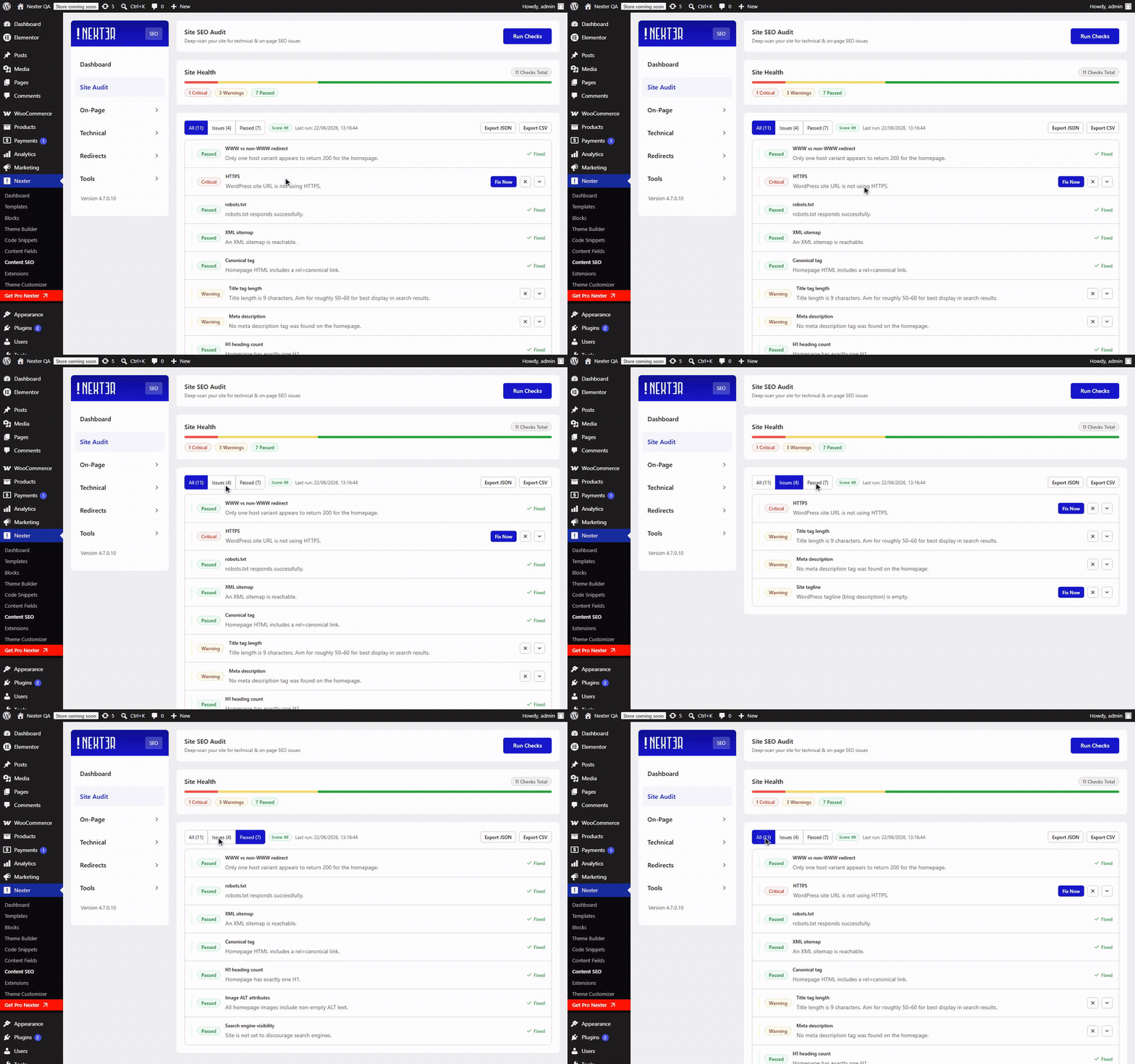
![Nexter SEO Site Audit with the All, Issues, and Passed filter tabs](https://nexterwp.com/wp-content/uploads/2026/07/nseo-02-site-audit.gif)


### Header And Summary

- **Run Checks** — runs the audit (15 checks total in this build).

- **Site Health** summary bar — shows **Critical**, **Warnings**, and **Passed** counts with a progress bar.

- **Score** badge — your health score (for example, 52), with **Last run: <date/time>** beside it.

- **Export JSON** / **Export CSV** — download the full audit results in either format for sharing or record-keeping.


### Filter Tabs

- **All (15)** — every check.

- **Issues (6)** — only checks that need attention (warnings).

- **Passed (9)** — only checks your site already passes.


### Check Rows

Each row shows a **status pill** (Passed or Warning), the check name, and an explanation.

- **Example passed checks:** WWW vs non-WWW redirect, HTTPS, robots.txt, XML sitemap.

- **Example warnings:** Canonical tag, Title tag length, Meta description.

- A **Fixed** indicator appears on resolved or passed rows.


### Per-Check Controls

- **X (dismiss)** — ignore a check so it stops appearing as an issue.

- **Chevron (expand)** — open the row to see the detail and how to fix it.


### The Fix Workflow

- Filter to **Issues** so you only see what needs work.

- Expand a warning with its **chevron** to read the detail.

- Make the fix (for example, add a meta description or shorten a title) in the relevant On-Page or Technical screen.

- Click **Run Checks** again. The resolved check moves to **Passed** and shows the **Fixed** indicator.

- If a check doesn't apply to your site, use the **X** to dismiss it and keep your Issues list clean.


#### Good To Know

- Re-run **Run Checks** after every batch of fixes — the audit shows the state from its last run, not live.

- Use **Export CSV** to hand the list to a teammate, or **Export JSON** to feed it into another tool.

- Dismissing a check with **X** removes it from your issues view. Only dismiss checks that genuinely don't apply to your site.


#### Troubleshooting

- **A check I fixed still shows as a warning.** Click **Run Checks** to re-scan — results don't refresh on their own.

- **The Issues count doesn't match what I expect.** Any checks you dismissed with **X** no longer count as issues. Check the **All** tab to see the complete list.

- **I can't tell what a warning wants.** Click the **chevron** to expand the row for the full explanation and fix guidance.

**Related:** [Nexter SEO Dashboard Overview](/docs/seo-dashboard-overview/) · [Getting Started With Nexter SEO](/docs/getting-started-with-nexter-seo/)


[Explore Nexter Extension](https://nexterwp.com/nexter-extension/)


This is how you can run a site audit with Nexter SEO.

## Frequently Asked Questions

**Q: Why does a WordPress SEO site audit still show warnings after I fix them?**
A: The audit only updates when you run Run Checks again, so stale warnings are normal until you rescan. Nexter SEO shows the state from the last run, not live changes, which is why a fixed title tag or meta description can still look unresolved for a bit. Re-running the audit is what flips a resolved check to Passed and adds the Fixed indicator.

**Q: What should I do if the Issues count in Nexter SEO looks wrong?**
A: Dismissed checks no longer count as issues, so the Issues total can be lower than the full problem list. That’s why the All tab is useful when you want the complete picture. In Nexter SEO, the Issues tab only shows warnings that still need attention, while All shows every one of the 15 checks in this build.

**Q: How do I know which SEO problems matter most in a site audit?**
A: The filter tabs are the fastest way to separate real work from already-clean checks. Nexter SEO splits the audit into All (15), Issues (6), and Passed (9), so you can focus on warnings first instead of scanning everything. That matters because checks like Canonical tag, Title tag length, and Meta description are shown as warnings, while WWW vs non-WWW redirect, HTTPS, robots.txt, and XML sitemap are examples of passed checks.

**Q: What do the warning rows in a WordPress SEO site audit actually tell you?**
A: Each row gives you three things: a status pill, the check name, and an explanation. That’s enough to tell whether you’re looking at a Passed item or something that needs work. In Nexter SEO, warning examples include Canonical tag, Title tag length, and Meta description, which makes it easier to connect the issue to an on-page or technical fix.

**Q: Should I dismiss an SEO check if it doesn't apply to my site?**
A: Dismiss it only when it genuinely does not apply, because X removes that check from your issues view and keeps the list cleaner. That’s useful for edge cases where a warning is irrelevant to your setup, but it also means dismissed items no longer count toward Issues. In Nexter SEO, that makes the audit easier to manage without hiding real problems.

**Q: What's the best way to fix warnings in Nexter SEO without missing anything?**
A: The cleanest workflow is Issues first, then expand each warning with its chevron and fix it in the relevant On-Page or Technical screen. Nexter SEO is built around that loop: read the detail, make the change such as adding a meta description or shortening a title, then run Run Checks again to confirm it moved to Passed. That keeps you from guessing at fixes.
