






Otter Blocks is one of the few block plugins that has kept shipping steadily through 2026, and it now has an AI layer, a WordPress 7.0 AI connector and, as of 29 September, agent support for its forms and settings. So the question is no longer whether it is alive. It is whether it is the right block plugin for your next site. I read the WordPress.org listing, the full recent changelog and the vendor’s pricing page on 7 October 2026, then installed Otter beside Nexter Blocks on a local test site to see how they sit in the editor.
The short version: Otter is a solid, actively maintained choice if you want a compact set of useful blocks, popups, forms and AI that works with WordPress’s own AI connectors. Nexter Blocks fits better if you want a much larger library, a built-in popup, mega menu and header builder, and a cheaper yearly price across more sites. I work on the Nexter side, so I will say plainly where Otter wins.
The Short Answer
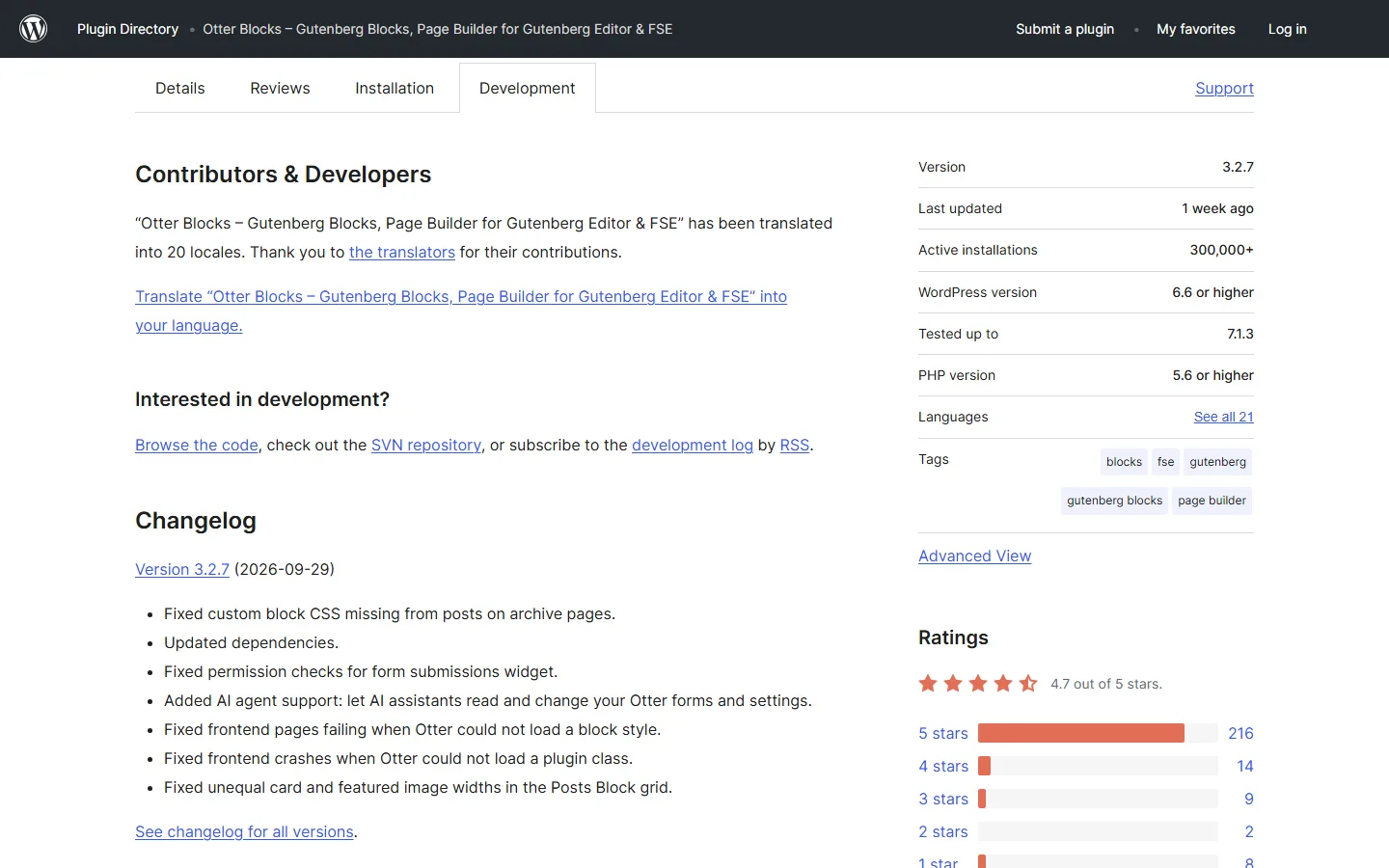
- Is Otter still worth using? Yes. Version 3.2.7 shipped on 29 September 2026, it has 300,000+ active installations and it is tested up to WordPress 7.1.3.
- Who it suits: bloggers, small business sites and agencies that want popups, forms, sliders, maps and a pattern library without a heavy plugin.
- Who should look elsewhere: anyone who needs a full header, mega menu and WooCommerce store builder in one plugin, or who wants 90+ dedicated blocks instead of about 26.
- AI is not a differentiator either way. Otter has an AI block, an AI toolbar and agent support for forms and settings. Nexter has its own AI tools and registers abilities on the WordPress Abilities API. Both sides are in the race.
What Otter Blocks Is In October 2026
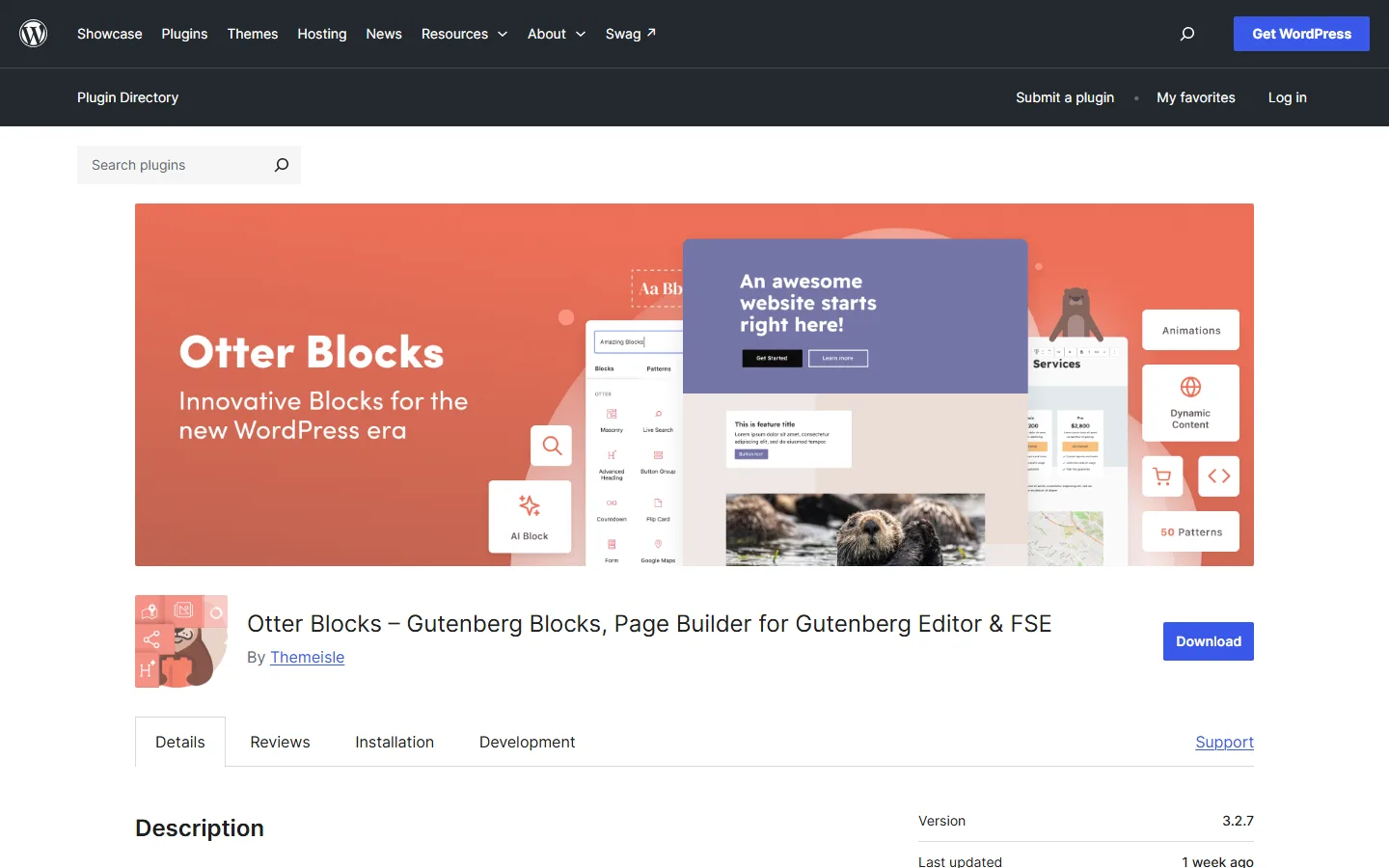
Otter is built by Themeisle, the company behind Neve and Optimole, and it is listed on WordPress.org as a Gutenberg blocks and page builder plugin. The listing says it adds 26+ blocks, a pattern library, full-page templates, visibility conditions, custom CSS, animations and dynamic content. Free and Pro blocks sit in the same list, labelled on the listing, so you can see before you install what needs a licence.
The numbers I could confirm on the day are in the table below. Where the vendor and WordPress.org disagree on a figure, I use WordPress.org because anyone can check it.
| Item | Otter Blocks | Nexter Blocks |
|---|---|---|
| Current version | 3.2.7 (29 Sep 2026) | 5.0.7 (22 Sep 2026) |
| Active installations | 300,000+ | 10,000+ |
| WordPress.org rating | 4.7 from 249 ratings | 4.8 from 90 ratings |
| Tested up to | WordPress 7.1.3 | WordPress 7.1.3 |
| Minimum WordPress / PHP | 6.6 / 5.6 | 5.6 / 7.4 |
| Block count (vendor claim) | 26+ blocks | 90+ blocks |
| Popup builder | Popup block, extra options in Pro | Popup builder with 6 popup types |
| Mega menu and header builder | No dedicated builder on the listing | Both included |
| AI in the editor | AI Block, AI Toolbar, WordPress 7.0 AI connectors | AI content, image and repeater tools using ChatGPT and Gemini |
| Yearly price, 1 site | $69 (introductory, renews at full price) | $39 on the pricing page |
Two things stand out. Otter has roughly thirty times the installs, which means more tutorials, more third-party testing and more people finding bugs for you. Nexter has the larger block library and the lower entry price. Neither number alone tells you which plugin is better for your project.
What Otter Does Well
A Compact Library With Real Depth
Otter’s free blocks cover the things most small sites actually need: Section, Advanced Heading, Accordion, Tabs, Button Group, Countdown, Flip Card, Icon List, Circle Counter, Progress Bar, Slider, Content Slider, Maps, Lottie, Posts, Product Review, Sharing Icons, a Stripe Checkout block and a Form block. The Content Slider added in 3.2.0 is a good example of the approach. Every slide holds any blocks, so a testimonial carousel or a set of pricing cards needs no extra plugin.
I like that Otter does not try to be everything. If your pages are mostly text, images and a handful of interactive elements, a smaller block set means less to learn and fewer settings to wade through.
The Free Tier Is Useful
The free Form block supports Brevo and Mailchimp, webhooks and hCaptcha, and 3.2.0 added Cloudflare Turnstile as a spam alternative. The same release made form submissions save to the database before the email is sent, so a mail failure no longer loses a lead. That is a thoughtful change for a free feature. Free also includes custom CSS per block, 50+ animations and the Posts block, which one reviewer called the only plugin they found that did blog posts in a card layout.
AI Is Built In And Moving Fast
Since 3.2.0 on 6 July 2026, Otter has an AI Block that generates a section or a full page as real, editable blocks matched to your theme colours, plus an AI Toolbar that rewrites, summarises, expands, shortens, translates or changes the tone of selected text. Otter also works with the native AI adapters in WordPress 7.0, so you connect an AI provider once and every Otter AI feature uses it. That is a clean design, and arguably more future-proof than tying an editor to one vendor’s credits.
Version 3.2.7 then added what the changelog describes as AI agent support: letting AI assistants read and change your Otter forms and settings. The changelog does not say more than that, so I cannot tell you how many operations it covers. It does mean Nexter is not alone in letting agents touch a block plugin.
The Maintenance Cadence Is Strong
Between 6 July and 29 September, Otter shipped eight releases: 3.2.0, 3.2.1, 3.2.2, 3.2.3, 3.2.4, 3.2.5, 3.2.6 and 3.2.7. That is one release roughly every ten days. Several fix real security and permission problems, and they are disclosed plainly: 3.2.3 fixed a Stripe Checkout bug where the checkout price could be manipulated through the URL, and 3.2.7 fixed permission checks on the form submissions widget. Fast fixes with honest notes are what you want from a plugin on 300,000 sites.
Where Otter Gets Complicated
A Pro Paywall Complaint Worth Knowing About
The most recent review on the listing, dated 9 September 2026, is a one-star complaint. The reviewer says Otter disabled default WordPress block controls, such as margins on column and grid blocks, and that you now need Pro to get them back. It is one review with one reply, and I did not test that claim on a clean install, so treat it as a flag, not a finding. If you rely on core block spacing controls, test them on a staging copy with only the free plugin active before you commit.
Compatibility Lagged, Then Caught Up
A June 2026 review complained that Otter still registered a block with API version 2, seven months after WordPress 6.9 deprecated it. The 3.2.0 changelog, published a month later, says all blocks were migrated to apiVersion 3, removing editor deprecation warnings and fixing iframe compatibility. So that specific criticism is now addressed. The pattern is still worth knowing: Otter’s own changelog also lists a steady run of fixes for frontend pages stopping when a class or block style could not load, and those are the kind of bug that you notice when a page goes blank. I would keep auto-updates on and test big releases on staging.
Pro Features Are Where The Interesting Blocks Live
Add to Cart, Business Hours, Modal, Live Search and Review Comparison are Pro blocks, and so are the WooCommerce Builder, extra dynamic content options, sticky blocks and most advanced visibility conditions. That is a reasonable split, but it means the free plugin is a strong starter, not the whole product.
Pricing Compared
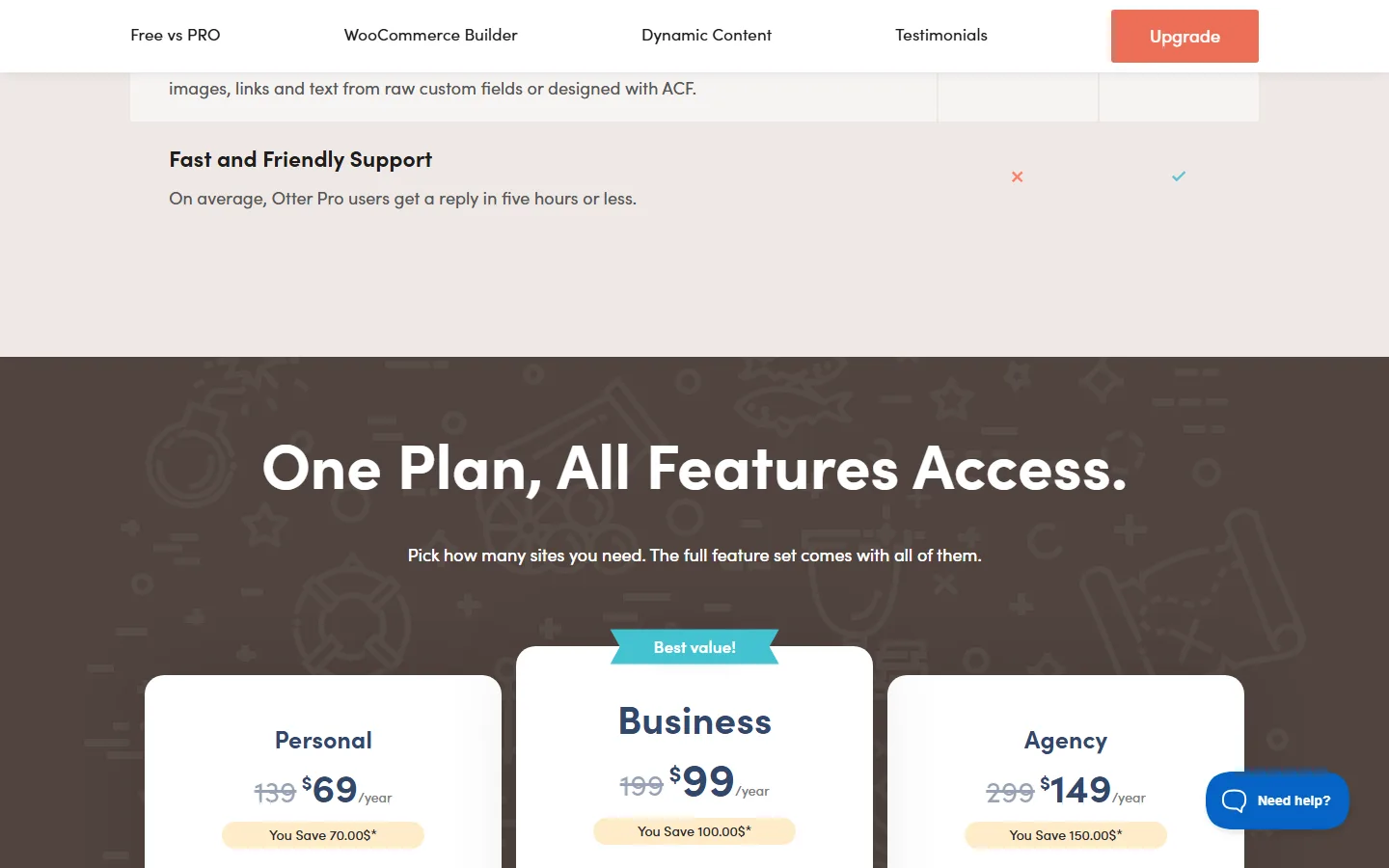
Otter Pro’s pricing page lists one plan with all features, sold by site count: Personal at $69 per year for one site, Business at $99 for five and Agency at $149 for unlimited client sites. A note on the page says these are introductory prices and renewals are at full price, and the struck-through list prices are $139, $199 and $299. There is a 30-day money-back guarantee.
Nexter’s pricing page lists Starter at $39 per year for one site, Professional at $89 for five and Studio at $129 for unlimited sites, with a lifetime option and the same 30-day guarantee. Those prices include the page’s current discount, and the plans bundle Nexter Blocks with the Nexter suite rather than selling the blocks alone, so it is not a like-for-like comparison. The WooCommerce Builder is not in the Starter plan.
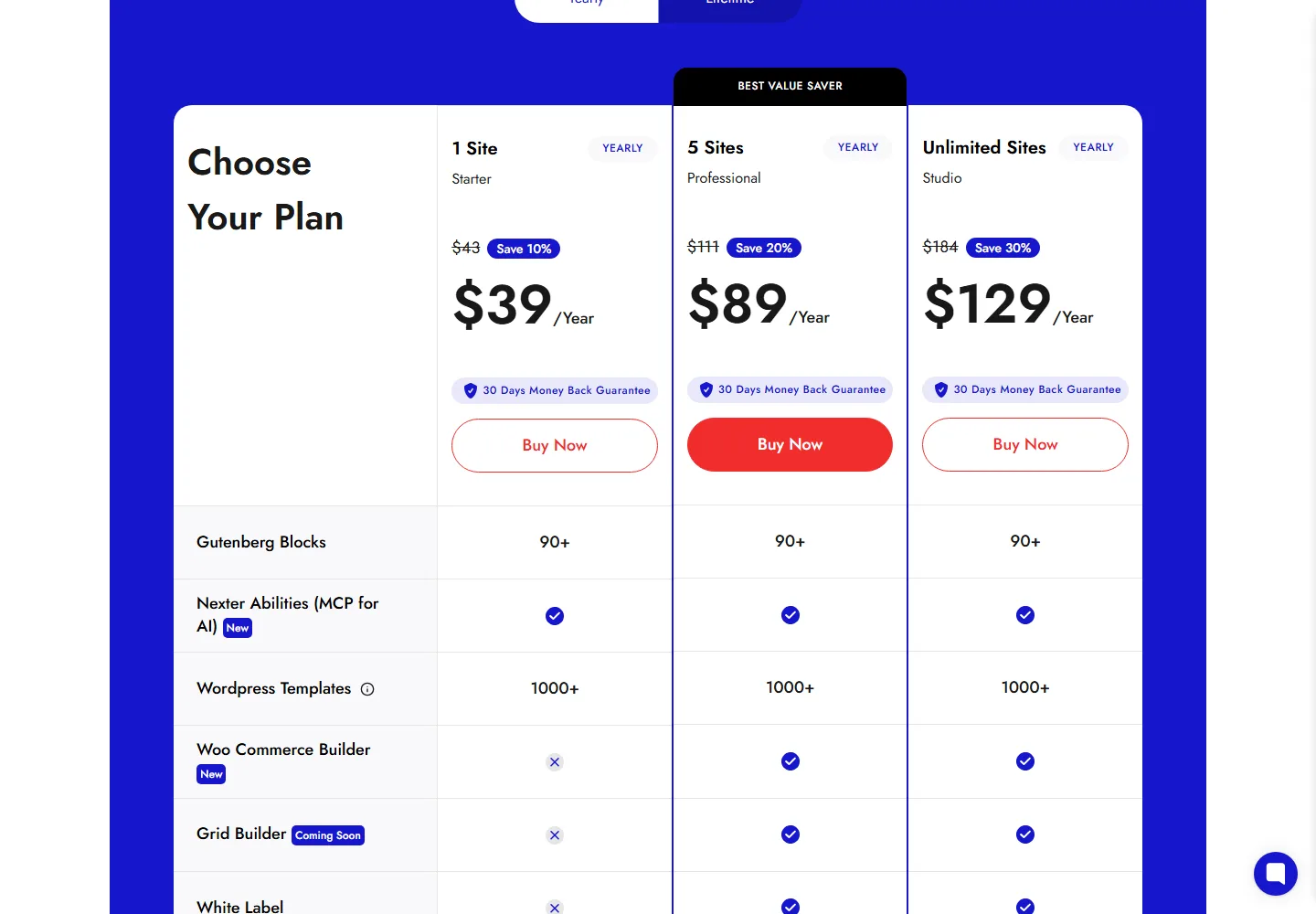
On sticker price Nexter is lower at every tier. On renewal behaviour, I would read both pages again before buying, because both mention discounts and promotions that change.
Hands-On Notes From A Test Site
I installed Otter Blocks 3.2.7 and Nexter Blocks 5.0.6 (Free and Pro, because the Free plugin update on my test copy failed) on a local WordPress 7.0.2 site. I used the block inserter and the plugin dashboards. This was a look-around, not a benchmark.
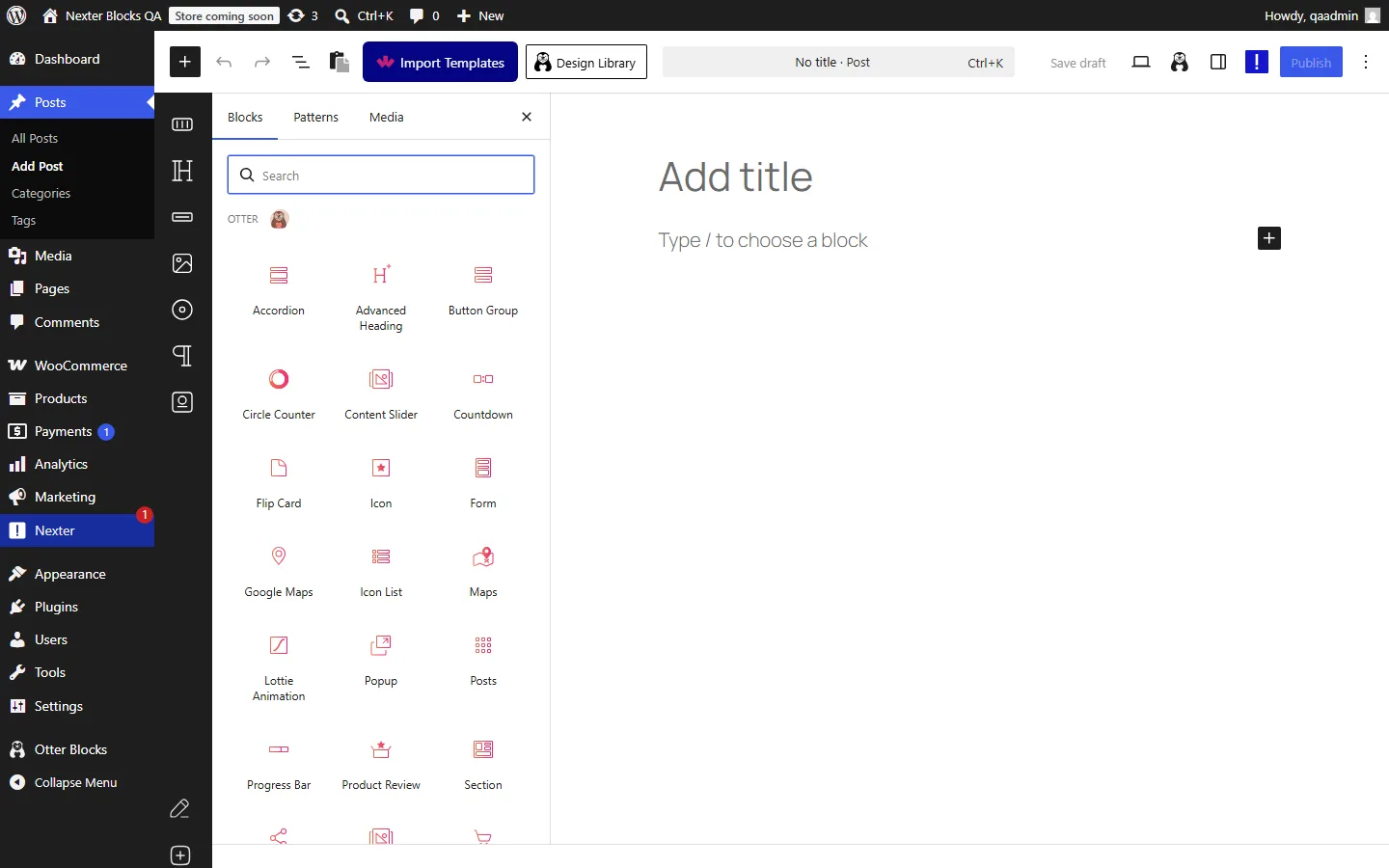
Searching the inserter for Accordion returns three results: the core block, Nexter’s and Otter’s, each with a different icon. That is a small thing, but it shows the practical downside of running two block libraries together. You will meet duplicates, so pick one library for each job and stick to it.
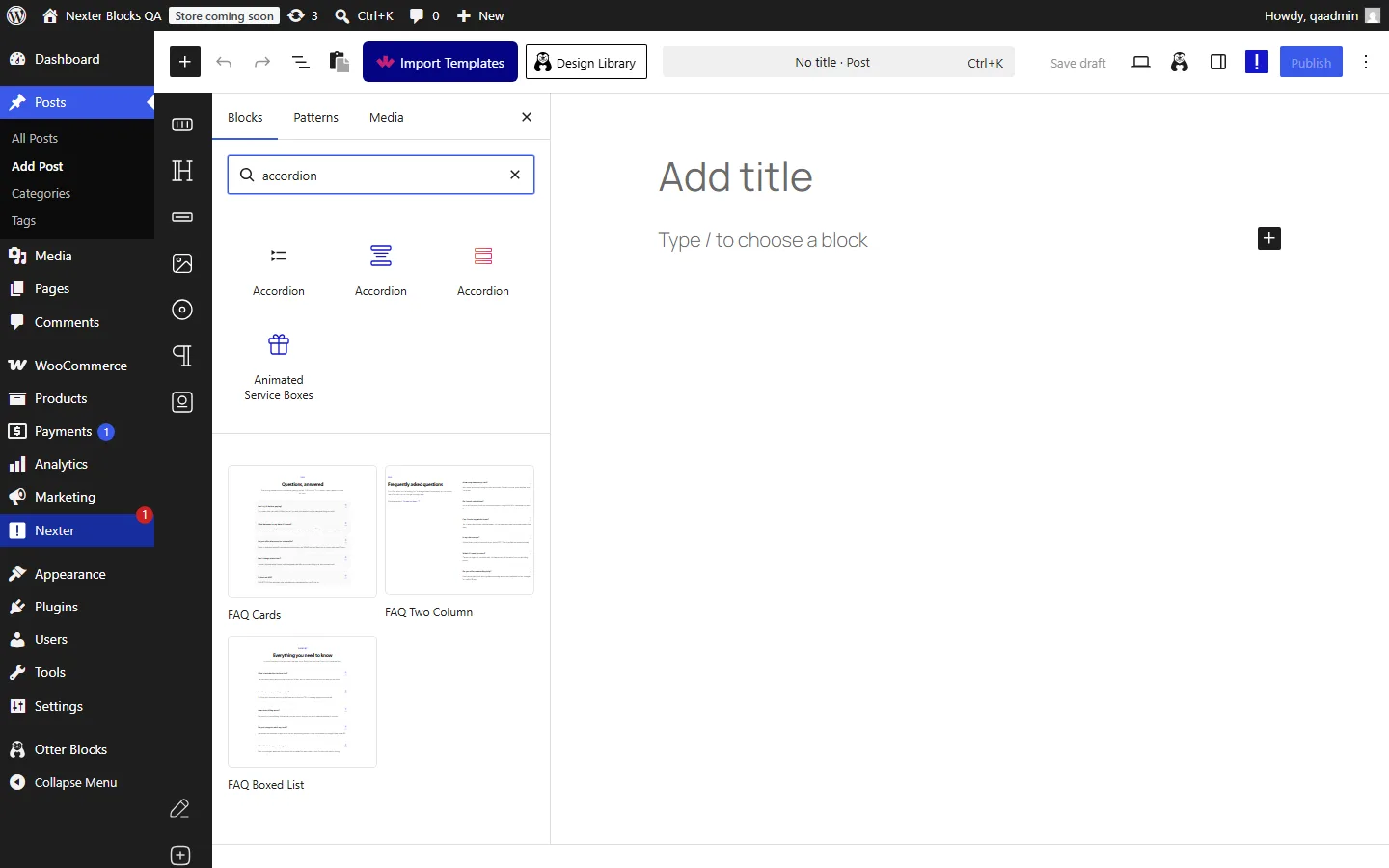
Otter groups its blocks under a single Otter heading in the inserter. In the editor, the registry showed 46 Otter block types, which includes child blocks such as form fields and accordion items, while Nexter registered 150 block types including its inner blocks. Those counts are not directly comparable to the marketing numbers of 26+ and 90+, so I use the vendors’ own figures in the comparison above.
Otter’s plugin dashboard is simple: module toggles for Custom CSS, the AI Block Toolbar, animations, visibility conditions and the patterns library. For someone who wants to turn features on and off without a long settings screen, that is a plus.
How Nexter Blocks Compares
Where Nexter Fits Better
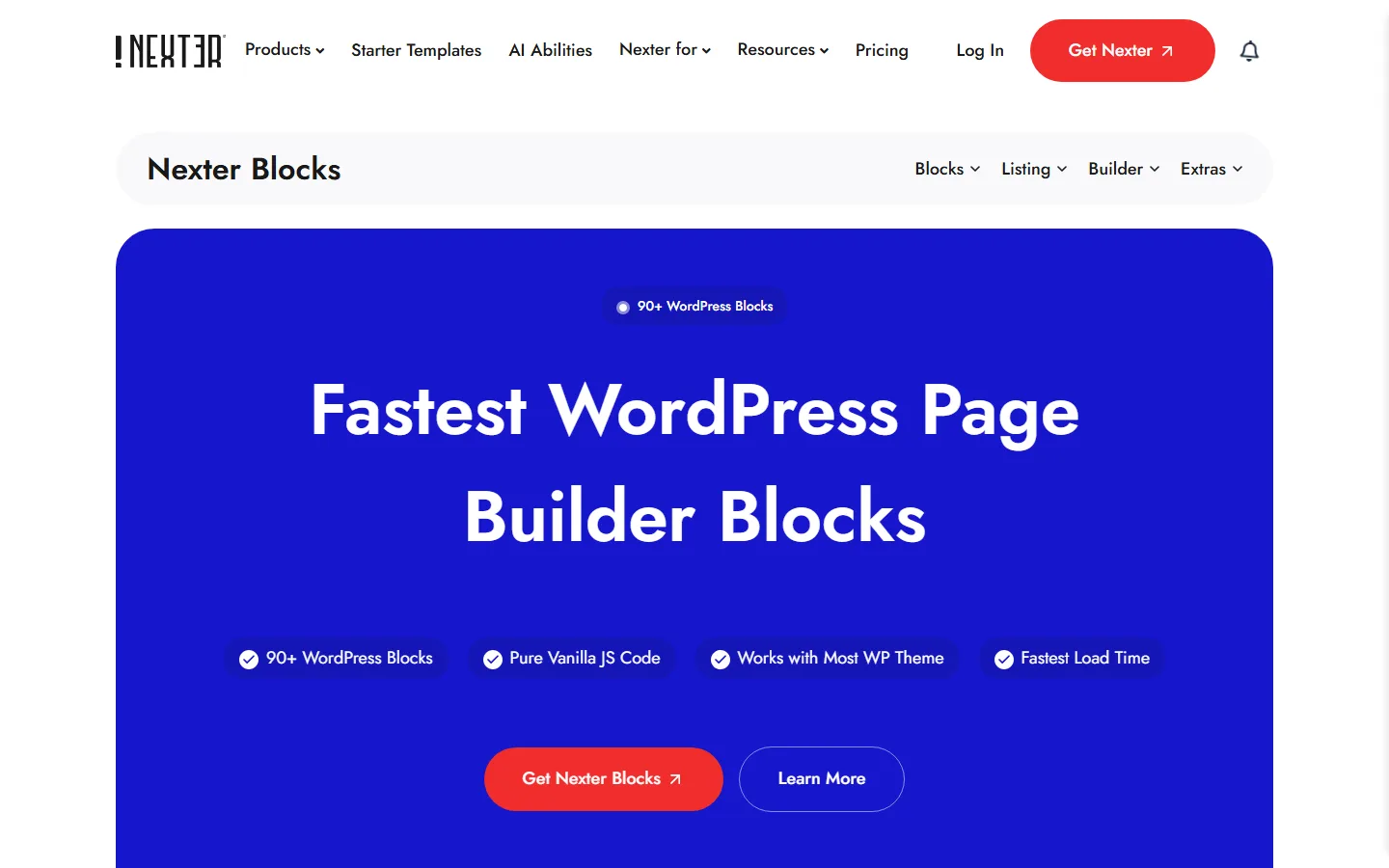
- Library size: 90+ blocks against about 26, including dedicated blocks for data tables, pricing tables, listings and an extensive WooCommerce set.
- Site-building features: a popup builder, mega menu builder, header builder and form builder with conditional logic (added in 5.0.6 on 8 September 2026) all sit inside one plugin.
- Design consistency: Global Block Styles let you change a block’s style once and update every instance.
- Price per site: the yearly plans are lower at all three site counts on the pricing pages I checked.
- Performance approach: the listing says each block is a separate module that loads no CSS or JavaScript when disabled and uses vanilla JavaScript with no jQuery. I did not benchmark this.
Where Otter Fits Better
- Track record: 300,000+ installs and 249 ratings against 10,000+ installs and 90 ratings. More people have already hit your edge case.
- Simplicity: fewer blocks and a lighter dashboard are easier to learn if you only need a few interactive elements.
- WordPress-native AI: using the WordPress 7.0 AI connectors means you bring your own provider, rather than relying on credits bundled with a licence.
- Lower PHP floor: Otter lists PHP 5.6 as its minimum, while Nexter lists 7.4. Almost nobody should run 5.6 in 2026, but it is a stated difference.
- Release cadence: Otter’s eight releases in twelve weeks are hard to beat, though Nexter also shipped 5.0.2 through 5.0.7 between 27 July and 22 September.
AI And Abilities: Neither Plugin Is Alone
This is the part where I would be careful with marketing claims, including ours. Otter has AI generation, an AI toolbar and agent support for forms and settings. Nexter has AI content, image and repeater tools and registers abilities on the WordPress Abilities API, which AI clients can discover and call. You connect a client through an MCP bridge plugin rather than a standalone Nexter server. Nexter’s own abilities page mentions an MCP endpoint and suggests the Sprout MCP plugin for smoother integration, so read it before you plan a workflow around it.
The ability counts also differ between our pages. The Nexter Abilities page currently says 115 abilities on Nexter Blocks, 68 free and 47 Pro, while an earlier explainer counted 58 on Blocks at launch. Treat the page as the live number. If you want the details, our Nexter Abilities explainer and the guide to the WordPress Abilities API cover how it works and what to switch on first.
Nexter’s own record is not spotless either. Version 5.0.2 on 27 July 2026 fixed a stored XSS issue through SVG uploads, so both plugins patch real vulnerabilities. That is normal for products on this many sites. What matters is how fast the fixes land.
Which Should You Choose?
Choose Otter If
- You want a smaller set of well-supported blocks, mostly for forms, popups, sliders and maps.
- You want AI to follow the WordPress 7.0 connector model with your own provider.
- A larger user base matters to you more than a larger feature list.
Choose Nexter Blocks If
- You want one plugin for blocks, popups, a mega menu, a header builder and a WooCommerce store builder.
- You manage several sites and the per-site yearly price matters.
- You want to experiment with abilities and AI clients on a block library with a large ability set.
Look At Other Options If
You are comparing wider than these two. Our guides to Kadence Blocks alternatives, Stackable alternatives and GenerateBlocks alternatives show where the wider field stands, our Stackable review covers another block-first plugin in detail, and Spectra Blocks vs Spectra Legacy explains the rename that confuses many Spectra users. For a broader list, see our roundup of the best Gutenberg plugins.
If you want to try Nexter first, Nexter Blocks has a free version on WordPress.org, and the pricing page lists the paid plans. Either way, test on a staging site with a backup before you rebuild live pages.
What This Doesn’t Cover
This is a review based on listings, changelogs, pricing pages and a short look in the editor. I installed Otter Blocks 3.2.7 and Nexter Blocks 5.0.6 on a local WordPress 7.0.2 test site and checked the inserter and dashboards. I did not build pages with either plugin, benchmark front-end speed or Core Web Vitals, test Otter Pro or the AI features, or check how either behaves with WooCommerce, multilingual plugins or caching. I also did not verify the September one-star review about core block controls. Install counts are rounded floors on WordPress.org, prices and discounts change often, and Otter’s AI agent support is described in one changelog line, so I cannot say how deep it goes.
The Bottom Line
Otter Blocks is still worth using. It is maintained, stable enough to be on 300,000 sites, and its AI approach is sensible. Nexter Blocks is the better fit when you want a much larger library and site-building tools in one plugin, and I would say so even without the bias. If you are unsure, install each on a staging site, build the same landing page twice and see which one you enjoy editing.
Suggested Reading
- Nexter Abilities Explained: The WordPress Abilities API Inside Nexter Blocks
- Spectra Blocks vs Spectra Legacy
- Stackable Review
- Kadence Blocks Alternatives
