
How to Connect to Zapier Webhook from a WordPress Form?

Key Takeaways

  • Nexter Blocks allows users to connect a Zapier webhook to their WordPress form using the Form block.
  • The Form block requires installation and activation of Nexter Blocks to access its features.
  • Users can assign a custom identifier to each field in the Form block for seamless data transfer with CRMs or other integrations.
Table of Contents

Want to automate tasks and connect your WordPress form to thousands of apps? By sending form submissions to a Zapier webhook, you can trigger powerful workflows—like adding contacts to your CRM, sending Slack messages, or updating spreadsheets. 

With the Form block from Nexter Blocks, you can easily connect a Zapier webhook to your WordPress form.

To check the complete feature overview documentation of the Nexter Blocks Form block, click here.

Requirement  – This block is a part of the Nexter Blocks, make sure it’s installed & activated to enjoy all its powers.

Learn via Video Tutorial

Youtube video

For this, you must have a Zapier Webhook URL.

Get a Zapier Webhook URL

Create an account in Zapier if you don’t already have one. Once you are logged into your account, follow the steps – 

1. From the Zapier dashboard, go to Zaps > Create > New Zap.

2. On the next screen, click on Trigger

3. In the pop-up, search for Webhook and click on Webhooks

4. Then, in the Trigger event, select Catch Hook.

5. After that, click on the Continue button.

6. Keep the Pick off a Child Key blank and again click on the Continue button.

7. Then you’ll see the webhook URL; click on the Copy button to copy it.

Use the Form Block

Now, add the Form block to the page and select the appropriate form type, then follow the steps –

1. Add the required form fields and customize them as per your requirements.

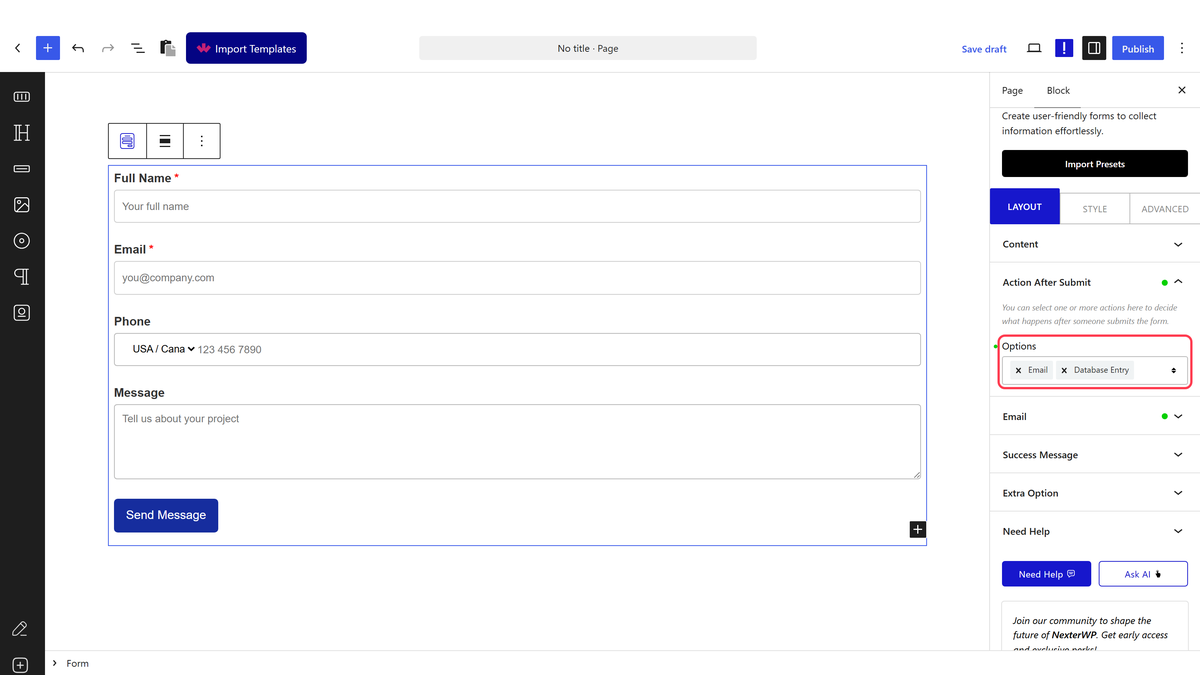
2. Then select the main form block and go to the Action After Submit tab and select WebHook from the Options dropdown.

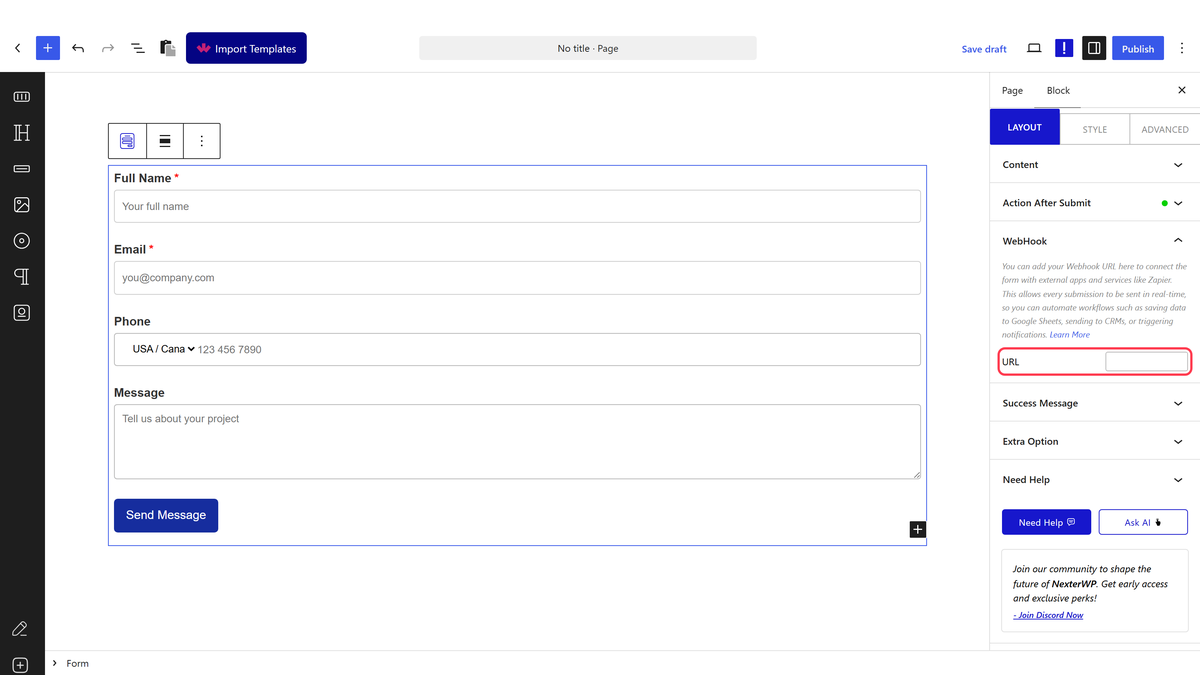
3. Now you’ll see the WebHook tab, open it.

4. Then add the webhook URL in the URL field.

Now, when a user fills out your form, the data will be sent to your Zapier Zap. You can click on the Test Trigger button in your Zap to see the data.

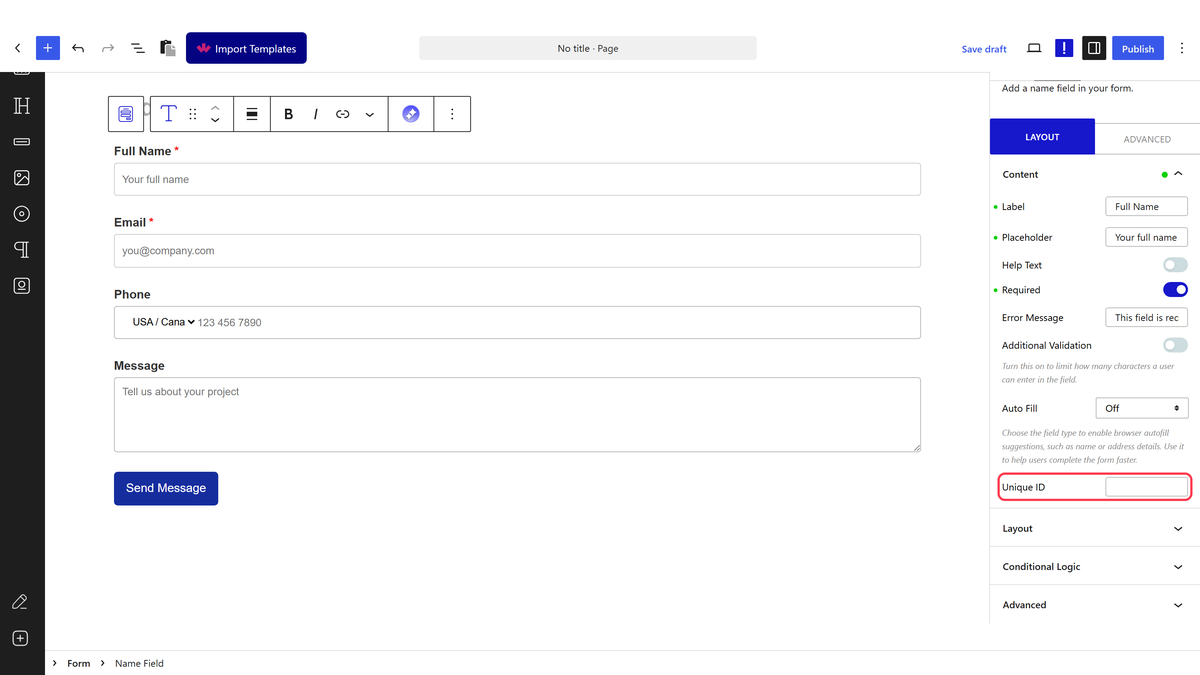
You can also assign a custom identifier to each field from the Unique Id field. With this, you can match these IDs with your CRM or other integrations for seamless data transfer.

About the Author

Photo of Aditya Sharma CMO of NexterWP
CMO at POSIMYTH Innovations · NexterWP · 7 years experience

He has spent years in the WordPress ecosystem building, breaking, and optimizing sites until they actually perform. He works at the intersection of speed, growth, and usability, helping creators ship websites that load fast and convert. An active WordPress community contributor sharing through tools, tutorials, and direct collaboration. Tested practice, not theory.

WordpressThemesElementorn8nAIClaudeAutomationServer

Share your Thoughts

Get Instant Answers to all your questions about Nexter Blocks,
Extensions & Theme trained on 1000+ Docs and Videos

Still in Doubt? Let’s Assist You

Have Feedback or Questions?

Join our WordPress Community on Facebook!

Related Frequently Asked Questions

What should I do if my Zapier webhook is not receiving data from the WordPress form?

If your Zapier webhook isn't receiving data, first ensure that the Form block from Nexter Blocks is correctly configured with the webhook URL. Double-check that the URL is copied accurately in the WebHook tab of the form settings. Additionally, use the Test Trigger button in your Zap to verify if the data is being sent correctly. If issues persist, confirm that the form fields are properly set up and that the form is published on your WordPress site.

Can I use the Nexter Blocks Form block to connect to multiple Zapier webhooks?

The Nexter Blocks Form block is designed to connect to a single Zapier webhook URL per form. If you need to send data to multiple webhooks, consider creating separate forms for each webhook or using a third-party service to route the data accordingly. This keeps your setup straightforward and ensures that each form submission is directed to the correct endpoint.

What is the best practice for customizing form fields when connecting to a Zapier webhook?

When customizing form fields in the Nexter Blocks Form block, assign unique identifiers to each field using the Unique Id field. This practice is crucial for mapping the data correctly in your CRM or other integrations. It ensures that the data sent to Zapier is organized and can be easily matched with the corresponding fields in your applications.

What happens if I forget to copy the Zapier webhook URL?

If you forget to copy the Zapier webhook URL, your form submissions will not be sent to Zapier, and you won't be able to trigger any workflows. To resolve this, go back to your Zapier account, create a new Zap, and follow the steps to generate a new webhook URL. Make sure to copy it and paste it into the WebHook tab of your Nexter Blocks Form block.

How do I create a Zap that uses the webhook from my WordPress form?

To create a Zap using the webhook from your WordPress form, log into your Zapier account and create a new Zap. Choose 'Webhooks' as the trigger app and select 'Catch Hook.' After copying the generated webhook URL, paste it into the WebHook tab of your Nexter Blocks Form block. This setup allows you to automate tasks based on form submissions, such as adding contacts to a CRM or sending notifications.

Last reviewed: April 14, 2026

Related Docs