




Short answer: if you run CoBlocks today, your site is not broken, but the plugin has not had a release since 5 March 2026 and the WordPress.org page now warns it has not been tested with the latest three major WordPress releases. For most sites I would move to Kadence Blocks if you want a polished free toolkit, Spectra Blocks if you want AI-assisted page drafts, or Nexter Blocks if you want one plugin that also covers popups, mega menus and headers. I checked every number below on 13 October 2026.
CoBlocks is a free suite of page building blocks made by GoDaddy for the Gutenberg editor. On WordPress.org it still shows 300,000+ active installations and a 4.2 out of 5 rating from 109 reviews. That install base is why people keep searching for it. It is also why a quiet plugin matters: a lot of sites depend on blocks that nobody is actively maintaining.
I wrote this for site owners, freelancers and agencies who have CoBlocks on one or more sites and want to know whether to act, and what to move to. I did not install CoBlocks on a test site for this guide. Everything about it comes from its WordPress.org listing, its changelog and its public reviews, and I say so where it matters.
What The Public Data Says About CoBlocks Right Now
Here is what the WordPress.org plugin page showed when I read it on 13 October 2026:
- Version 3.1.17, last updated 5 March 2026, about seven months ago.
- Tested up to WordPress 6.8.11. The current 7.1 line is three major releases ahead of that.
- A notice at the top of the page: the plugin has not been tested with the latest three major releases of WordPress and may no longer be maintained.
- Support forum: 0 of 3 issues resolved in the last two months.
- 55 blocks, free, GPL licensed, with GoDaddy as the publisher.
The changelog points the same way. The newest entry printed on the page is 3.1.15 from April 2025, even though the current version is 3.1.17. Earlier entries show the plugin used to ship fixes regularly, including a security patch in March 2024 and a possible XSS fix in May 2024. A plugin that used to patch security issues quickly and has now been silent for seven months is the real signal here, more than any single bug.
What Users Are Reporting
Three recent reviews stand out. I cannot verify any of them myself, so treat them as user reports, not facts about the plugin:
- On 8 September 2026 a reviewer wrote that the plugin has been left to die, has no support responses for over six months, and breaks the visual editor on WordPress 7.0.4.
- On 1 June 2026 another reviewer said support replies are few and far between and that there have been no updates in quite some time.
- On 19 January 2026 a reviewer reported that the plugin loads Google Fonts from fonts.googleapis.com, which they said conflicts with European data protection rules, and that they received no reaction to their question.
Not every review is negative. A December 2025 reviewer called it simple and effective and said the blocks work with the themes they use. That fits my own expectation: a stable block plugin can run fine for a long time on an unchanged site. The risk grows when WordPress core moves, as it did with the 7.x editor changes, and nobody ships a compatibility fix.
Do You Actually Need To Leave CoBlocks?
No one needs to panic. My honest take is that the answer depends on what your site does with CoBlocks and how much risk you can carry.
- Stay for now if the site is small, rarely edited, and uses only a few CoBlocks blocks. Keep backups, avoid editing pages that use the plugin’s blocks on a live site, and set a date to revisit.
- Plan a move if you edit pages weekly, run WordPress 7.x, or manage client sites where an editor problem becomes your support ticket.
- Move soon if you collect data through the CoBlocks Form block, serve visitors in regions with strict privacy rules, or have a security policy that rejects unmaintained plugins.
If you want a wider view of why unmaintained plugins are a risk, my guide on how to vet a WordPress plugin walks through the checks I use before installing anything. And if you are not sure you need a blocks plugin at all in 2026, read Do You Still Need A Gutenberg Blocks Plugin first.
Five Checks I Use Before Picking A Replacement
Swapping one block plugin for another is a bigger decision than it looks, because your content lives inside that plugin’s blocks. Before I commit a site to a replacement, I check these five things on the WordPress.org page, which takes about ten minutes:
- Last updated date. A release in the last few weeks is a good sign. A gap of many months, as with CoBlocks, deserves a closer look.
- Tested up to. This should match the WordPress version you run. All three alternatives below say 7.1.3.
- Support activity. Open the support tab and check how many threads were resolved recently, and whether the vendor replies. CoBlocks shows 0 of 3 resolved in two months; Spectra Blocks shows 7 of 8.
- Recent reviews, not the average. A 4.2 star average can hide a run of one star reviews in the last quarter. Read the newest five.
- The exit route. Ask what happens to your pages if you ever leave. Plugins that store content as standard block markup are easier to leave than ones that use shortcodes or a private format.
I applied the same five checks to every plugin in the next section, and the table shows the results I could verify today.
CoBlocks Alternatives At A Glance
I limited this list to plugins I could verify on the WordPress.org directory and the vendor’s own pricing page today. The three alternatives are actively updated and tested up to WordPress 7.1.3. CoBlocks is included as the baseline.
| Plugin | Best for | Version and last update | Active installs | Price |
|---|---|---|---|---|
| CoBlocks (baseline) | Existing sites that already use it | 3.1.17, 5 March 2026 | 300,000+ | Free |
| Kadence Blocks | A polished free toolkit with a big user base | 3.7.12.1, 6 October 2026 | 600,000+ | Free, Pro through a bundle |
| Spectra Blocks | AI-assisted page drafts in native blocks | 1.0.11, 5 October 2026 | 50,000+ | Free, AI needs a ZipWP account and credits |
| Nexter Blocks | Blocks plus popups, mega menu, headers and templates | 5.0.7, 23 September 2026 | 10,000+ | Free, Pro from $39 per year for one site |
I left out other good plugins on purpose, because I would rather print four numbers I checked than eight I half remember. You will find more options in my guides to GenerateBlocks alternatives and Spectra alternatives, and in the wider roundup of the best Gutenberg plugins.
Kadence Blocks: The Closest Free Replacement
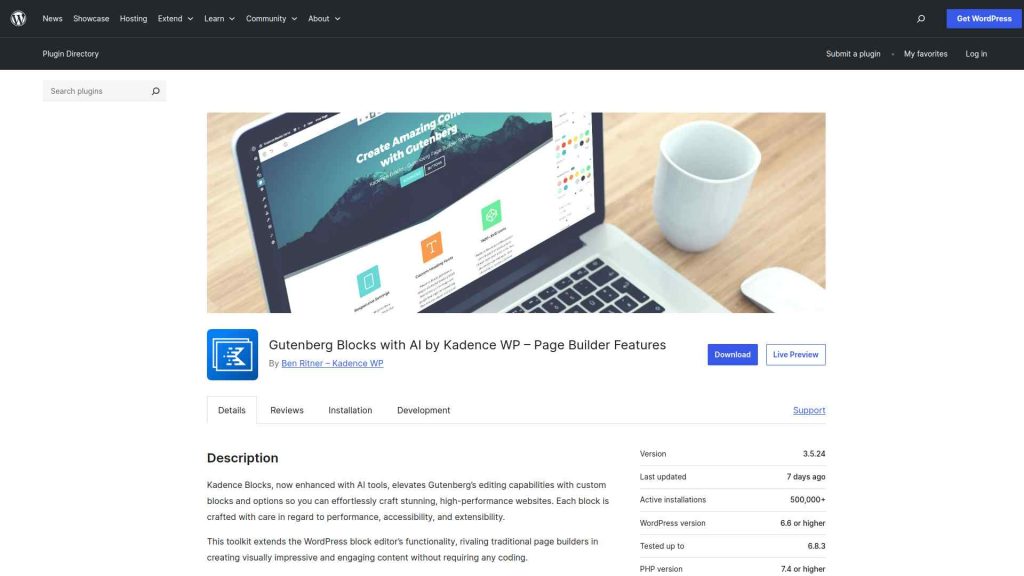
If your main reason for using CoBlocks was rows, columns, galleries and a few content blocks, Kadence Blocks is the closest free swap. WordPress.org shows version 3.7.12.1, updated six days before I checked, with 600,000+ active installations, a 4.8 rating from 332 reviews, and a tested-up-to value of 7.1.3. That is double the install base of CoBlocks and a clear maintenance signal.
The trade-off is on the paid side. The free plugin lists 20 or so blocks, and features such as popups and some dynamic content sit behind Kadence Pro, which is sold as part of a bundle rather than as a single plugin. If you want the full comparison, I covered it in Kadence Blocks alternatives.
Pick it if: you want a mature free toolkit and you are comfortable staying inside the Kadence ecosystem.
Spectra Blocks: The AI-Assisted Option
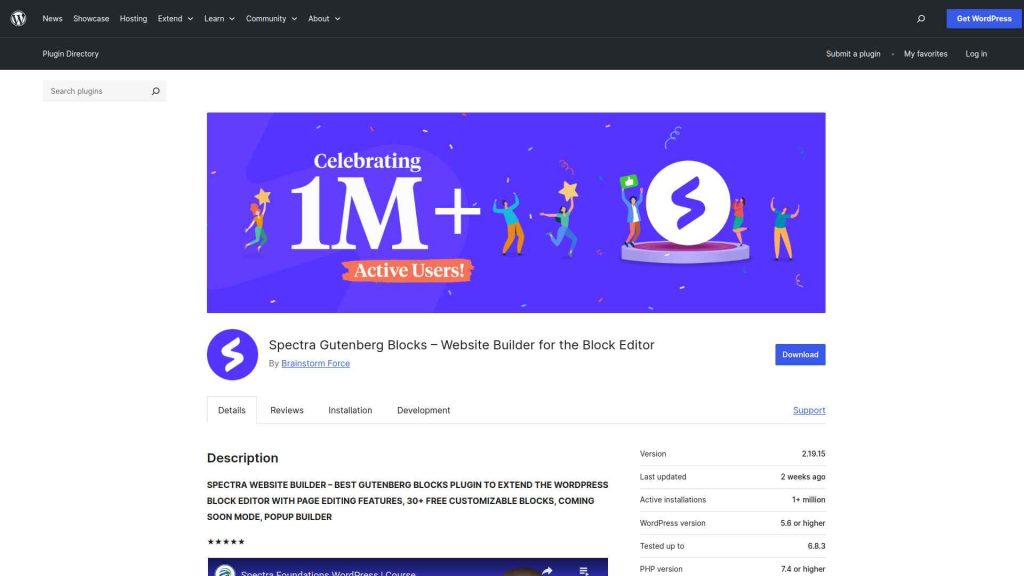
Spectra Blocks by Brainstorm Force is a ground-up rebuild on core block APIs. The directory listing shows version 1.0.11 from 5 October 2026, 50,000+ active installations, a 4.6 rating from 49 reviews, WordPress 6.6 or higher and PHP 8.1 or higher. The core plugin and every block are free with no account. AI page and section generation comes from a separate free plugin called Zip AI, and it needs a ZipWP account and runs on credits.
Two cautions. First, it ships a smaller set of flexible blocks instead of dozens of single-purpose ones, so a CoBlocks testimonial or pricing table becomes a Container with other blocks inside it. Second, the reviews are mixed: most praise the support team, while one October 2026 reviewer called the editor slow and buggy. That is one opinion, but it is recent. If you are weighing it against the older plugin, my guide on Spectra Blocks versus Spectra Legacy explains the split.
Pick it if: you start many new pages and want an AI first draft in native blocks.
Nexter Blocks: One Plugin For Blocks And Site Building
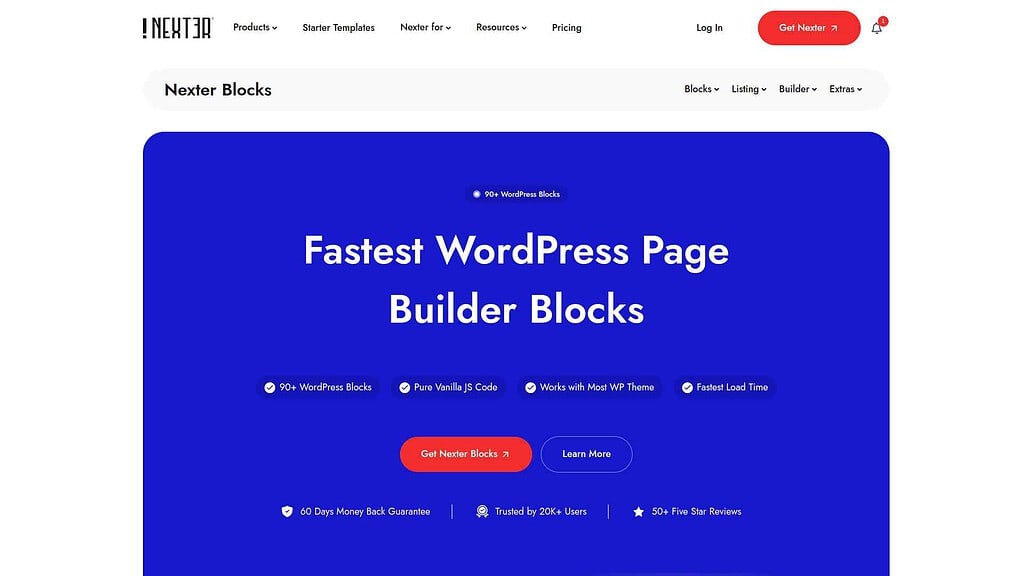
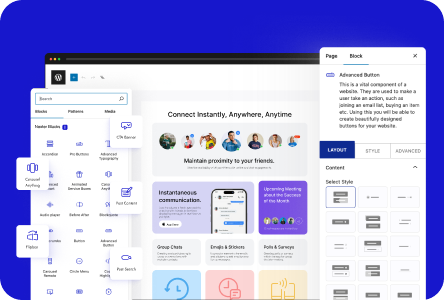
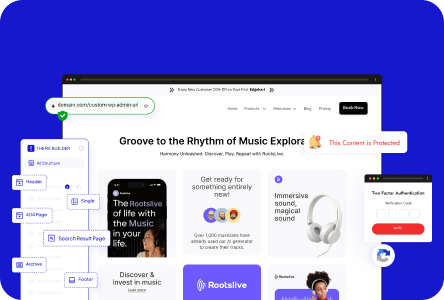
I work on the Nexter side, so weigh this section accordingly. Nexter Blocks, from POSIMYTH Innovations, is listed on WordPress.org at version 5.0.7, updated 23 September 2026, tested up to 7.1.3, with 10,000+ active installations. That install count is the smallest in this list, and I will not pretend otherwise. What you get for it is breadth: the plugin page describes 90+ blocks, a popup builder, a mega menu builder, a form builder, a header builder and theme building in a single plugin, and it says it uses no jQuery.
Pricing from the live pricing page today, with the current discount applied: Starter at $39 per year for one site, Professional at $89 per year for five sites, and Studio at $129 per year for unlimited sites, each shown with a 30 day money back guarantee. Lifetime options also exist. Details on the block library are on the Nexter Blocks page, and I compared it head to head with another alternative in Nexter Blocks versus Kadence Blocks.
Pick it if: you want blocks plus popups, menus and headers without stacking more plugins, and you are fine with a smaller community than Kadence or Spectra.
Other Options Worth A Look
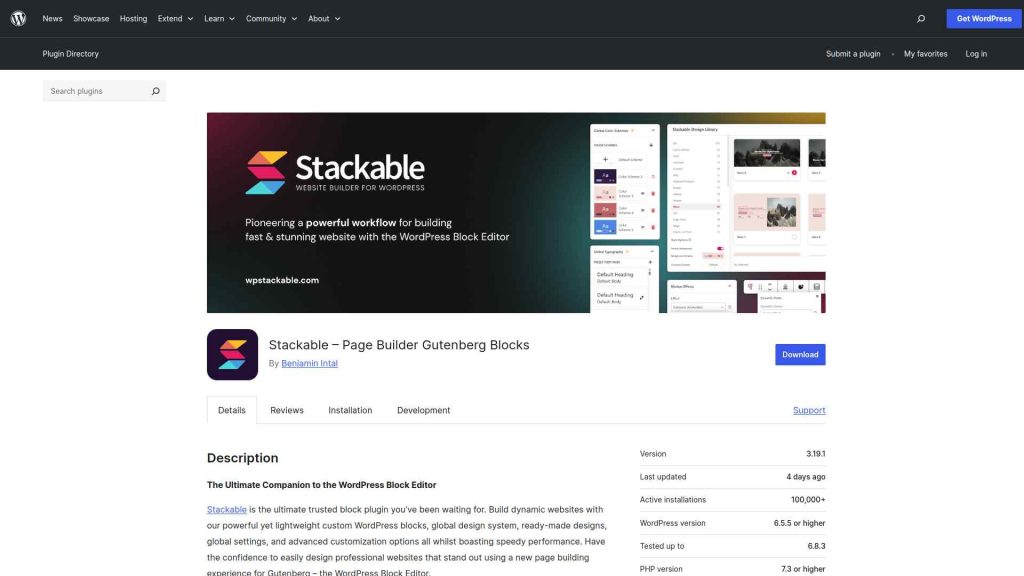
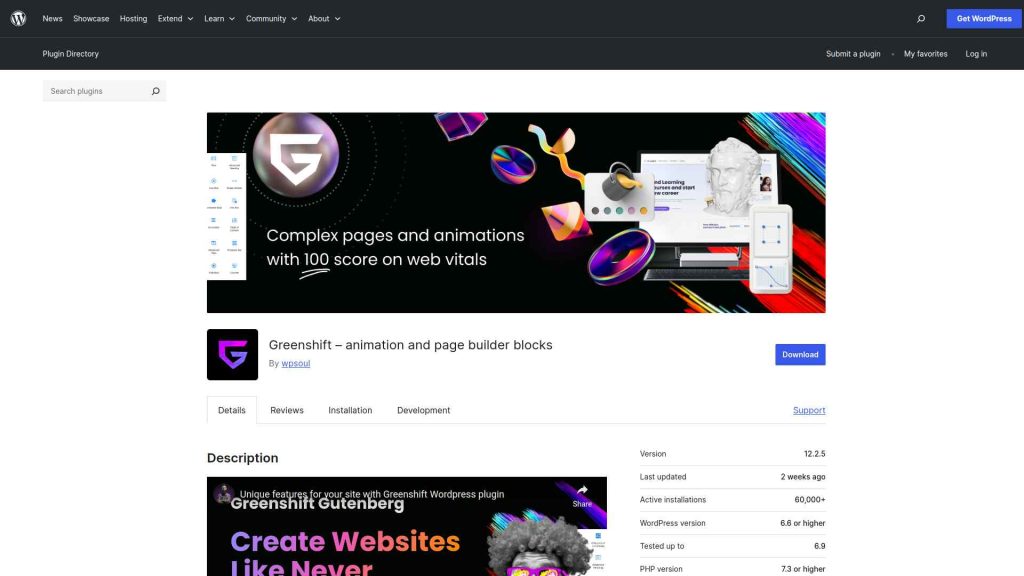
I did not re-verify the following today, so I am only pointing to them, not rating them. Stackable is a design-first block plugin and Greenshift leans toward motion and animation. Essential Blocks offers a broad general library. You can read how each compares in my Spectra series, for example Spectra alternatives.
How To Move Off CoBlocks Without Breaking Pages
This is general WordPress behavior, not a CoBlocks-specific tool. Blocks are stored in your post content. If you deactivate a block plugin, WordPress cannot render or edit its blocks, so the order you do things in matters. Here is the process I would follow:
- Take a full backup and clone the site to staging. Do not test the move on production.
- List what you use. Search your content for CoBlocks blocks. The Form, Events, Food and Drinks, Row and Columns, and gallery blocks have the least direct replacements.
- Install the new plugin next to CoBlocks. Running both during a transition is normal. Leave CoBlocks active until the last page is rebuilt.
- Rebuild the highest traffic pages first, then the rest. A rebuild does not change a page URL, so links and rankings stay in place.
- Recreate custom CSS. Anything written against CoBlocks class names will need updating on rebuilt sections.
- Deactivate CoBlocks only when no page uses its blocks, then check the front end and the editor on a few templates before deleting it.
If you have been through a similar move before, the steps in how to move from Spectra Legacy to Nexter Blocks follow the same logic and may help you plan the rebuild.
Which Alternative Should You Pick?
- You want the safest, most used free option: Kadence Blocks, with 600,000+ installs and a release six days old.
- You build many new pages and want an AI draft: Spectra Blocks, knowing AI runs on ZipWP credits.
- You want popups, menus, headers and blocks in one plugin: Nexter Blocks, from $39 per year for one site.
- You barely edit the site: stay on CoBlocks for now, keep backups, and set a review date.
What This Doesn’t Cover
I did not install CoBlocks on a test site, so I cannot confirm whether it really breaks the editor on WordPress 7.x or loads Google Fonts in a way that creates a privacy issue. Those are reviewer reports. I also did not benchmark front end performance of any plugin here, and I did not test the migration steps on a live CoBlocks site. The Stackable, Greenshift and Essential Blocks mentions are pointers, not verified ratings. Prices and install counts change, so check each vendor page before you buy.
Suggested Reading
- Kadence Blocks Alternatives
- Best Gutenberg Plugins
- Spectra Blocks Vs Spectra Legacy
- How To Vet A WordPress Plugin
