



Key Takeaways
- AI website builders like Wix AI, Hostinger, Durable, and 10Web can generate a working first-draft site in minutes. That part is real and genuinely useful.
- The tradeoff is ownership and control. Most AI builders keep your content, design, and hosting inside their platform, and moving out later is painful.
- WordPress still powers 41.5% of all websites because it gives you full ownership, portability, and unlimited customization.
- You do not actually have to choose. WordPress now has its own AI tools, fast starter themes, and block libraries that get you moving almost as quickly.
- For a quick one-pager, an AI builder is fine. For anything you plan to grow, own, or rank, WordPress is the safer long-term home.
Type “build me a website” into an AI tool today, wait about a minute, and you get a full homepage with copy, images, and a color scheme already in place. It looks like magic, and honestly, part of it is. The obvious question follows right behind: if AI can do that, why would anyone still bother with WordPress?
We build products for WordPress, so you would expect us to have a defensive answer ready. The honest version is more interesting than “WordPress wins.” AI website builders are genuinely good at one thing and genuinely limiting at another, and which of those matters depends entirely on what you are trying to do. Here is the real comparison of an AI website builder vs WordPress, tradeoffs included.
Can AI actually build your website?
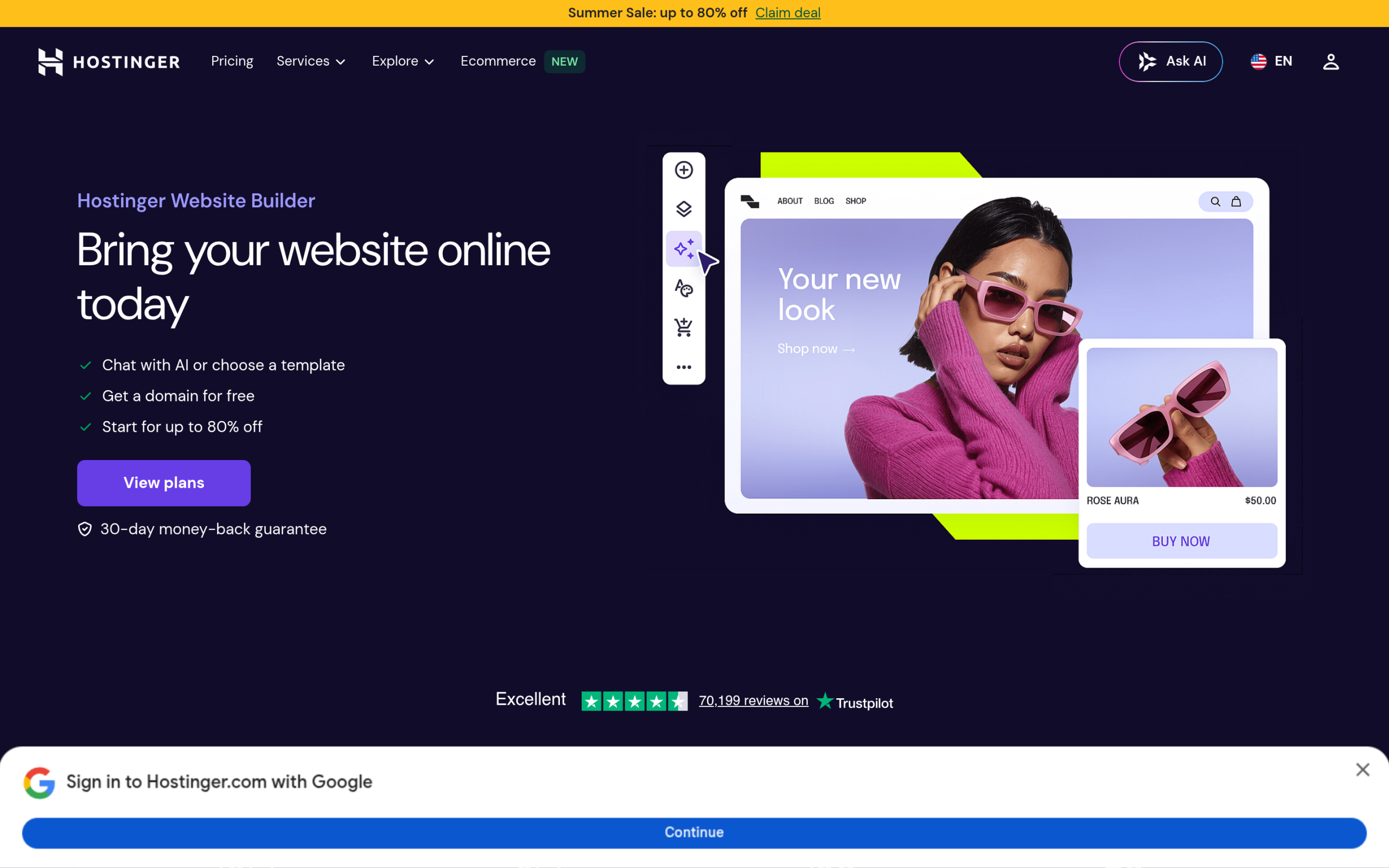
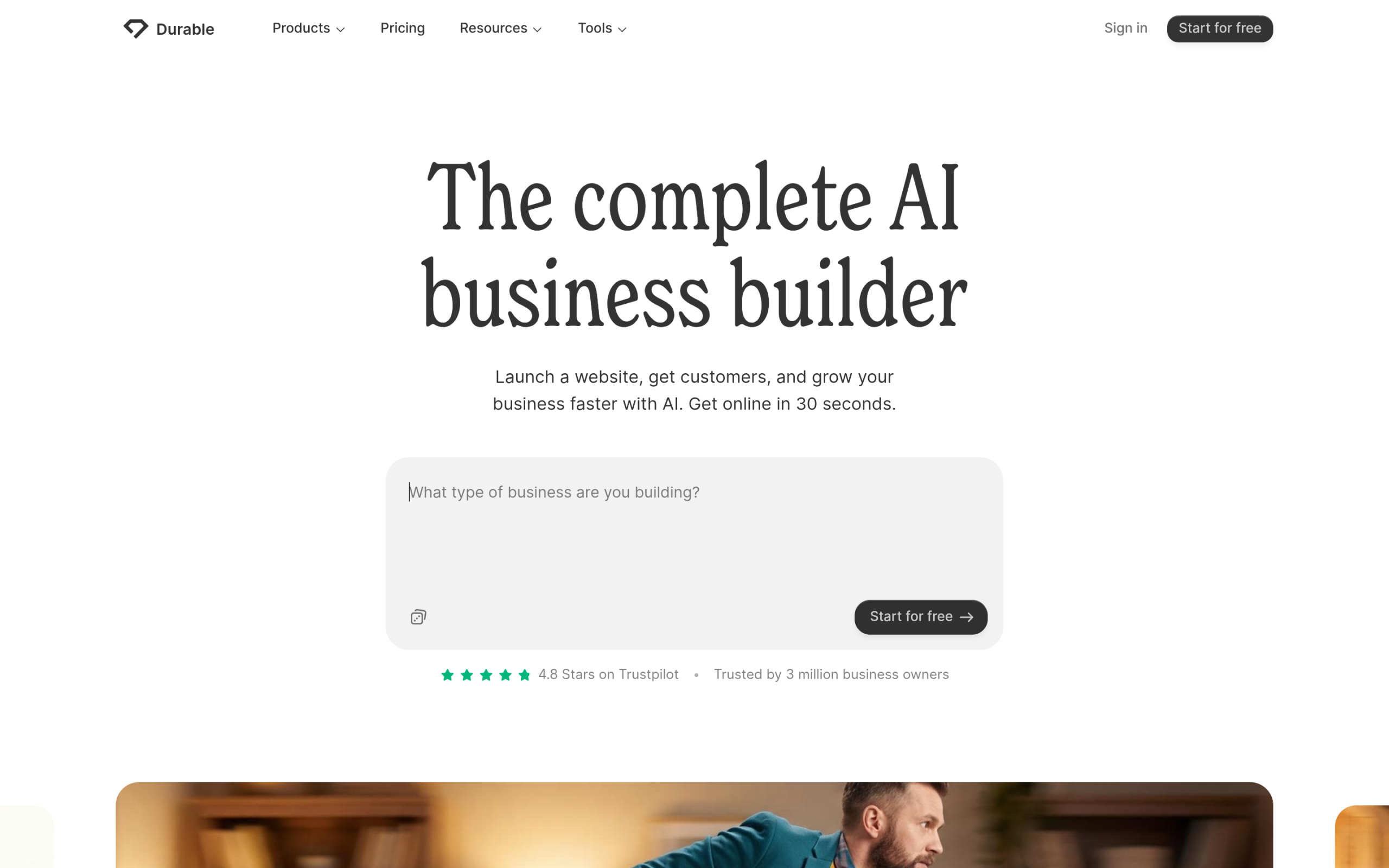
Short answer: yes, a version of one. You answer a few questions, what your business does, its name, the style you like, and the tool assembles a layout, writes placeholder copy, and drops in images. Wix AI, Hostinger, Durable, 10Web, Squarespace AI, Framer AI, and newer prompt-to-site tools like Lovable all work roughly this way. In the US alone, “ai website builder” is searched about 40,500 times a month, so the curiosity is not niche.
What you get is a starting point, not a finished, strategic website. The AI does not know your customers, your positioning, or which pages actually drive your revenue. It gives you a confident-looking draft. Whether that draft is enough depends on how far you need to take it.
Where AI website builders genuinely shine
Credit where it is due. For the right person, an AI builder is the fastest path from nothing to online that has ever existed.
- Speed to a first draft. Minutes, not days. If you need a simple presence by tonight, this is hard to beat.
- Zero technical barrier. No hosting setup, no plugins, no theme decisions. You describe, it builds.
- Good enough for simple needs. A one-page portfolio, a local service page, an event or coming-soon page. If the site is small and static, the AI draft may be most of the way there.
- Built-in hosting and basics. Domain, SSL, and hosting usually come bundled, so there are fewer moving parts to think about.
If that describes your project, you can stop reading and go try one. The rest of this comparison is for people who want the site to become something bigger.
Where AI website builders fall short
The speed comes with strings attached, and most of them only show up months later when they are expensive to undo.
- You do not own the platform. Your site lives inside the builder. If the company changes its pricing, its terms, or shuts down, your site and your options move with it.
- Portability is limited. Most AI builders make it hard to export a clean, working copy of your site. Leaving often means rebuilding from scratch somewhere else.
- Design hits a ceiling. The generated layout is fine until you want something specific. Then you run into what the builder will and will not let you change.
- SEO and markup control is shallow. You usually cannot touch the underlying code, so fine-grained control over how search engines and AI answer engines read your pages is limited.
- Cost adds up. The monthly plan looks cheap until you need more pages, e-commerce, or to remove limits. At scale, a locked platform can cost more than owned WordPress hosting.
That SEO point deserves a closer look, because it is the one most people discover too late. When you do not control your own markup, you cannot fully control how you show up in search or in AI-generated answers. On WordPress you own that layer, and tools like RankReady can structure your content and schema so AI search engines can actually read and cite your pages. An AI builder rarely gives you that level of access.
Also Read: SEO for AI-built and vibe-coded websites covers why AI-generated sites often struggle to rank, and how to fix it.
Why WordPress still runs 41.5% of the web
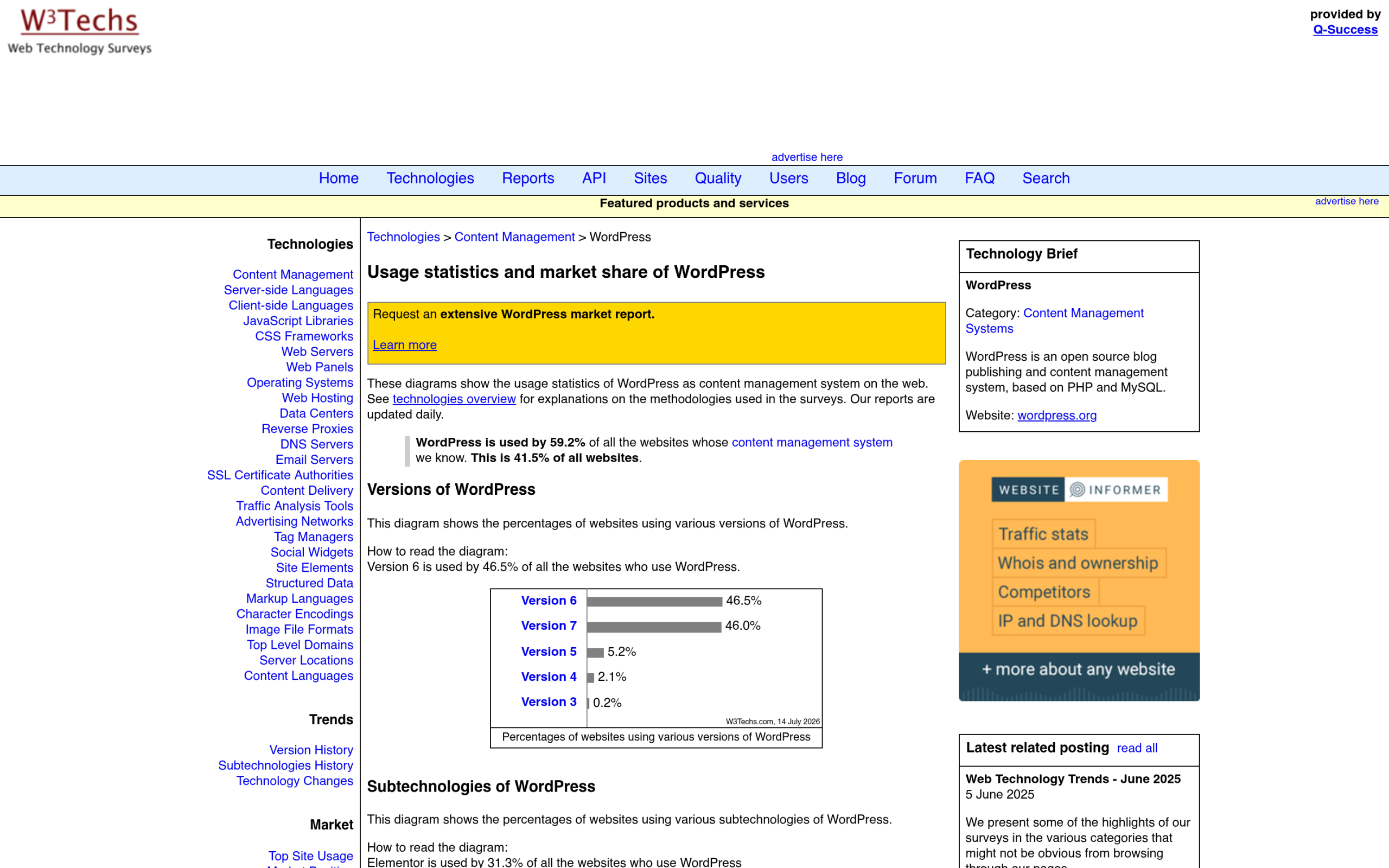
WordPress is not popular out of habit. According to W3Techs, WordPress powers 41.5% of all websites and 59.2% of every site whose content management system is known. That did not happen because it is the flashiest option. It happened because it solves the exact problems AI builders create.
- You own everything. Your content, your database, your files. You can move to any host at any time.
- No ceiling. Thousands of themes and plugins mean almost anything you can imagine is buildable, from a blog to a full store to a membership site.
- It grows with you. The same WordPress site can start as a one-pager and become a 500-page business without a migration.
- Deep SEO control. You control your markup, your schema, your redirects, and your structure. Search visibility is in your hands, not a vendor’s.
The classic objection is that WordPress is slower to get started and more technical. That was true. It is much less true now, which is the part of this comparison that has actually changed.
WordPress is getting AI too, so you do not have to choose
The framing of “AI builder vs WordPress” quietly assumes WordPress has no AI. That is out of date. The gap in setup speed, the one real advantage AI builders had, is closing fast.
- The block editor keeps getting smarter. Building pages by dragging blocks is now close to the AI-builder experience, without giving up ownership.
- AI plugins do the heavy lifting. There are WordPress plugins that draft copy, generate layouts, and even run AI chat and support on your site.
- Starter templates skip the blank page. Modern themes ship with hundreds of ready-made designs you can import and edit, which removes the “where do I even start” problem.
In other words, you can get the fast start of an AI builder and still keep the ownership of WordPress. You just assemble the pieces yourself, and the pieces have gotten very good.
Also Read: Best WordPress AI chatbot plugins shows how much AI you can add to a WordPress site you fully own.
The fast, owned path: a lightweight theme plus blocks
If the only reason to pick an AI builder was speed, the answer is to make WordPress fast to start too. That comes down to two things: a light, quick starter theme and a strong block library.
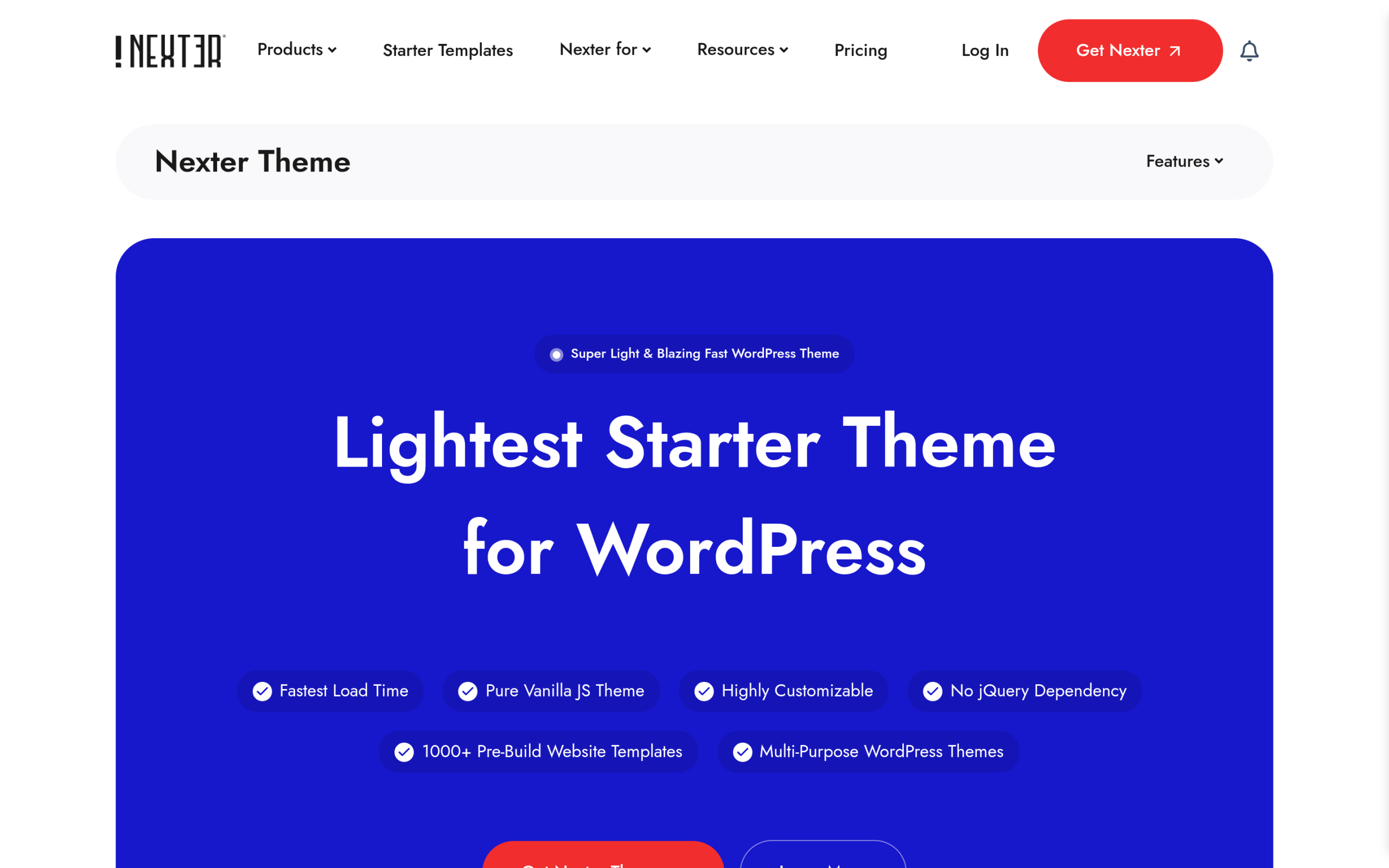
Nexter Theme is built for exactly this. It weighs less than 20Kb, uses pure Vanilla JS with no jQuery dependency, and ships with 1000+ pre-designed website templates and sections you can import and edit. It works with both Elementor and Gutenberg, so you are not locked into one way of building. You get the “skip the blank page” head start of an AI builder, on a site that is entirely yours.
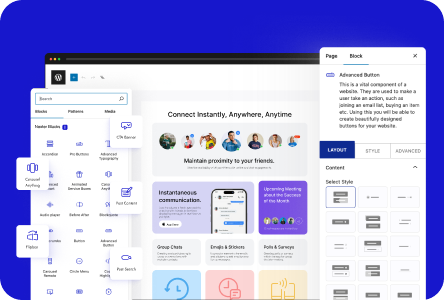
Pair it with Nexter Blocks, a library of 90+ Gutenberg blocks, and you can build custom sections right inside the native WordPress editor. This is the practical version of “you do not have to choose”: near-AI-builder speed, full WordPress ownership.
Also Read: How to create a landing page in WordPress walks through the fast, owned build in detail.
AI website builder vs WordPress: side by side
| Factor | AI Website Builder | WordPress |
|---|---|---|
| Time to first draft | Minutes | Hours (faster with a starter theme) |
| Ease for beginners | Very high | Moderate, improving fast |
| Ownership of site and content | Limited, platform-held | Full, you own everything |
| Portability (change host) | Hard, often a rebuild | Easy, move anytime |
| Design flexibility | Capped by the builder | Effectively unlimited |
| SEO and markup control | Shallow | Deep and complete |
| Cost over time | Rises as you add features | Predictable, you control it |
| Room to scale | Limited | Blog to enterprise, same site |
So which should you actually choose?
There is no single winner, only the right fit for your goal. Here is the honest decision framework.
- Pick an AI website builder if you need a simple site online today, you are not technical, the project is small and unlikely to grow, and you are fine living inside one platform.
- Pick WordPress if you want to own your site, plan to grow it, care about SEO and being cited in AI answers, or expect to add features like a store, memberships, or a real blog over time.
Most people who are serious about their website end up on WordPress, not because AI builders are bad, but because ownership and room to grow matter more the longer a site lives. The good news is you no longer trade away speed to get there. With a light theme and a solid block library, WordPress starts fast and stays yours. AI can absolutely help build your site. It just does not have to own it.
Suggested Reading
- SEO for AI-Built and Vibe-Coded Websites
- How to Migrate from Elementor to Gutenberg
- Best WordPress AI Chatbot Plugins
- What Is ChatGPT Atlas? The AI Browser, Explained
- AI Visibility Tools: Track and Earn Your Place in AI Answers
