



Key Takeaways
- ChatGPT Atlas is a web browser from OpenAI with ChatGPT built into it. OpenAI introduced it on October 21, 2025, and it downloads for macOS.
- The real shift for site owners is that people can get an answer inside the browser without ever clicking through to your website.
- Atlas reaches web content through OpenAI’s documented crawlers and agents, so the AI-visibility work you already do for ChatGPT applies here too.
- You cannot force an AI browser to quote you, but you can make your WordPress content easy to fetch, read, and cite: crawlable pages, clean markup, schema, and an llms.txt file.
- A plugin like RankReady shows which AI crawlers hit your pages and scores how ready each post is, so you measure the signal instead of guessing.
Say a visitor opens their browser, types a question about the kind of product or service you sell, and gets a full, tidy answer right there in a side panel. No list of blue links. No visit to your site. That is the promise, and the quiet worry, behind ChatGPT Atlas.
Atlas is OpenAI’s web browser with ChatGPT built into it. If you run a WordPress site, the interesting question is not whether you should download it. The question is what a browser like this does to the way people find, read, and quote your content. This guide explains what ChatGPT Atlas is in plain terms, then walks through what actually changes for site owners and what you can do about it.
What Is ChatGPT Atlas?
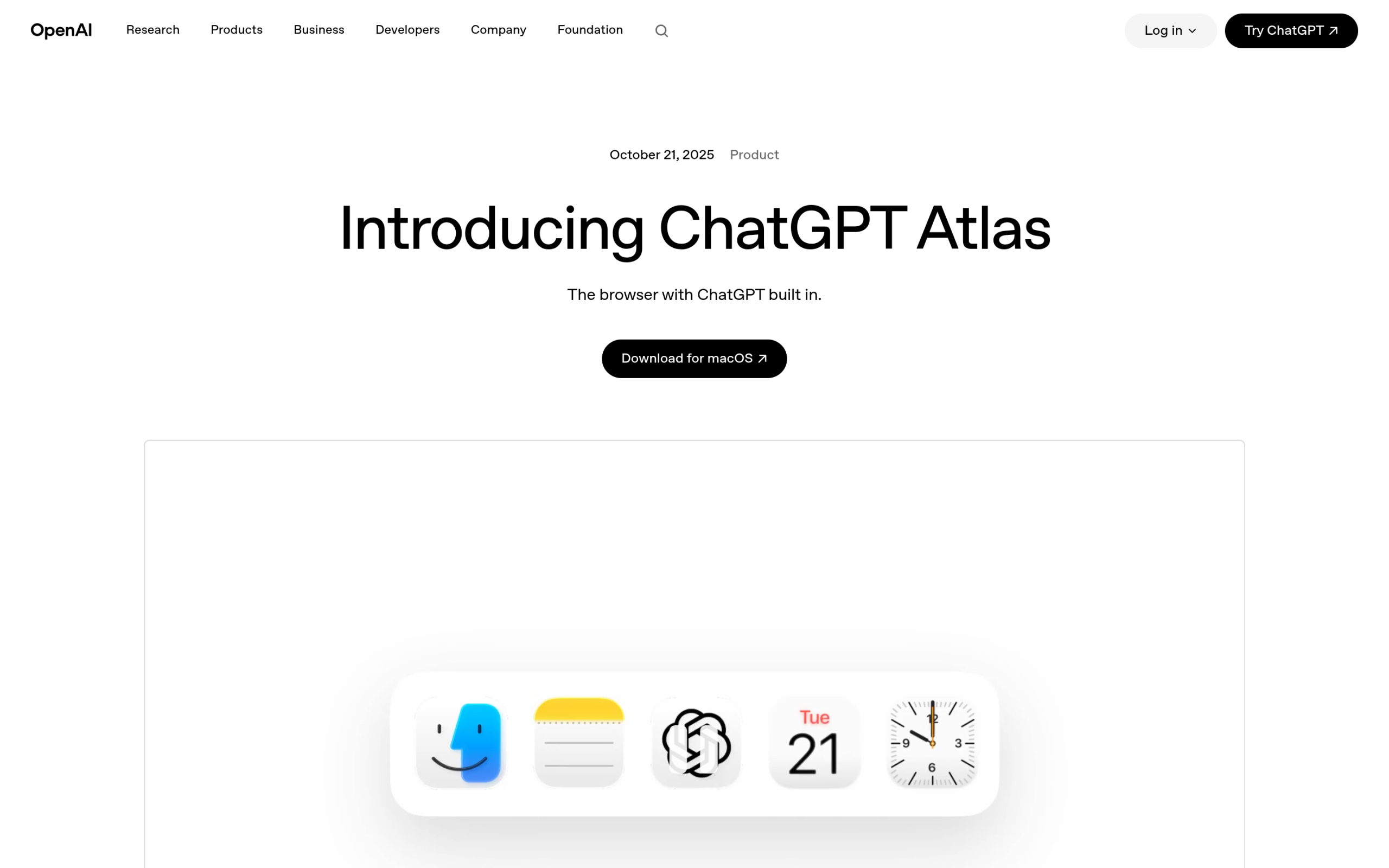
ChatGPT Atlas is a web browser made by OpenAI. On its launch page, OpenAI describes it in one line: “The browser with ChatGPT built in.” OpenAI introduced Atlas on October 21, 2025, and the site offers a “Download for macOS” button.
In everyday use, it looks and works like the browsers you already know. You have a tab bar, an address bar, and web pages that load the same way they do in Chrome or Safari. The difference is that ChatGPT is not a separate app you switch to. It sits alongside whatever page you are viewing, ready to answer questions, summarize what is on screen, or help you with a task without you leaving the page.
That is what people mean by an “AI browser.” The browser is no longer just a window onto the web. It is also an assistant that reads the web with you and, increasingly, on your behalf.
How an AI Browser Is Different From a Normal One
A traditional browser has a simple job. It fetches a page, displays it, and gets out of the way. You do the reading, the comparing, and the clicking. Search engines sit in the middle, sending you off to whichever pages look most relevant.
An AI browser adds a layer on top of that. In Atlas, ChatGPT can see the page you are on and answer questions about it, pull out the key points, or compare what you are reading against other sources. OpenAI also describes assistant features that can carry out multi-step tasks for you inside the browser, rather than you doing each click yourself.
The practical result is subtle but important. More of the reading and the deciding happens inside the browser, in a conversation, instead of on the individual web pages that supplied the information. For a site owner, that is the part worth paying attention to.
Why ChatGPT Atlas Matters for Your WordPress Site
For twenty years, the deal was straightforward. You published a good page, a search engine ranked it, and people clicked through to read it. Traffic was the reward for being useful.
An AI browser bends that deal. When ChatGPT answers a question from inside Atlas, it often does the useful part for the reader directly. Your content may still be the source behind that answer, but the visit, and the pageview, may never happen. This is the zero-click pattern that AI search has been pushing toward, now built into the browser itself.
So the goal quietly changes. It is no longer only about ranking a blue link. It is about being the source an assistant reads, trusts, and quotes. Being cited starts to matter as much as being clicked.
Also Read: OAI-SearchBot: the crawler that decides whether ChatGPT Search can find you, since the same visibility rules feed answers in Atlas.
How Atlas Actually Reaches Your Content
Here is the reassuring part. Atlas is not a mysterious new spider crawling the web in secret. It works through OpenAI’s existing, documented systems, so the crawlers and agents you should think about are the ones OpenAI already publishes.
- GPTBot is OpenAI’s training crawler. It gathers content that can help train models.
- OAI-SearchBot builds the search index that ChatGPT uses to find and surface sources.
- ChatGPT-User is the agent that fetches a specific page in real time, on a user’s behalf, while ChatGPT is answering a question.
That last one matters most for an AI browser. When a person asks Atlas about something and ChatGPT needs to check a live page to answer well, that fetch happens through documented OpenAI systems. If those systems can reach your pages, read them cleanly, and understand them, your content is in the running to be part of the answer. If they cannot, you are invisible to that whole surface.
Also Read: When an AI agent visits your WordPress site: how it finds, reads, and quotes you for a closer look at that fetch-and-cite loop.
What Site Owners Should Actually Do
You do not need a new strategy for every AI browser that launches. You need your WordPress content to be easy for AI systems to reach, read, and cite. Here is a practical checklist that pays off across ChatGPT, Atlas, and the rest.
- Do not accidentally block the AI bots you want. Check your robots.txt. It is common to block GPTBot or OAI-SearchBot by habit, then wonder why ChatGPT never surfaces your pages. Decide on purpose which crawlers you allow.
- Keep pages crawlable and fast. Clean HTML beats heavy, script-stuffed markup that machines struggle to parse. A block theme that outputs tidy semantic markup makes your content simpler for an AI system to read.
- Add structured data. Schema tells machines what a page is: an article, an FAQ, a product, a how-to. That understanding helps your content be used correctly in an answer.
- Publish an llms.txt file and clean markdown. These give AI tools a plain, readable map of your most important content instead of asking them to guess from a rendered page.
- Measure what is actually happening. You cannot improve what you cannot see. Knowing which AI crawlers hit which pages, and how ready each page is, turns guesswork into a checklist.
On WordPress, the reading and markup side is where a block-based setup helps. Nexter Blocks builds pages with clean Gutenberg markup, which is easier for a crawler to parse than page-builder div soup. For a full picture of the files and signals that matter, our guide to the 2026 AI-readiness stack for WordPress ties llms.txt, schema, MCP, and OKF together, and the note on markdown for AI agents explains why a plain-text version of your content is worth having.
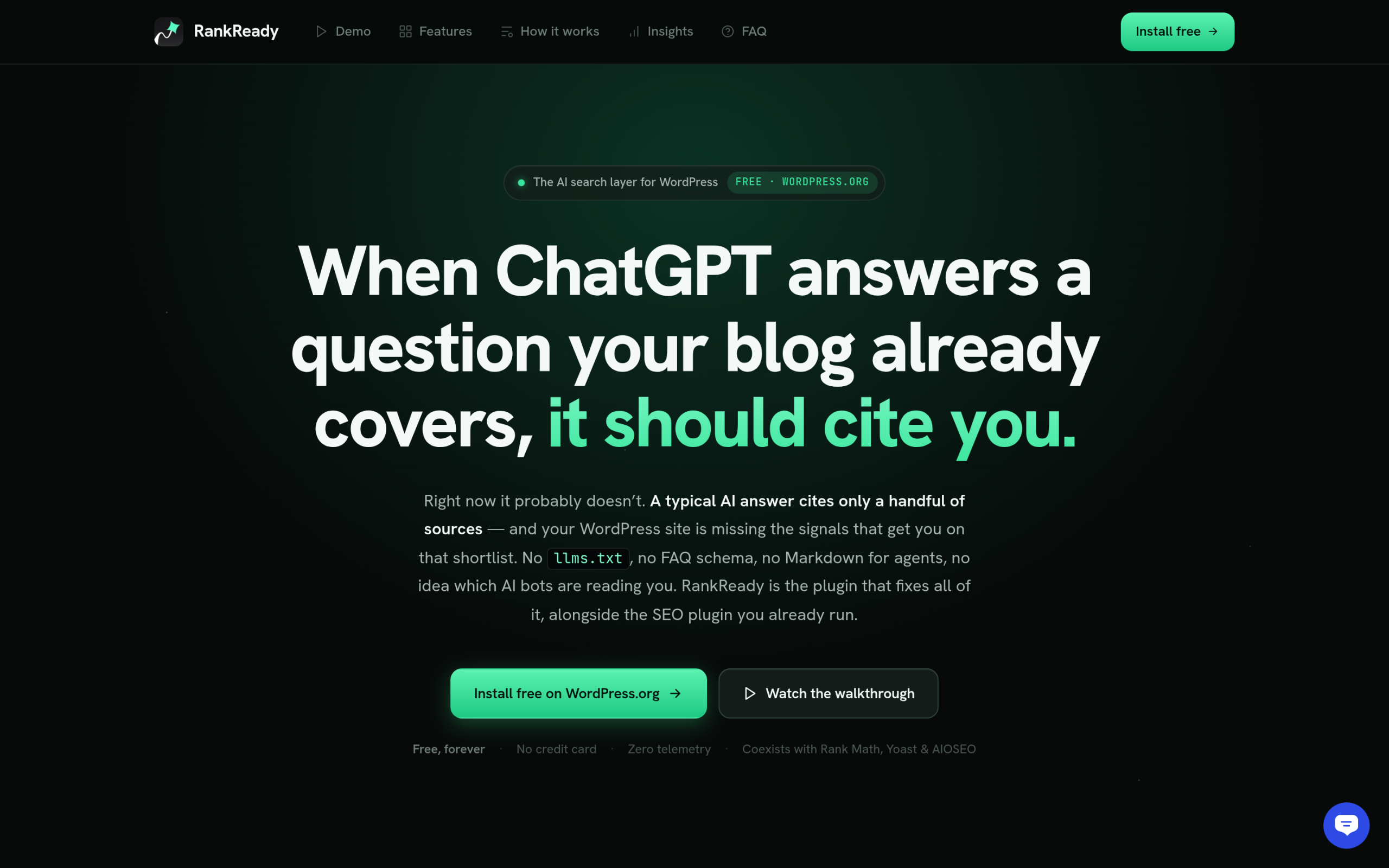
The measurement side is where a dedicated tool earns its place. RankReady is a free WordPress plugin that logs which AI crawlers indexed which pages (GPTBot, ClaudeBot, Google-Extended, Bytespider, CCBot and more), shows which pages were fetched mid-answer by citation-candidate bots like ChatGPT-User, OAI-SearchBot, PerplexityBot, Claude-Web and DuckAssistBot, and scores every post against 22 readiness signals. It also generates llms.txt, serves clean markdown, and adds schema. It is free, forever, under GPL-2.0-or-later, with no telemetry.
One honest caveat. No plugin, file, or tag can guarantee that ChatGPT or Atlas cites you. Anyone promising guaranteed AI citations is overpromising. What these steps do is make your content genuinely easy to reach and quote, and let you measure the signal instead of hoping.
Is ChatGPT Atlas Free, and Should You Care?
Downloading the Atlas browser is free, and you use it by signing in with your ChatGPT account. As with ChatGPT itself, some of the more advanced, assistant-style capabilities can depend on which ChatGPT plan you are on. If you want the exact current details, OpenAI’s own Atlas page is the place to confirm them, since the specifics change over time.
Should a site owner care? Not because you need to switch browsers. You should care because Atlas is one more sign of where discovery is heading: toward assistants that read the web and answer inside a single window. You do not have to chase every launch. You do have to make sure your WordPress content is easy for these systems to find, read, and cite. Do that once, and you are ready for Atlas and whatever AI browser ships next.
Suggested Reading
- OAI-SearchBot: The Crawler That Decides Whether ChatGPT Search Can Find You
- WebMCP for WordPress: Letting AI Agents Use Your Site, Not Just Read It
- Markdown Is Becoming the Language of AI Agents
- The 2026 AI-Readiness Stack for WordPress: llms.txt, Schema, MCP and OKF
- Bing Chat Is Now Copilot: What It Means for Getting Cited in AI Answers
