







Key Takeaways
- Rank Math and Yoast SEO are the two most-installed WordPress SEO plugins. Both handle titles, meta, schema, XML sitemaps, and content analysis well, so you will rank fine on Google with either one.
- Rank Math packs more into its free version (unlimited focus keywords, a redirection manager, 24 schema types, Search Console built in) and wins on features per dollar. PRO starts at $5.99/month billed annually.
- Yoast SEO is the simpler, more guided experience with a large support ecosystem. Premium is $118.80 per year and adds redirects, internal linking suggestions, and optimization for up to 5 keywords.
- Neither plugin is built to get your content read and cited by AI answer engines like ChatGPT, Perplexity, and Google AI Overviews. That is the gap RankReady fills, free.
- For most sites in 2026: pick Rank Math or Yoast for on-page SEO based on preference, then add RankReady for AI citations. They run together without conflict.
The first plugin I ever installed on a fresh WordPress site was an SEO plugin, and the first real argument I had with a teammate was about which one. He swore by Yoast because that is what he learned on. I had switched to Rank Math the year before and did not want to go back. We were both right, which is the annoying part. Years later the question still lands in my inbox most weeks: Rank Math or Yoast?
Here is the honest answer up front. For ranking on Google, both are excellent and the choice mostly comes down to taste. What almost nobody asks, and what actually matters more in 2026, is a third question: once you have picked one, is your content ready to be found and cited by AI answer engines? Neither Rank Math nor Yoast was built for that. Let us compare the two properly, then deal with the part they both leave out.
Rank Math vs Yoast at a glance
Both plugins do the core job: they let you control titles and meta descriptions, output structured data, generate XML sitemaps, and score your content as you write. The differences are in how much sits behind a paywall and how the experience feels. Here is the side by side.
| Feature | Rank Math | Yoast SEO |
|---|---|---|
| Focus keywords (free) | Unlimited | 1 (up to 5 in Premium) |
| Schema / structured data | 24 types free, 840+ in PRO | Automated default schema graph |
| Redirection manager | Free (301/302/307/410/451 + regex) | Premium only |
| 404 monitor | Free | Not included |
| Internal linking suggestions | Free + AI Link Genius in PRO | Premium only |
| Search Console integration | Built in (free) | Via integration |
| Readability analysis | Yes | Yes (a Yoast signature) |
| Free version | Generous | Solid |
| Entry paid price | PRO from $5.99/mo (annual) | $118.80/year |
What Rank Math does well
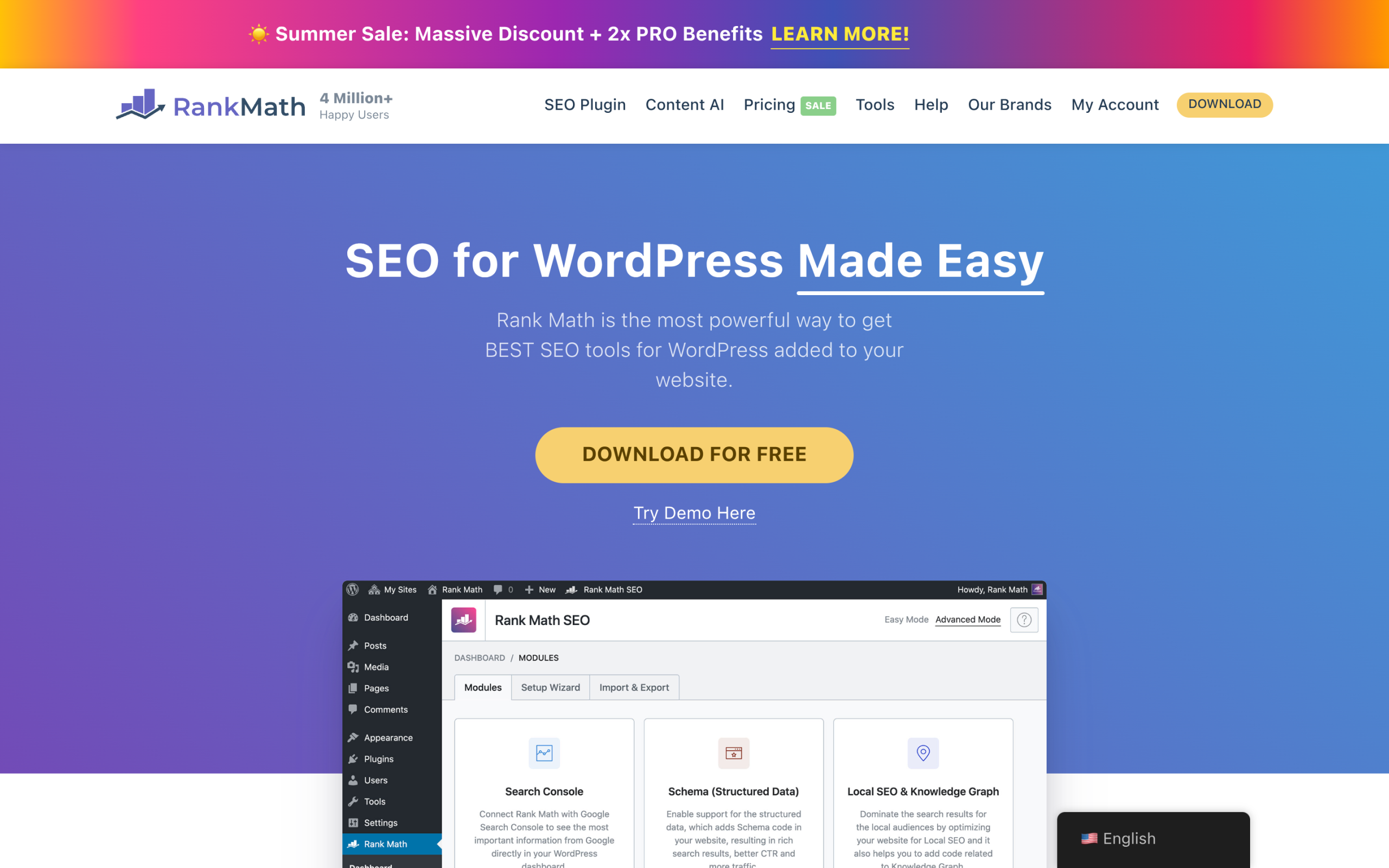
Rank Math has grown into the feature-heavy choice, with more than 4 million users and a 4.8 satisfaction rating across 7,439 reviews on WordPress.org. Its pitch is simple: put as much as possible in the free version. That free version includes a full redirection manager with 301, 302, 307, 410, and 451 types plus regex, a 404 monitor, 24 schema types, unlimited focus keywords, a role manager, and Google Search Console integration right inside the dashboard.
The setup wizard walks you through configuration step by step, and the on-page analysis checks your content against 30 known ranking factors as you write. If you like seeing every dial and toggle, Rank Math gives you the most surface area for nothing. PRO then adds 840+ schema types, advanced analytics with GA4, a keyword rank tracker, and AI features like AI Link Genius.
Also Read: Rank Math vs RankReady covers the traditional-SEO versus AI-citation split if Rank Math is the plugin you already run.
What Yoast SEO does well
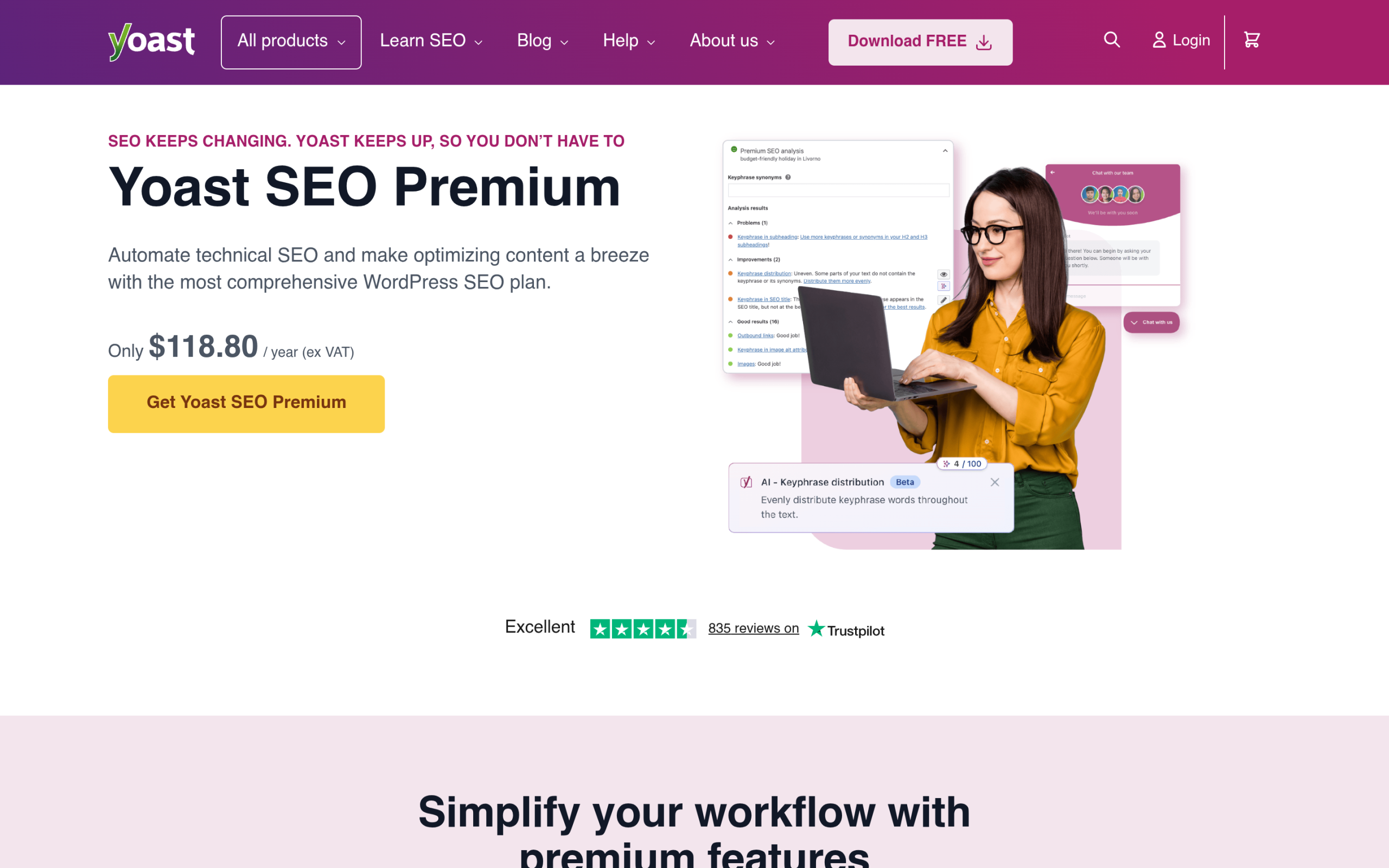
Yoast SEO is the original mainstream WordPress SEO plugin and still one of the most widely installed. Its strength is not feature count, it is guidance. The traffic-light readability and SEO analysis is the clearest in the category, which is why so many writers and smaller teams learn SEO on Yoast and never feel lost.
The free version covers real-time SEO and readability analysis, XML sitemaps, automated schema markup, technical SEO error detection, and keyword optimization guidance. Yoast SEO Premium, at $118.80 per year for one site, adds optimization for up to 5 keywords plus synonyms and related terms, a redirect manager, internal linking suggestions, AI-generated titles and descriptions, a social preview, 24/7 expert support, and bundled Local, Video, and News SEO plugins. If you want a plugin that holds your hand and a support line when you are stuck, Yoast is the safer pick.
Setup and ease of use
This is where personal taste decides it. Yoast leans on a guided configuration and famously readable green-yellow-red scoring, so a first-time user gets to a sensible setup quickly and always knows what to fix next. Rank Math also ships a setup wizard, but it exposes far more options along the way. Power users love that; beginners can find it busy.
If you manage one site and write your own content, Yoast feels calmer. If you run several sites or want maximum control without paying, Rank Math rewards the extra clicks. Neither is wrong. Migration between them is also straightforward, since both can import the other’s data, so you are not locked in.
Pricing compared
Both are free to start, and for many sites the free version is genuinely enough. The split shows up when you need premium features.
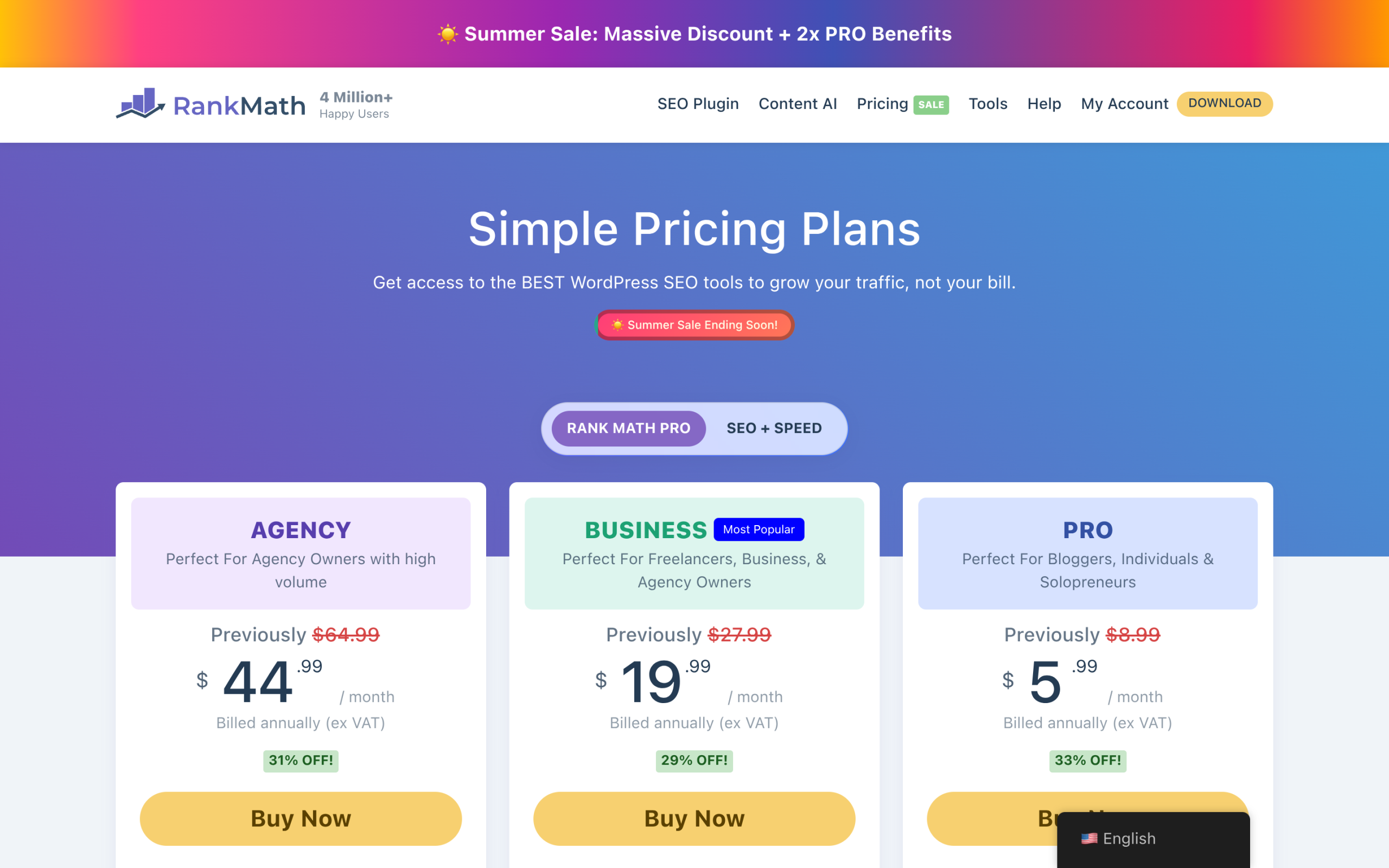
- Rank Math: PRO from $5.99/month billed annually (1,000 tracked keywords), Business at $19.99/month annually (20,000 keywords, 200 client sites), and Agency at $44.99/month annually (75,000 keywords, 750 sites). A Rank Math + WP Rocket bundle runs $10.99/month annually.
- Yoast SEO: Premium is $118.80 per year (ex VAT) for one website, with the Local, Video, and News add-ons bundled in.
On raw price, Rank Math’s entry PRO tier is cheaper and its free version does more, including redirects that Yoast keeps behind Premium. Yoast’s value is the bundled add-ons and the support. For a single content site, Rank Math free or PRO usually costs less for the same job.
The gap both Rank Math and Yoast leave open
Here is the part the usual comparison posts skip. Rank Math and Yoast are both excellent at one thing: helping Google rank your page. Both have started bolting on AI writing helpers, and Yoast Premium will generate titles and descriptions for you. But generating text with AI is not the same as being optimized to be cited by AI. That second job, answer engine optimization, needs three things a title-and-meta plugin does not provide.
- Crawler access control: the ability to allow or block individual AI crawlers like GPTBot, ClaudeBot, and PerplexityBot, rather than one blanket switch.
- Machine-readable delivery: an llms.txt file and a clean Markdown copy of each post, so a model can fetch your content without parsing a themed HTML page.
- Measurement: a way to see which AI bots actually fetched which pages, which posts get pulled as citation candidates, and how much referral traffic ChatGPT or Perplexity sent you.
That last one is the gap that stings. A green SEO score tells you Google should like your page. It tells you nothing about whether ChatGPT read it last week or whether your answer made it into an AI Overview. You cannot improve what you cannot see, and neither Rank Math nor Yoast shows you AI behavior.
Also Read: Answer Engine Optimization: The Complete WordPress Guide walks through the full AEO playbook if the idea is new to you.
Where RankReady fits
RankReady is a free, GPL-2.0 plugin from POSIMYTH Innovations built for exactly that missing layer. It does not replace Rank Math or Yoast, and it is documented to run alongside both (plus AIOSEO, SEOPress, The SEO Framework, and Slim SEO) without emitting duplicate schema. It needs WordPress 6.0+ and PHP 7.4+.
- AI crawler control: individual allow or block toggles for 31 AI crawlers.
- llms.txt generation: automatic
/llms.txtand/llms-full.txtfiles, plus a Markdown version of every post. - AI-ready schema: Article, Speakable, FAQPage, HowTo, ItemList, and Person schema that merges into your existing graph.
- Live AI crawler log: a timestamped record of which AI bots fetched which pages.
- Citation candidates and AI referral tracking: a leaderboard of fetched posts plus referral traffic from chatgpt.com, perplexity.ai, claude.ai, and more.
- Per-post readiness score: a 0 to 100 score and an agentic readiness scorecard for each post.
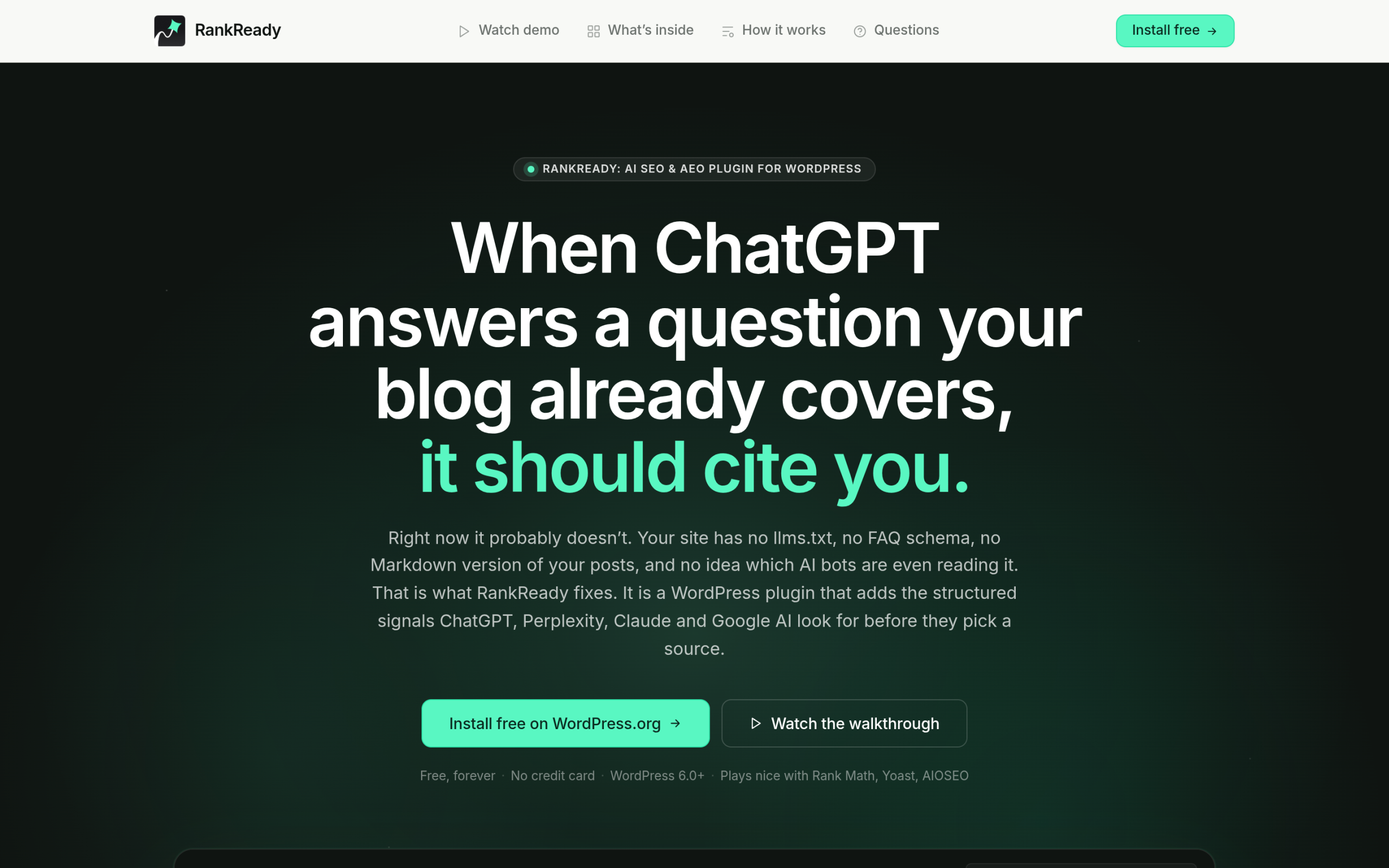
So the cost comparison is not really plugin against plugin. It is: keep the SEO plugin you prefer, and add a free AEO layer on top. That is the stack most sites land on once AI traffic starts showing up in their analytics.
The verdict: which should you choose?
- You want the most features for free, or you manage multiple sites: Rank Math. The free version does more, including redirects and unlimited keywords, and PRO is cheaper at entry.
- You want the simplest, most guided experience with strong support: Yoast SEO. The analysis is the clearest in the category and Premium bundles useful add-ons.
- You care about AI search, not just Google: whichever traditional plugin you pick, add RankReady. It fills the answer-engine gap both leave open, and it is free.
The Rank Math versus Yoast debate my teammate and I had years ago never really had a loser, and it still does not. Pick the on-page tool that fits how you work. The real change in 2026 is the second decision: ChatGPT, Perplexity, and Google AI Overviews are now a genuine discovery channel, and they read your site differently than Googlebot does. The free move is to add the AEO layer and start measuring whether the machines can see you.
Suggested Reading
- Rank Math vs RankReady: traditional SEO versus the AI-citation layer, head to head.
- SEOPress vs RankReady: the same comparison with SEOPress as the traditional plugin.
- 5 Best WordPress SEO Plugins Using AI: where Rank Math, Yoast, and RankReady sit in the wider field.
- Answer Engine Optimization for WordPress: the full AEO method, step by step.
- Do You Actually Need an AI SEO Tool?: what these tools do and how to choose.
