



If you have ever dropped a GIF onto a WordPress page and watched it turn blurry the moment someone opened it on a high-resolution phone, you already know the problem Lottie was built to solve. It gives you animation that stays sharp at any size, loads fast, and does not need a developer to wire it up.
Lottie is a JSON-based animation format you can add and customize right inside the Gutenberg editor, with no code required. This beginner guide explains what a Lottie animation actually is, how it compares to a GIF, where to find free files, and how to add one to your WordPress site step by step.
What Is a Lottie Animation?
A Lottie animation is a JSON-based animation file format that lets designers ship animations on any platform as easily as shipping a static image. Because the file describes the animation as vector data rather than a grid of pixels, it stays small and can scale up or down without pixelation.
Lottie started as an open-source library from Airbnb. It parses animations built in Adobe After Effects and exported as JSON with the Bodymovin plugin, then renders them natively on the web, Android, and iOS. That is why the same file plays smoothly across a website, a mobile app, and a landing page without extra conversion work.
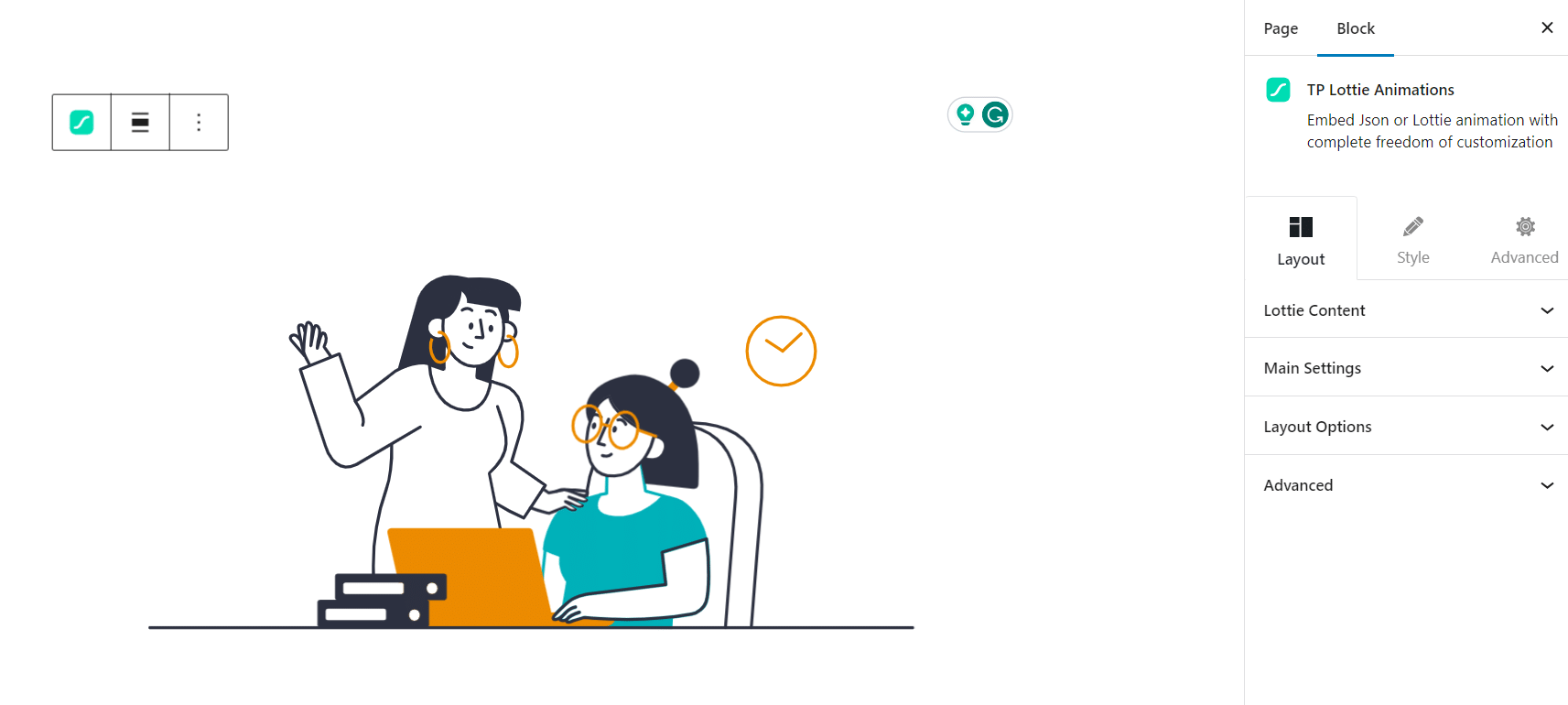
Example of a Lottie animation added with the Nexter Blocks LottieFiles Animation block.
What sets Lottie apart from a GIF or an MP4 is that vector structure. You can scale the animation to fill a hero section or shrink it to a tiny icon and it keeps the same crisp quality on every device. The format is also interactive, so an animation can respond to a scroll, a hover, or a click.
Why Use Lottie Animations on a WordPress Website?
Lottie gives you a way to add motion without the usual trade-offs of heavy media. Here is what makes it a good fit for a WordPress site.
- Lightweight, vector-based files: Because Lottie files are vector data, they are usually lighter than a comparable raster GIF and take up little disk space, so they are unlikely to drag down your load time.
- Scalable without quality loss: Vector data means you can scale a Lottie animation up or down without losing quality or resolution.
- Better engagement: Motion draws the eye. Use Lottie as animated icons, buttons, headers, and stickers to make a page feel more alive without overwhelming it.
- Fully customizable: You control how a Lottie animation behaves. Adjust its size, speed, and loop settings, and set it to respond to hover, click, or scroll.
- Cross-platform: The same Lottie file works across web, iOS, and Android, so you can reuse one animation everywhere without reworking it.
Lottie vs GIF: What Is the Difference?
GIFs are everywhere, so they are the natural comparison. The catch is how a GIF stores its animation. A GIF is a fixed grid of pixels using an old 8-bit compression method, so it cannot scale cleanly and cannot be recolored or edited after export. Stretch it and it turns blurry; add more frames and the file balloons.
A Lottie file stores the animation as vector instructions instead of pixels. That is why it scales without losing quality and generally stays lighter than the same animation saved as a GIF. Here is how the two formats line up.
| Feature | GIF | Lottie |
|---|---|---|
| Stored as | Pixels (raster, 8-bit) | Vector data (JSON) |
| Scaling | Blurs when enlarged | Stays sharp at any size |
| File size | Grows with frames and resolution | Usually lighter for the same animation |
| Editable after export | No | Yes (color, speed, loop, triggers) |
| Interactivity | Plays on a loop only | Responds to hover, click, and scroll |
| Best for | Quick memes and simple loops | UI, icons, hero and scroll animations |
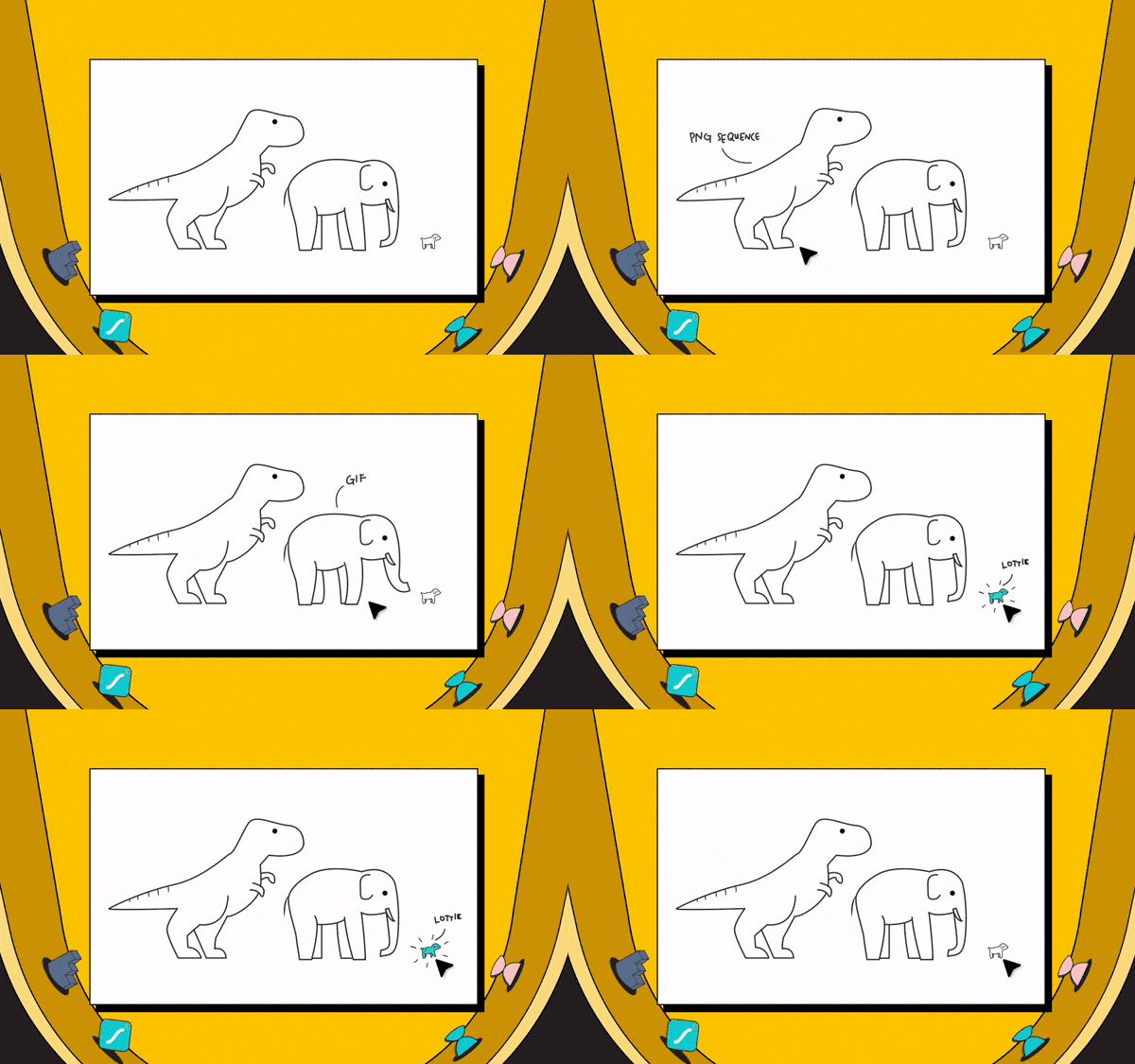
The practical takeaway is simple. For a static meme a GIF is fine, but for animations you want to scale, restyle, or make interactive on a website, Lottie is the more flexible and lighter choice.
Also Read: Top 20 Scroll Image Sequence Animation Inspirations for ideas on where motion adds the most impact.
Lottie Animation Examples and Use Cases
Now that you know what Lottie animations are, how can you actually use them? Here are some of the most effective ways to put Lottie to work on a WordPress site.
1. Web Interactions
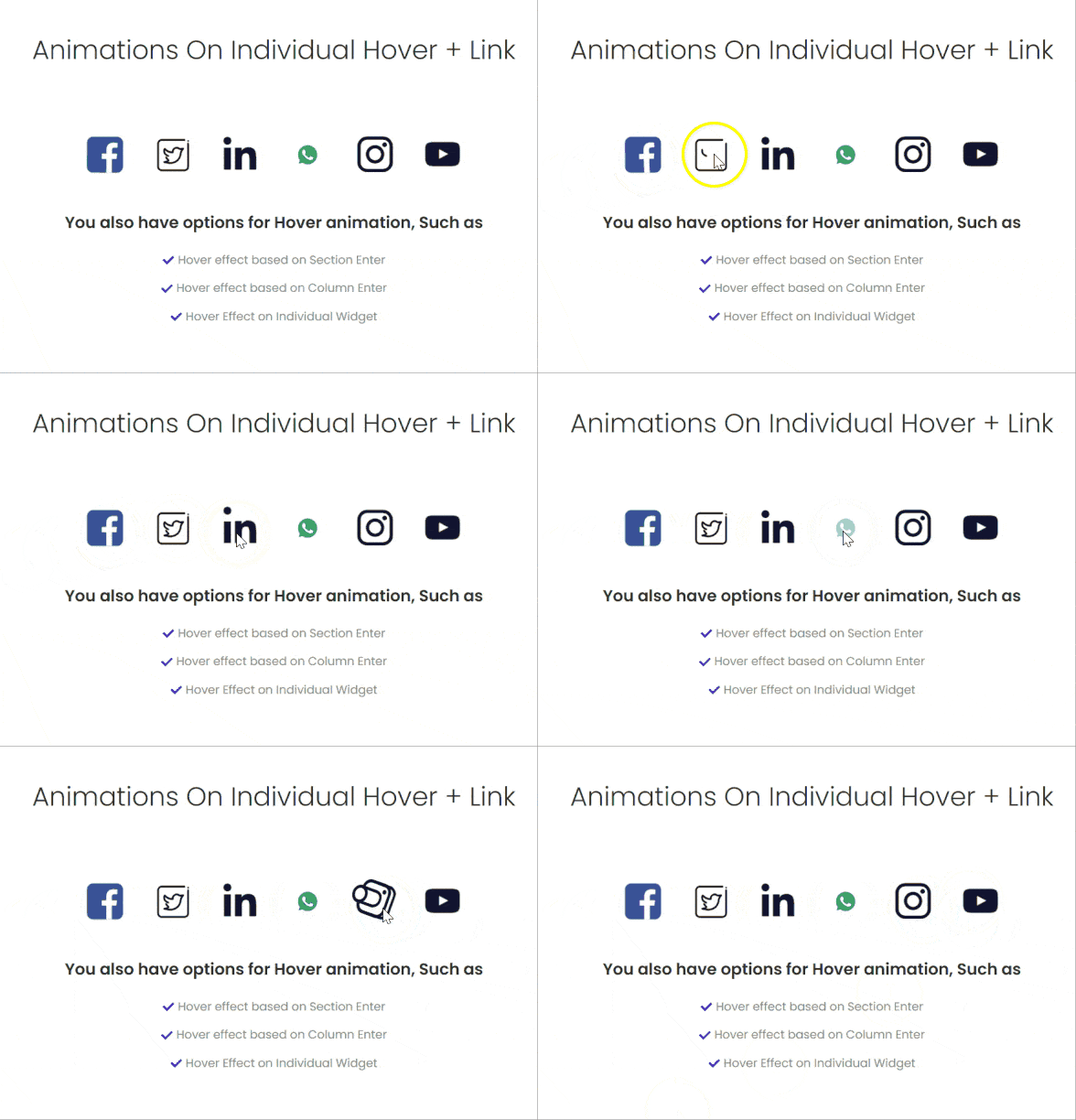
Lottie animations can bring a page to life in seconds. Use them on call-to-action buttons, subscribe forms, and social icons, or trigger an animation when a visitor scrolls to a section, so headers, footers, and menus feel interactive rather than static.
2. Hero Animations
A large animation at the top of a home page usually means a slower load. A Lottie hero animation lets you keep that visual impact while staying light on page weight.
3. Emojis and Stickers
If you enjoy working in Adobe After Effects, you can build your own stickers and emojis, export them as Lottie files, and drop them into your site or social posts as crisp, high-quality animations.
4. Basic UI Elements
Lottie is well suited to simple UI elements and logos. Its small size and clean resolution let you enhance an interface without hurting performance.
5. Element Animations
You can add motion to almost any element: hover effects on images, animated social icons, or scroll-triggered movement, all handled through a single Lottie file.
Where to Find Lottie Animations
You do not have to create Lottie animations from scratch. Plenty of libraries offer free and paid files you can use right away, and you can always build your own. Here is where to look.
1. LottieFiles
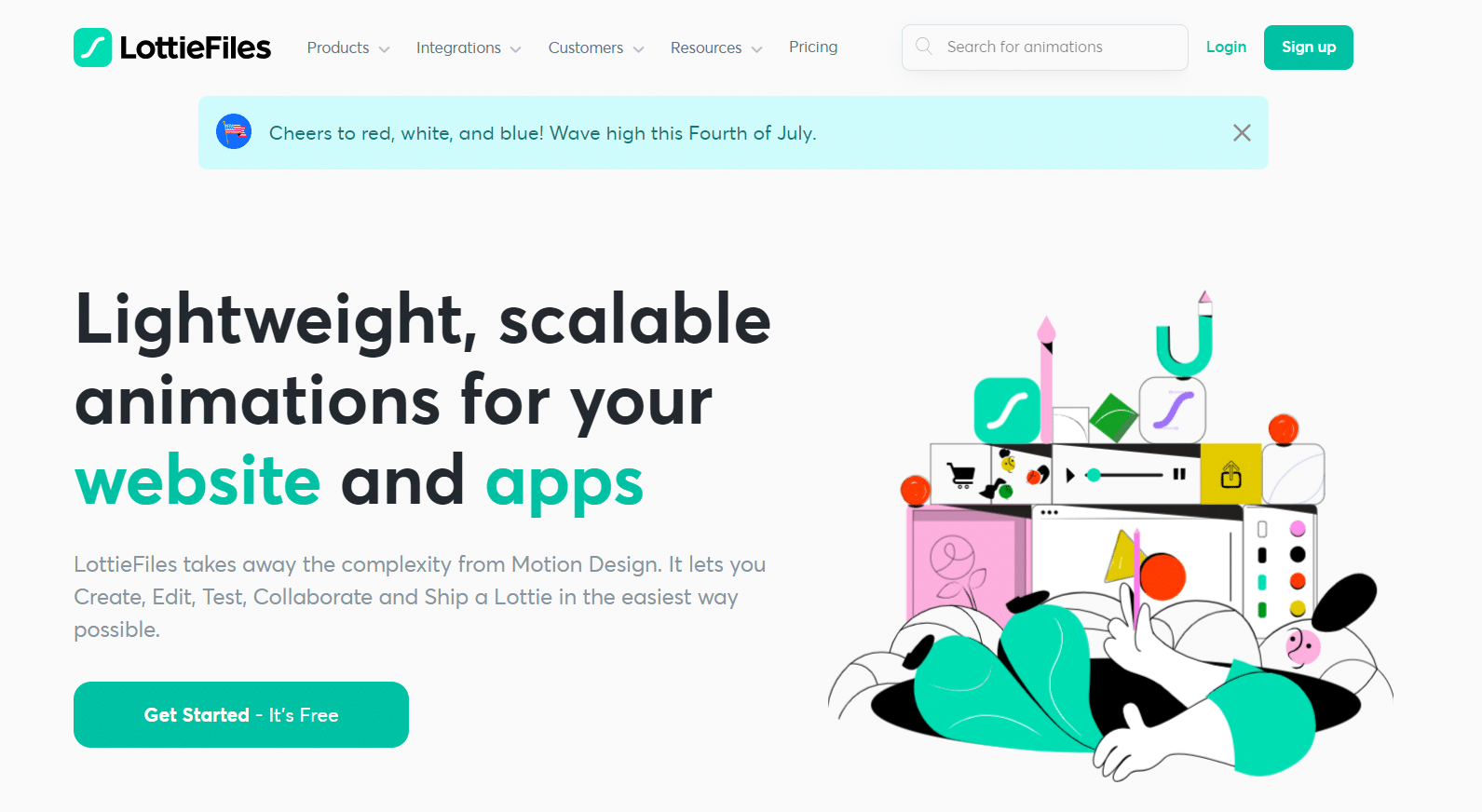
LottieFiles is the best-known source, with over 50,000 free Lottie animations plus a large paid catalog. You can preview a file, tweak its colors in the built-in editor to match your brand, and download it. Deeper design changes still need Adobe After Effects, where you can edit the animation and re-export it as a Lottie file.
2. Creattie
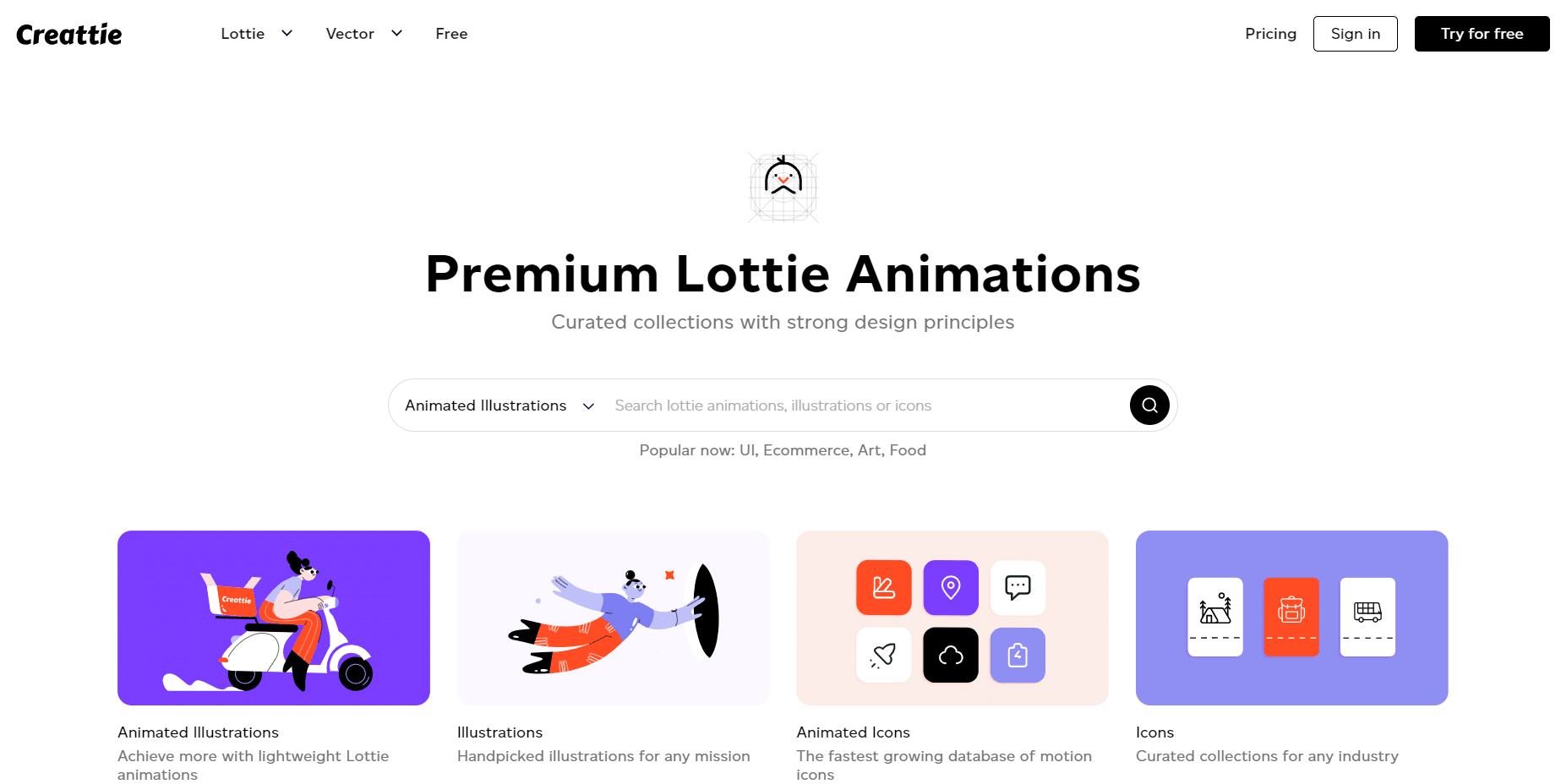
Creattie is a curated library aimed at businesses, with animations and illustrations made by professional designers. It is a good option when you want a consistent, polished style across your site.
3. IconScout
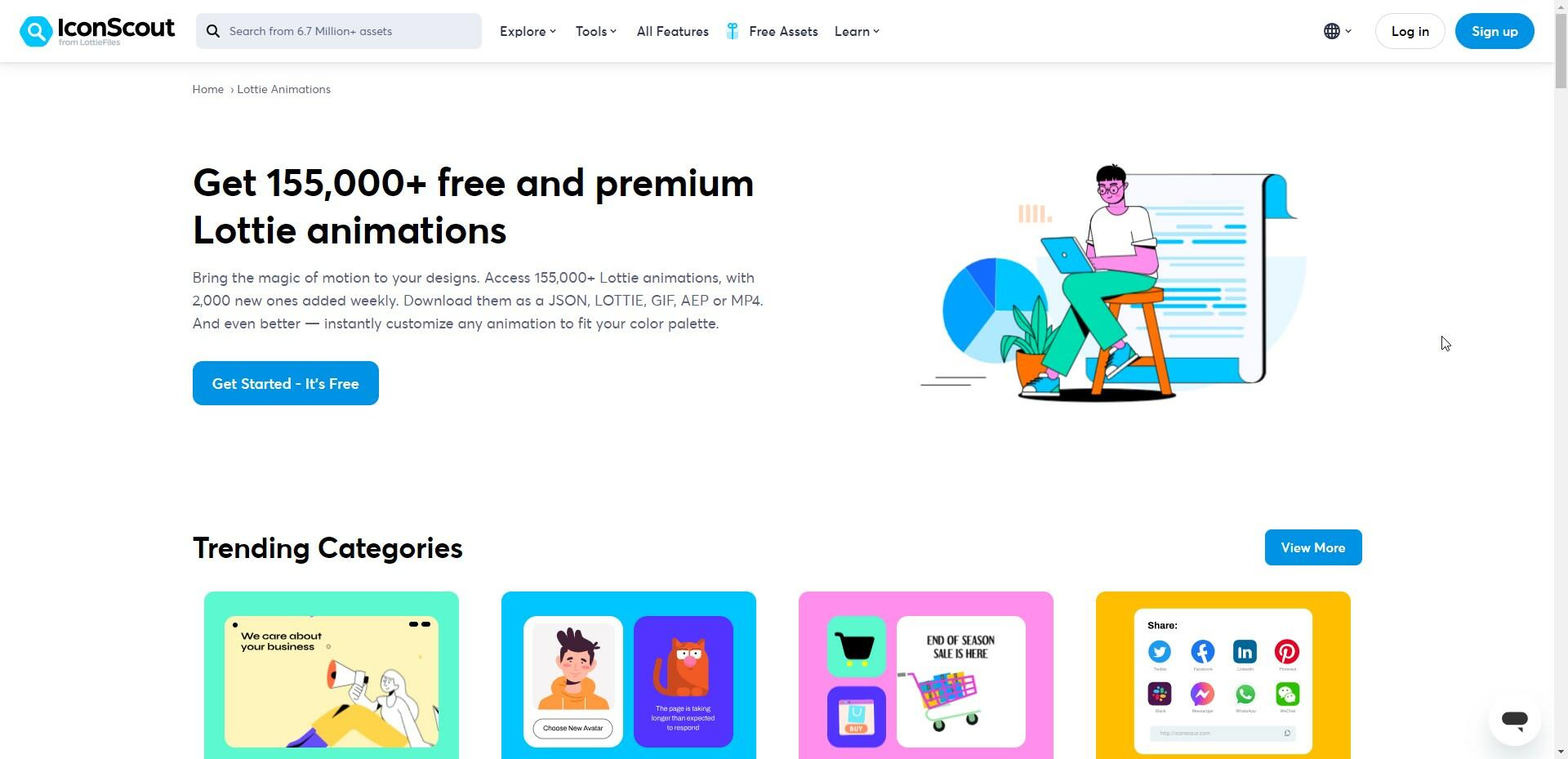
IconScout offers a large collection of icons, illustrations, 3D assets, and Lottie animations, along with strong search tools and an API for pulling assets into a website or app. It also runs a marketplace where creators sell their work.
Also Read: the best LottieFiles plugins for WordPress, compared side by side.
4. Create Your Own With Adobe After Effects
If you know your way around Adobe After Effects, you can build interactive animations from scratch. Design the artwork in Adobe Illustrator, animate it in After Effects, and customize it however you like.
Here is a video that walks through the process:

Once the animation is ready, export it as a Lottie file with a compatible plugin and add it to your site.
How to Add Lottie Animations in WordPress
Ready to add a Lottie animation to your site? Several WordPress plugins and blocks make it straightforward. One of the easiest is the LottieFiles Animations Block by Nexter Blocks, an all-in-one block that adds and customizes Lottie animations without any code.
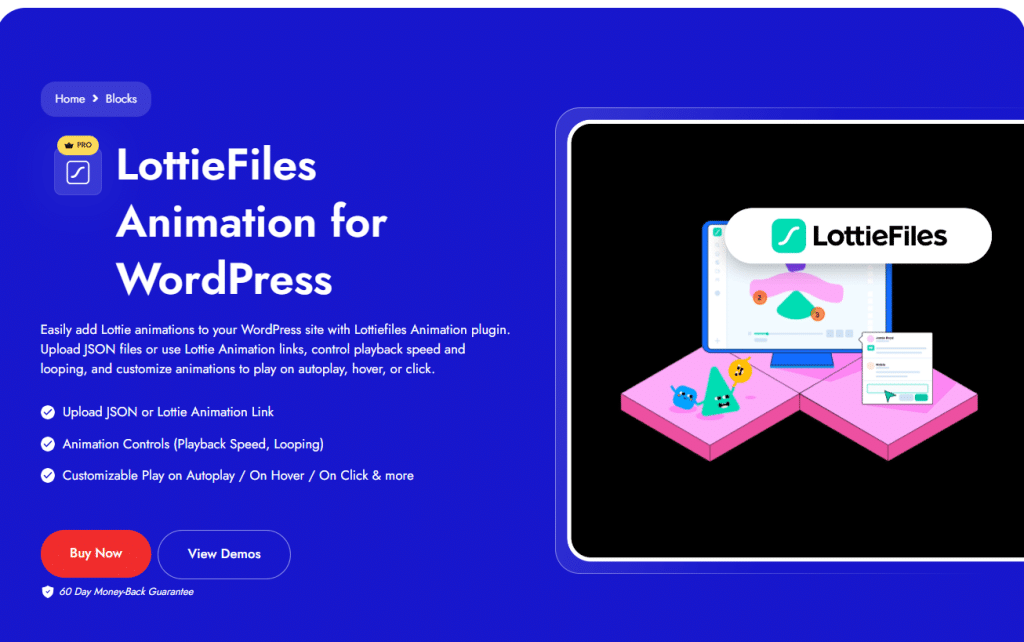
If you build with the Gutenberg editor, Nexter Blocks is one of the simplest ways to add Lottie animations. You get a range of design controls plus a direct connection to the LottieFiles library, so you can pick an animation and use it without leaving the editor.
With the LottieFiles Animation block you can set which action plays the animation, create loops, adjust play speed, add a description, and more. For example, you can play an animation on hover, trigger it on click with a delay, or use a mouse-in and mouse-out effect to encourage clicks.
Here is the step-by-step process to add a Lottie animation with Nexter Blocks:
Step 1: Install and Activate Nexter Blocks
From your WordPress dashboard, go to Plugins > Add New, search for Nexter Blocks, then install and activate it. Open the Blocks section and turn on the LottieFiles Animation block.
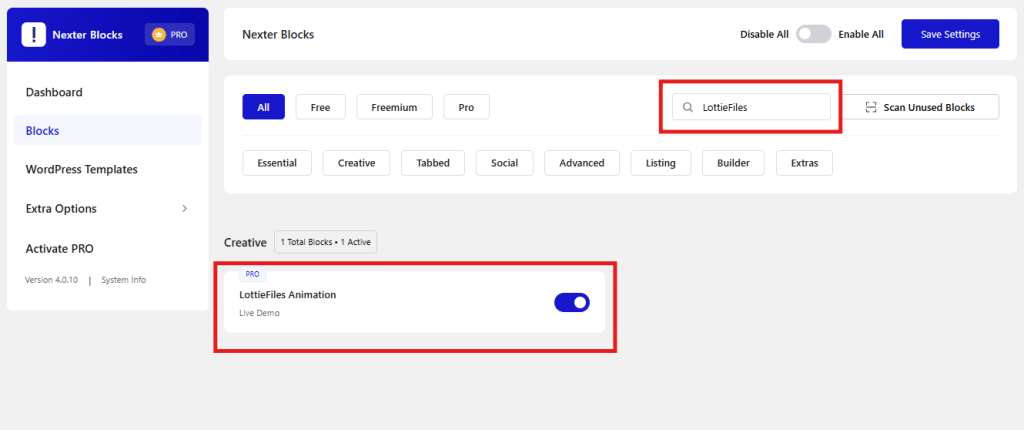
Step 2: Pick an Animation From the LottieFiles Library
With the LottieFiles Animation block enabled, add it to your Gutenberg editor.
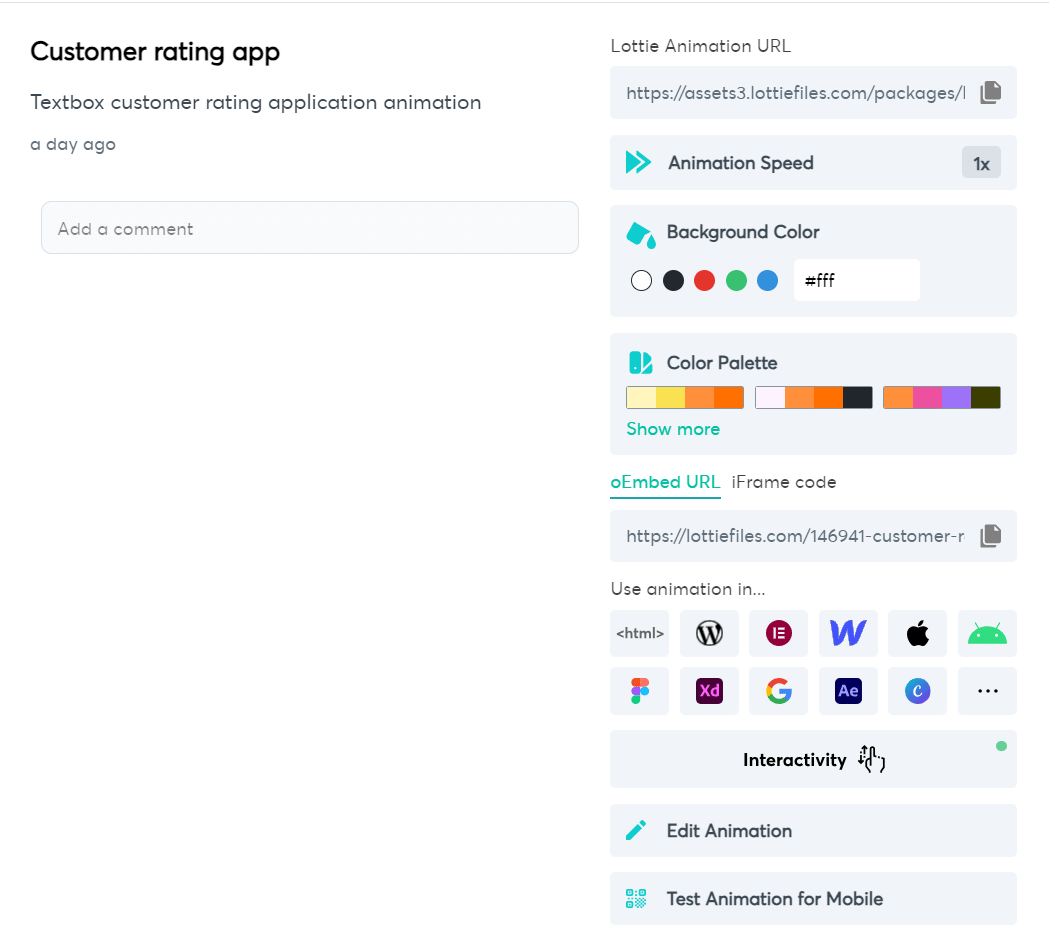
Next, head to the LottieFiles library and choose an animation. A pop-up lets you customize details like background color, color palette, and animation speed.
Step 3: Add the Lottie Animation to Your Nexter Blocks Block
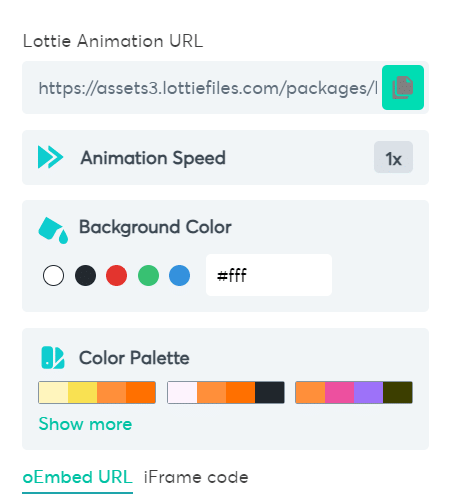
Once you are happy with the animation, copy its Lottie Animation URL.
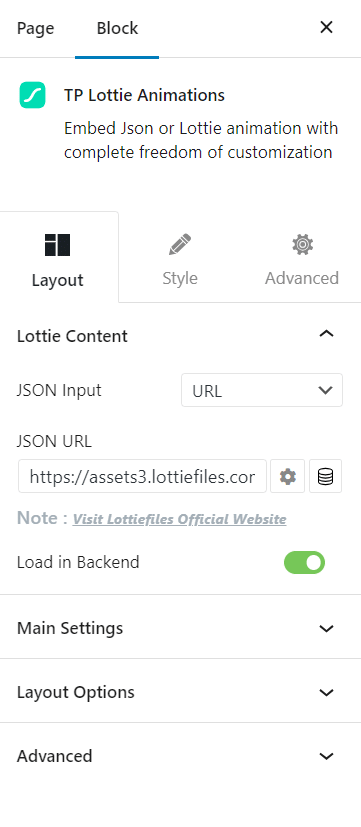
In the Gutenberg editor, open Lottie Content in the block settings, set the JSON input to URL, and paste the Lottie Animation URL into the JSON URL field.
Step 4: Customize the Animation
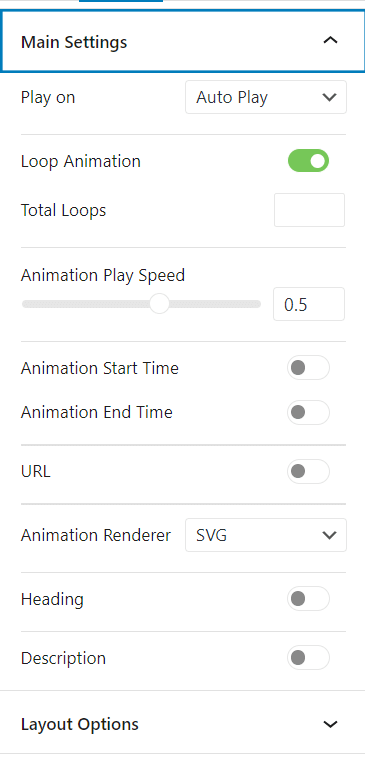
Under Main Settings you get full control over how the animation looks and behaves. Set the speed, turn on looping, and choose a play mode: default, autoplay, on click, scroll parallax, hover, and more. You can also set the loop count and the start and end times.
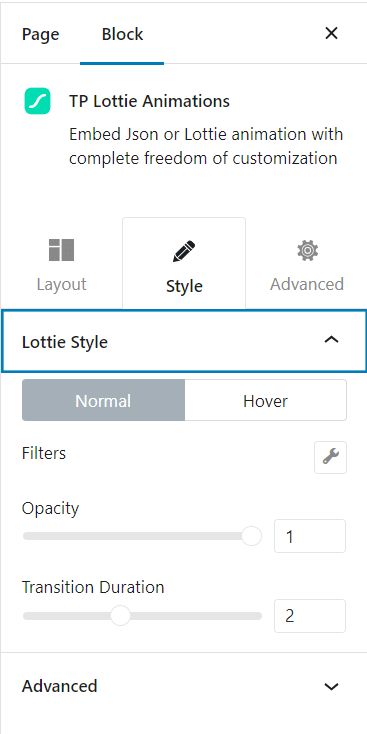
In the Style section you can adjust the opacity and the transition duration.
With the LottieFiles block from Nexter Blocks, you can design a polished, interactive experience for your visitors.
Prefer to watch? Here is a quick video tutorial of the steps above:

Wrapping Up
Lottie animations are one of the easiest ways to make a WordPress site feel more engaging. From social icons and logos to stickers and scroll effects, they add personality without the weight and blur of a GIF. The simplest way to use them is a block like the LottieFiles Animations by Nexter Blocks, which lets you add and fully customize any Lottie animation right in the Gutenberg editor.
If you want motion that stays sharp and loads fast, that is all you need to get started.
Suggested Reading
- How to add scroll animation in WordPress
- How to add a parallax effect in WordPress
- Gutenberg vs Elementor: which builder to choose
- What is Gutenberg, the WordPress block editor
