








Picture the moment you run your site through PageSpeed Insights and watch the loading bar crawl past four seconds. Every extra second is visitors leaving before your page even paints, and Google reading that slowness as a reason to rank you lower. A caching plugin is the fastest fix for that problem, because it lets WordPress hand over a ready-made copy of each page instead of rebuilding it from scratch on every visit.
The catch is that the “best” cache plugin is not a single answer. It depends on where your site is hosted and how much you want to spend. A free plugin that is unbeatable on one type of server does almost nothing on another. So this guide does two things: it compares the five caching plugins worth your time in 2026 with their real, current pricing, and it shows you how to match one to your setup instead of guessing.
Here are the five we will cover: WP Rocket, FlyingPress, NitroPack, WP Fastest Cache, and LiteSpeed Cache. All facts and prices below were checked against each plugin’s own source in July 2026.
What Caching Actually Does (in Plain Terms)
Every time someone opens a normal WordPress page, the server runs PHP, queries the database, assembles the HTML, and sends it back. That work happens again for the next visitor, and the next. Caching short-circuits it: the first visit builds the page, saves a static copy, and every visitor after that gets the saved copy in a fraction of the time.
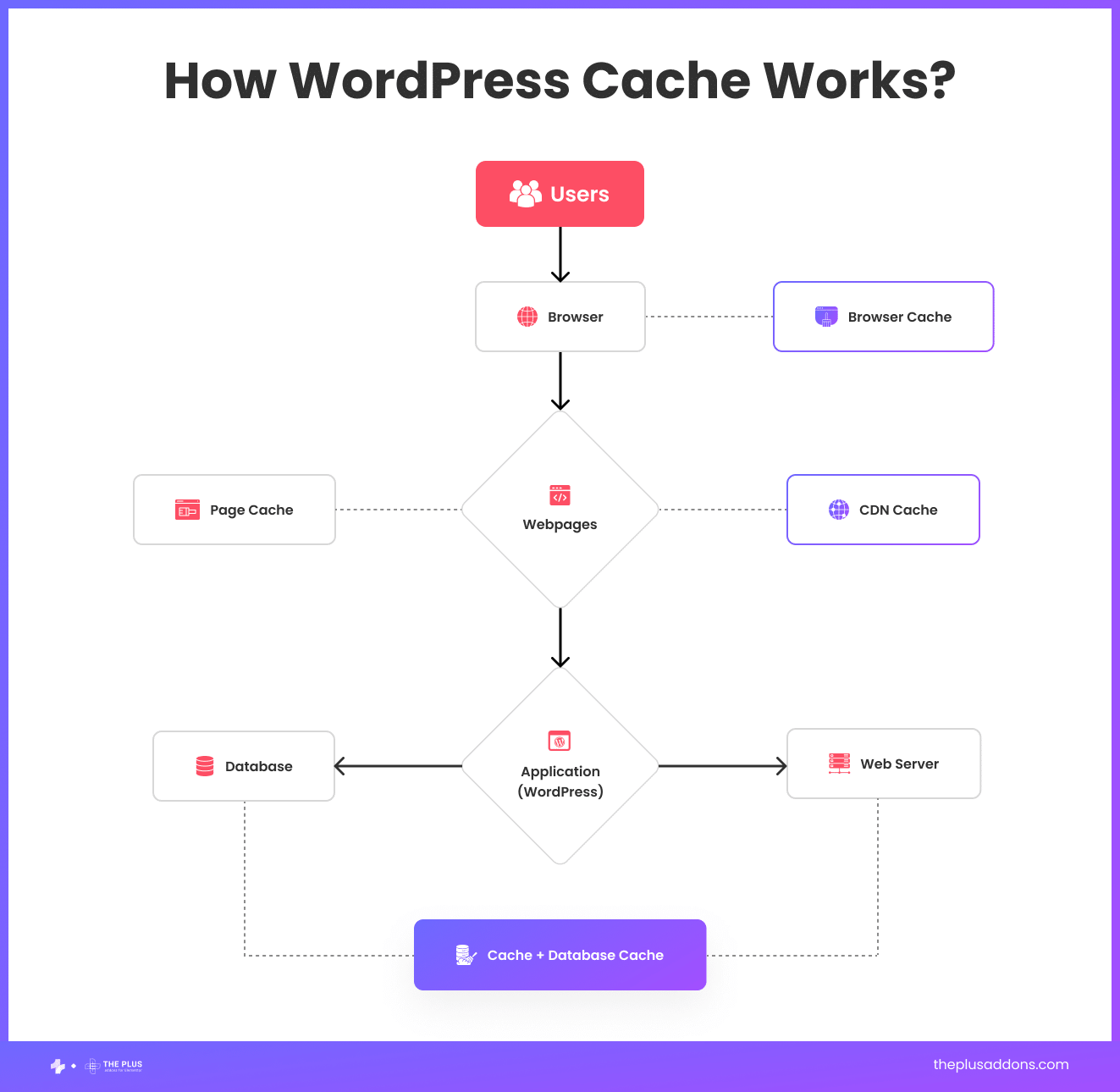
Good caching plugins do more than store pages. They also minify CSS and JavaScript, defer or delay scripts that block rendering, preload key files, and often plug into a CDN. Those extras are where the real Core Web Vitals gains come from, and they are the main reason the plugins below differ in price.
Also Read: How to pass Core Web Vitals on a block-theme site walks through the metrics caching helps with, and the ones it does not.
When Do You Actually Need a Caching Plugin?
If your host already runs full-page server caching (many managed WordPress hosts do), a plugin may add little on the page-cache front, though its optimization features still help. If you are on standard shared or cloud hosting with no built-in caching, a caching plugin is one of the highest-impact changes you can make. Either way, the rule that matters most: run one caching plugin, never two. Two plugins fight over the same static files and usually make a site slower or broken, not faster.
The 5 Best WordPress Cache Plugins Compared
1. WP Rocket – Easiest Premium All-Rounder
WP Rocket is the plugin most people mean when they say “just install a cache plugin.” It applies roughly 80% of web-performance best practices automatically the moment you activate it, so a beginner gets a real speed jump without touching a single setting. On top of page caching it handles LazyLoad, preloading, Delay JavaScript execution, and Remove Unused CSS, plus a built-in CDN option.
Pricing: premium only, no free version. Single $59/year (1 site), Plus $119/year (3 sites), and Multi $299/year (up to 50 sites), all with a 14-day money-back guarantee.
Best for: anyone on Apache or Nginx hosting who wants strong results with the least effort and does not mind paying for it.
Worth knowing: there is no free tier, so you are committing budget from day one. It works on any host, which is exactly why it is popular, but on LiteSpeed servers a free plugin can match a lot of it.
2. FlyingPress – Built Around Real-User Speed
FlyingPress is the enthusiast favorite for a reason: it is engineered around how fast pages feel to actual visitors, not just lab scores. It ships more than 30 optimizations beyond basic caching and keeps configuration light, so you are not drowning in toggles. It currently holds a 4.7 out of 5 on Trustpilot across 300-plus reviews.
Pricing: paid only, with a 14-day free trial. Starter $59/year (1 site), Pro $109/year (3 sites), Business $229/year (25 sites), and Unlimited $279/year (unlimited sites).
Best for: owners who care about Core Web Vitals and want a modern, lean setup without a giant settings screen.
Worth knowing: like WP Rocket it is subscription-based, and its edge is in fine-grained delivery tuning that casual users may never notice.
Also Read: How to remove unused JavaScript in WordPress pairs well with these plugins’ script-delay features for a lower total page weight.
3. NitroPack – Cloud-Powered, Set and Forget

NitroPack takes a different approach: it is a cloud service with a WordPress plugin front-end. Caching, image optimization, CSS and JavaScript optimization, and CDN delivery all happen on NitroPack’s infrastructure, so your own server does less work. That makes it genuinely hands-off and popular with WooCommerce and high-traffic sites.
Pricing: freemium, metered by pageviews. Free ($0, 1 site, 1,000 pageviews/month, 1GB CDN bandwidth), Starter $7/month, Plus $18/month (40,000 pageviews), and Pro $83/month (540,000 pageviews), billed annually, with a custom Agency tier.
Best for: store owners and busy sites that want maximum speed with minimal setup and are fine offloading optimization to a third party.
Worth knowing: because pricing is tied to pageviews, your cost rises as your traffic grows, and your performance depends on NitroPack’s cloud rather than living entirely on your own site.
4. WP Fastest Cache – Simplest Free Starting Point

If you want something free, dead-simple, and hosted right in the plugin directory, WP Fastest Cache is the easiest on-ramp. It generates static HTML files, minifies code, and enables compression through a settings page anyone can understand. It has more than 1 million active installs and a 4.9 out of 5 rating across 4,220 reviews, and it currently sits at version 1.4.9, tested up to WordPress 7.0.1.
Pricing: free core plugin, with a one-time Premium upgrade for advanced features like image optimization and render-blocking removal.
Best for: smaller sites and beginners who want a free, no-fuss cache without a subscription.
Worth knowing: the free version covers the basics well, but the more advanced speed features sit behind the Premium upgrade.
5. LiteSpeed Cache – Unbeatable Free (On the Right Server)
LiteSpeed Cache is the most-installed option here by a wide margin: more than 7 million active installs, a 4.8 out of 5 rating from 2,760 reviews, on version 7.8.1 from LiteSpeed Technologies. It is completely free, and it bundles an aggressive optimization suite plus access to the free QUIC.cloud CDN.
Pricing: free, with optional paid QUIC.cloud credits for heavier CDN and image-optimization usage.
Best for: anyone hosted on a LiteSpeed or OpenLiteSpeed server, where its server-level cache is genuinely best-in-class and free.
Worth knowing: the headline server cache needs a LiteSpeed-based server to work. On standard Apache or Nginx hosting you still get the optimization features, but not the full-page server cache that makes it famous. Check your host before choosing it as your main cache.
Quick Comparison: Which Cache Plugin Fits You
| Plugin | Type | Free tier? | Best for | Starting price |
|---|---|---|---|---|
| WP Rocket | Plugin (any host) | No | Easiest premium all-rounder | $59/year |
| FlyingPress | Plugin (any host) | No (14-day trial) | Real-user Core Web Vitals | $59/year |
| NitroPack | Cloud service + plugin | Yes (1,000 views/mo) | Hands-off, high-traffic sites | $7/month |
| WP Fastest Cache | Plugin | Yes | Simple free starting point | Free |
| LiteSpeed Cache | Plugin (server-level) | Yes | LiteSpeed-hosted sites | Free |
How to Choose (Start With Your Server, Not the Rating)
The single fastest way to narrow this list is to check what server your host runs. If it is LiteSpeed or OpenLiteSpeed, install LiteSpeed Cache first: it is free and its server-level cache is hard to beat. If you are on standard Apache or Nginx and want the least effort, WP Rocket or FlyingPress will give you the strongest results for a yearly fee.
Budget is the next filter. Want to spend nothing? Start with WP Fastest Cache, or LiteSpeed Cache if your server supports it. Running a store or a high-traffic site and happy to offload the work? NitroPack’s cloud model is built for that, as long as you are comfortable with pricing that scales with pageviews. And whichever you pick, keep only one caching plugin active at a time and re-test with PageSpeed Insights after setup so you can see the actual difference.
One Thing Caching Cannot Fix: A Heavy Foundation
Caching speeds up how quickly a page is delivered. It does not reduce how much there is to deliver. If your theme loads a large CSS file, jQuery, and a stack of scripts on every page, a cache plugin is compensating for weight that did not need to be there.
That is why a lightweight foundation and a caching plugin work best together. The Nexter Theme, for example, is described by its makers as “Less than 20Kb” and “jQuery FREE,” coded in “pure Vanilla JS with no jQuery dependency.” Start from something that light and your caching plugin has less to paper over, which is the whole point of the pairing. It is not a caching tool, and it does not replace one; it just gives caching less work to do.
Suggested Reading
- 20+ Tips to Speed Up WordPress Websites
- Gutenberg Core Web Vitals: Speed Up a Block-Theme Site
- How to Remove Unused JavaScript in WordPress
- How to Host Google Fonts Locally in WordPress
- 7 Best WordPress Hosting Providers Compared
FAQs on Best WordPress Caching Plugins
What is a caching plugin for WordPress?
A caching plugin for WordPress helps to speed up your website by storing frequently accessed data in a cache. This helps to reduce the number of requests made to the server and improve website performance.
Can I use multiple caching plugins on my WordPress site?
No, it is not recommended to use multiple caching plugins on your WordPress site as they may conflict with each other and cause issues with website performance.
How often should I clear my WordPress cache?
It is recommended to clear your WordPress cache regularly, such as once a week or once a month, to ensure that your website is running at optimal speed and performance.
Which cache plugin is the most effective for boosting WordPress site speed?
The most effective cache plugin for boosting WordPress site speed depends on your specific website needs and requirements. However, WP Rocket, LiteSpeed Cache, and NitroPack are some of the most popular and effective cache plugins.
What is the best caching plugin for WordPress WooCommerce sites?
NitroPack and WP Rocket are both excellent caching plugins for WordPress WooCommerce sites. They offer advanced optimization features that can significantly improve website speed and performance, reduce server load, and enhance the user experience.
What is the difference between server-side caching and client-side caching?
Server-side caching is when data is stored on the server to reduce the number of requests made to it, while client-side caching is when data is stored on the user’s device to improve website performance.
Can I use a caching plugin with a content delivery network (CDN)?
Yes, caching plugins can be used with a content delivery network (CDN) to further improve website speed and performance by storing cached data on multiple servers around the world.
How do I test the performance of my WordPress site with a caching plugin?
To test the performance of your WordPress site with a caching plugin, use a tool such as Google PageSpeed Insights.
