





The moment before someone leaves is the last chance to say the thing that keeps them.
Exit Intent watches for the cursor heading out of the page and opens the popup then.
For every Popup Builder setting in one place, see the Popup Builder block guide.
Before You Start
- Edition: Pro — the Popup Builder block is part of Nexter Blocks Pro.
- Block to enable: Popup Builder, switched on under Nexter > Blocks in your WordPress dashboard.
- The popup’s content decided: a short message, a form, or a saved pattern to load into it.
Learn via Video Tutorial

Steps
- Add the Popup Builder block to your page and click Design from Scratch.
- In the Content panel, choose a Type and set the popup’s size.
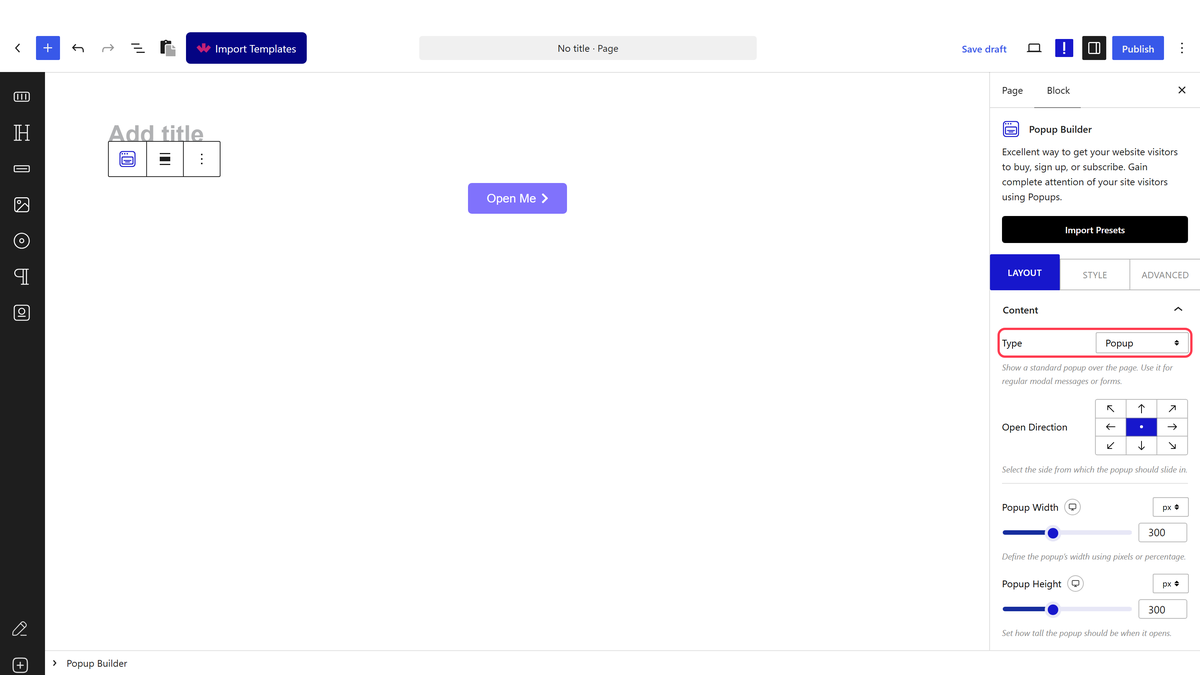
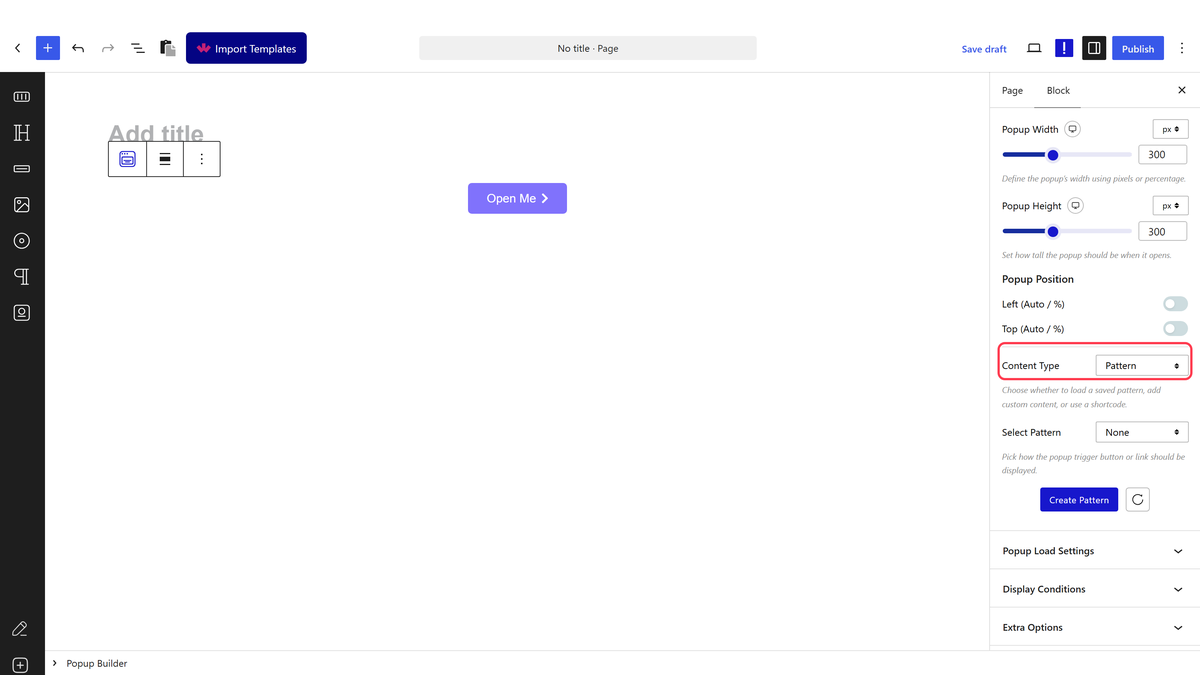
- Set Content Type and add what the popup should show.
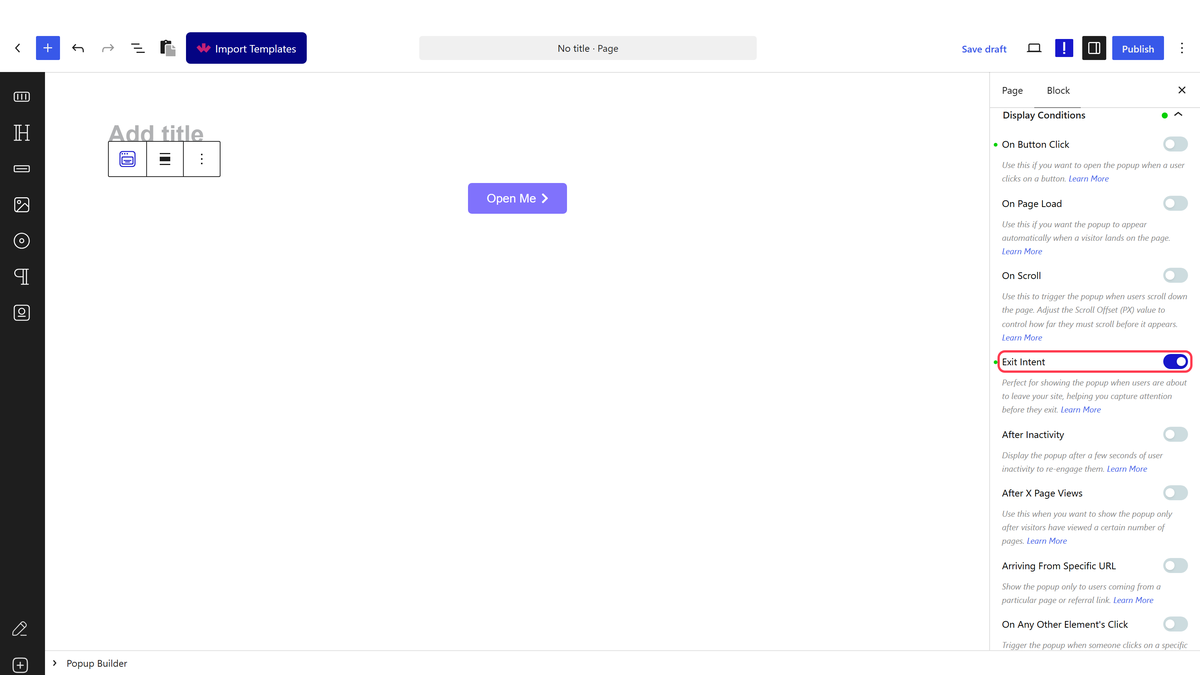
- Open Display Conditions and switch Exit Intent on.
- Publish the page and test it on the front end.
A popup can have more than one display condition switched on at once. Leave On Button Click on only if you also want the button to open it.
How It Behaves
- The condition is written into the page and the block’s script watches for the cursor leaving through the top of the window.
- That is where the tab bar and address bar are, which is why it reads as leaving.
- Switch On Button Click off if the popup should only appear on exit.
- Combine it with a per visitor limit so someone who leaves twice is not asked twice.
Limitations
- Pro only.
- Exit intent needs a mouse. There is no equivalent gesture on a phone or tablet, so touch visitors will never see it.
- It cannot detect someone closing the tab with a keyboard shortcut, or switching apps.
- Moving the cursor up to a bookmark or another tab counts as leaving, so it can fire when the visitor was not really going.
Troubleshooting
Nothing happens when I move the mouse away
Move the cursor up and out through the top of the window, and test on the published page.
It never fires on mobile
That is expected: there is no cursor to track. Use On Scroll or After Inactivity for touch visitors.
