

Skip to content

How to Add a Post Listing in WordPress?

Key Takeaways

  • Post Listing block muestra una lista de entradas en cualquier lugar de la página y permite elegir diseño, columnas y qué partes de cada entrada aparecen: imagen, título, fecha, autor y extracto.
  • Nexter Blocks incluye gratis el bloque Post Listing y los diseños grid y list; con Nexter Blocks Pro desactivado, category filter, carousel y metro dejan de funcionar como funciones Pro.
  • Post Listing block ejecuta su propia consulta y no depende del loop principal, así que puede mostrar entradas en cualquier página; en una página publicada escribe la configuración en el atributo data-dypost.
  • Columnas en Post Listing block usan una cuadrícula de doce columnas: 4 renderiza tpgb-col-lg-4 y muestra tres elementos por fila, no cuatro; para cuatro columnas se usa 3.
Table of Contents

The blog page your theme gives you shows every post, in one layout, in date order. The moment you want six recent posts in a two-column grid on the home page, that is not enough.

The Post Listing block puts a list of posts wherever you want one, and lets you choose what it shows and how it looks.

Before You Start

  • Edition: Free — works in Nexter Blocks (free) and with Nexter Blocks Pro.
  • Block to enable: Post Listing, switched on under Nexter > Blocks in your WordPress dashboard.
  • Enough posts to see the effect. A listing with three posts cannot show pagination, filtering or a second row.

Video Tutorial

Steps

  1. Add the Post Listing block to your page.
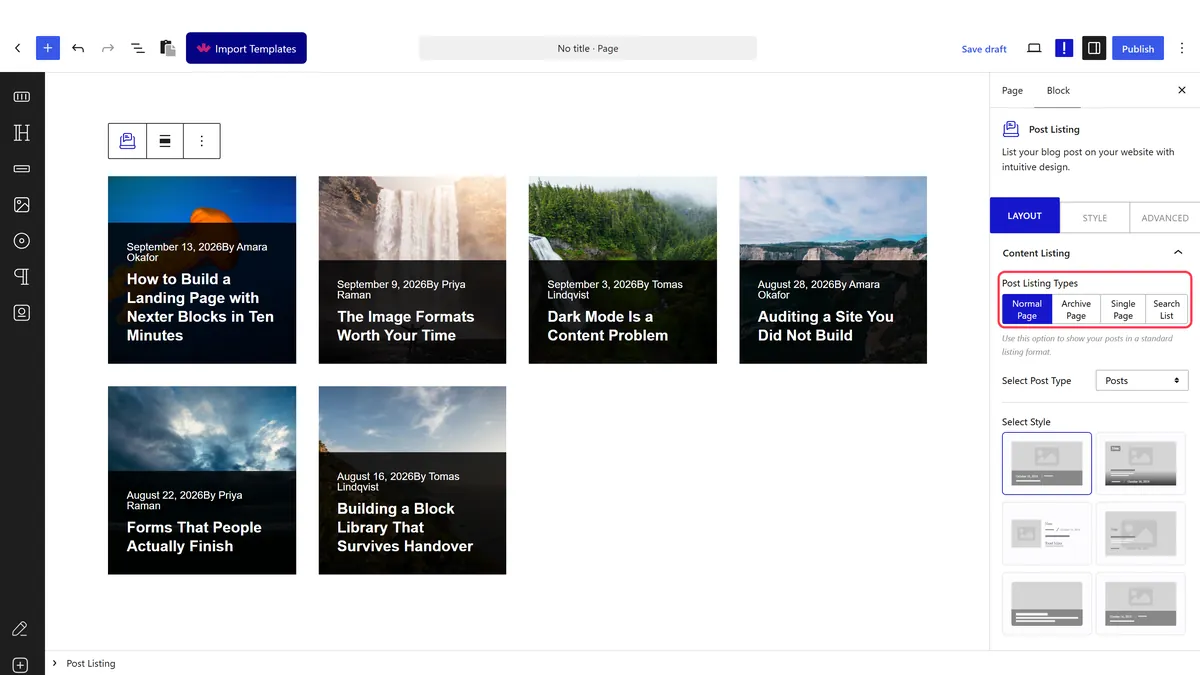
Adding the Post Listing block
  1. Choose a layout — grid, masonry, metro, carousel or list.
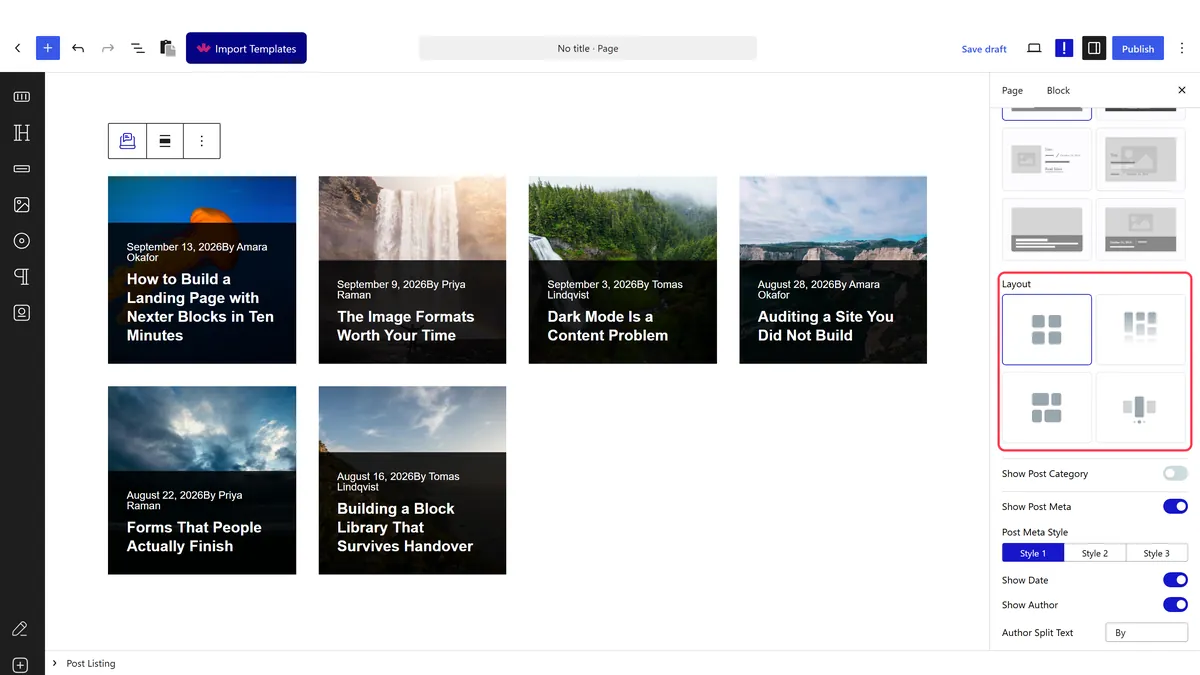
Choosing the layout
  1. Set how many columns to show, per device.
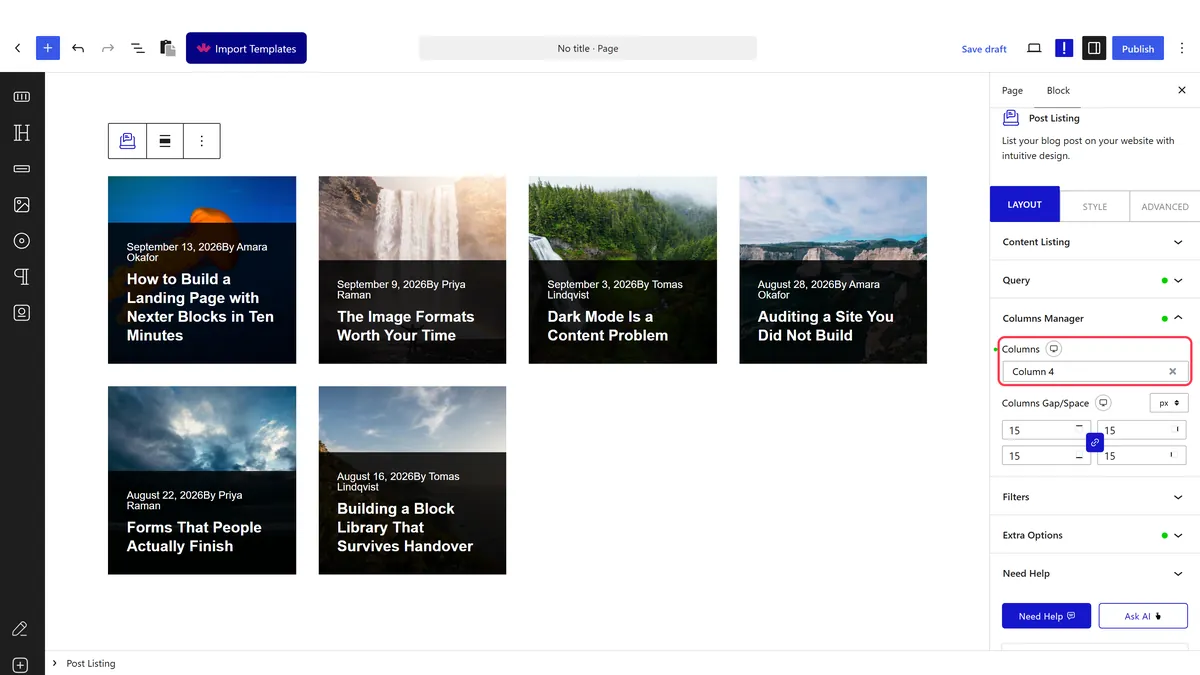
Setting the columns
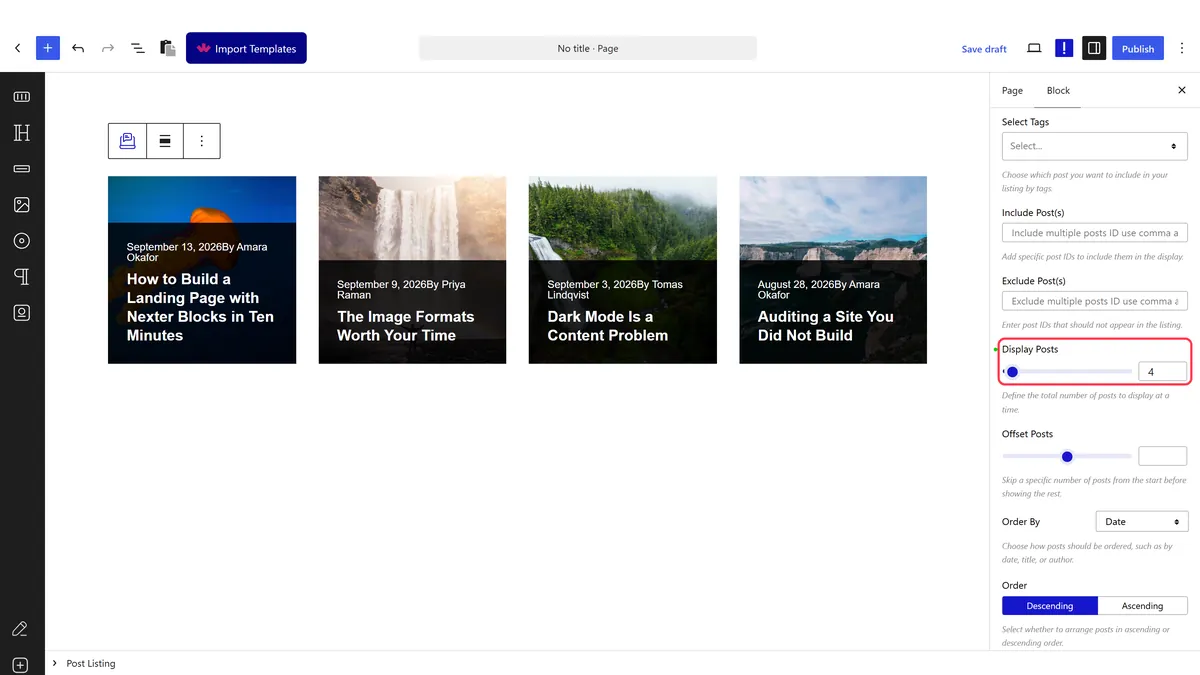
  1. Set how many posts appear.
Setting the post count
  1. Choose which parts of each post to show — image, title, date, author, excerpt.
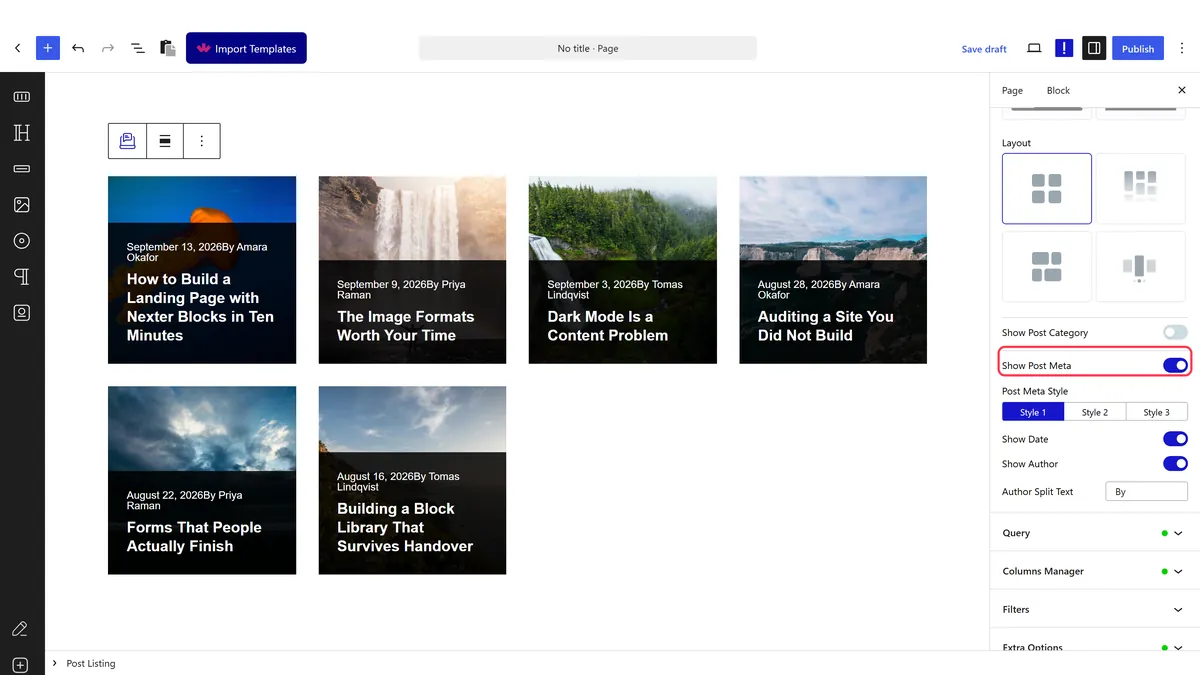
Choosing what each post shows
  1. Style it, then publish and check the real page.
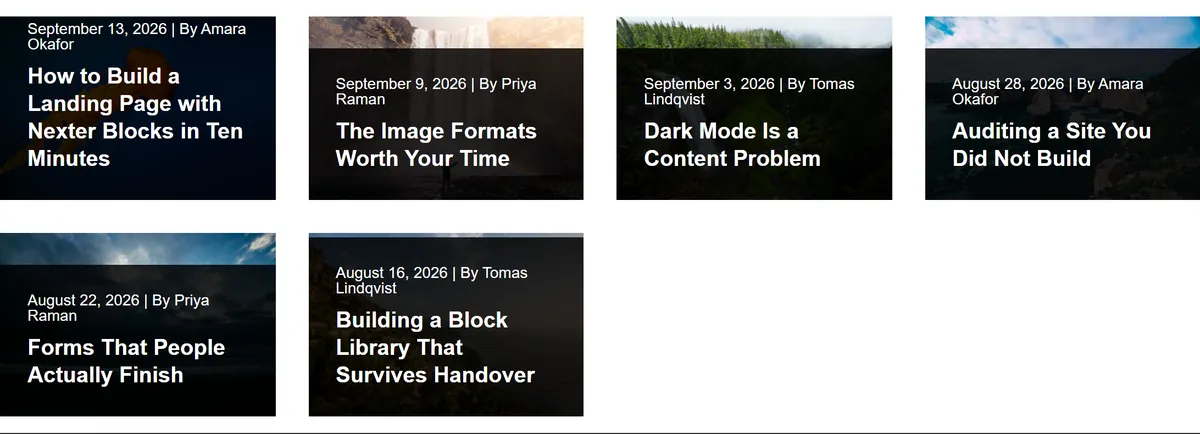
Styling the listing

How It Behaves

The block runs its own query and renders one item per post, with the whole configuration written into the page.

  • Everything ends up in one attribute. The block writes its whole query configuration into a data-dypost attribute on the published page, so if a setting is not doing what you expect, that is where to look. Measured on a published page, that attribute carried display_post, offset_posts, page, total_page and the chosen layout.
  • The layout is a wrapper attribute. Measured: data-layout="grid" by default, changing to masonry, metro, carousel or list to match.
  • Columns work on a twelve-column grid. Measured: setting 4 rendered tpgb-col-lg-4, which is three items across, not four. The number is the width of each item, not the count.
  • It is independent of the main loop. The listing can sit on any page and still show posts, because it runs its own query rather than reading the page’s.
  • Measured with Nexter Blocks Pro deactivated: the listing still renders its posts. The block itself is free.

What Needs Pro

The block and its grid and list layouts are free. These are not, and each was measured with Nexter Blocks Pro deactivated:

  • The category filter — the filter row disappears entirely.
  • Carousel layout — the wrapper still says carousel but the slider configuration is gone, so it renders as a plain stacked list.
  • Metro layout — falls back to ordinary grid items.

Limitations

  • More posts means a heavier page. Every post in the listing is queried and rendered, so a listing of thirty is thirty posts’ worth of work.
  • Free users get silent degradation on the Pro layouts. Measured: with Pro off the wrapper still reports data-layout="carousel" while behaving as a plain list, so nothing on screen explains why it is not sliding.
  • Column numbers are widths, not counts. This trips people up constantly — 4 gives three across.
  • It shows published posts. Drafts and private posts will not appear, which is worth remembering when a listing looks short while you are building.
  • Set the phone breakpoint explicitly, or the desktop column width is inherited and the listing is cramped.

Troubleshooting

The listing is empty

There are no published posts matching the query. Check the post type, any category restriction, and that the posts are published rather than drafts.

I asked for four columns and got three

The number is the width on a twelve-column grid. Measured: 4 renders tpgb-col-lg-4, which is three across. Use 3 for four across.

My carousel is not sliding

Carousel layout needs Nexter Blocks Pro. Measured with Pro off, the slider configuration is absent and the posts stack.

It looks wrong on mobile

Set the column width for tablet and phone. The desktop value is inherited otherwise.

Related Docs

Share your Thoughts

Still in Doubt? Let’s Assist You

Have Feedback or Questions?

Join our WordPress Community on Facebook!

Related Frequently Asked Questions

Why is my WordPress post listing empty even though I have posts published?

An empty listing usually means the query has nothing published to show. The page says to check the post type, any category restriction, and whether the posts are published rather than drafts. That matters because the block runs its own query, so it only renders items that match the settings you gave it. If you are building with Nexter Blocks, this is the first place to look when the layout loads but no posts appear.

How do I get four posts across in a WordPress post listing?

The column number is a width on a twelve-column grid, not a literal item count. The page measured 4 as tpgb-col-lg-4, which renders three items across, not four. For four across, use 3 instead. That detail trips people up because the number looks like a count, but in Nexter Blocks it controls width. The same rule affects how your grid feels on desktop and why the spacing may look off at first.

Why is my carousel not sliding in the post listing?

Carousel layout needs Nexter Blocks Pro. With Pro off, the page measured that the slider configuration disappears and the posts stack as a plain list even though the wrapper still says carousel. That can be confusing because nothing on screen explains the fallback. If you are using Show blog posts in a carousel slider, this is the key limitation to know before debugging the layout.

Does the post listing work on a page that does not use the main blog loop?

The block runs its own query, so it can sit on any page and still show posts. That is why Nexter Blocks can place recent posts on a home page without relying on the theme’s default blog archive. The page also notes that all of the configuration is written into a data-dypost attribute on the published page, which is useful when a setting behaves unexpectedly.

What should I set before publishing a post listing so it looks right on mobile?

Set tablet and phone column widths explicitly. The desktop value is inherited otherwise, and that can leave mobile layouts cramped or visually broken. The page calls this out as a common limitation, so responsive settings are not optional if you want clean results across devices. In practice, this matters more when you use grid or metro layouts because their column widths have a bigger visual impact.

What layouts are available for a WordPress post listing in Nexter Blocks?

The block supports grid, masonry, metro, carousel, and list layouts. Grid and list are free, while metro and carousel depend on Nexter Blocks Pro. That split matters when you choose a design early, because free users can still build a working listing but some layouts degrade silently if Pro is off. For layout-specific setup, these docs help: grid, masonry, metro, and carousel.

Last reviewed: September 22, 2026

Related Docs