



Key Takeaways
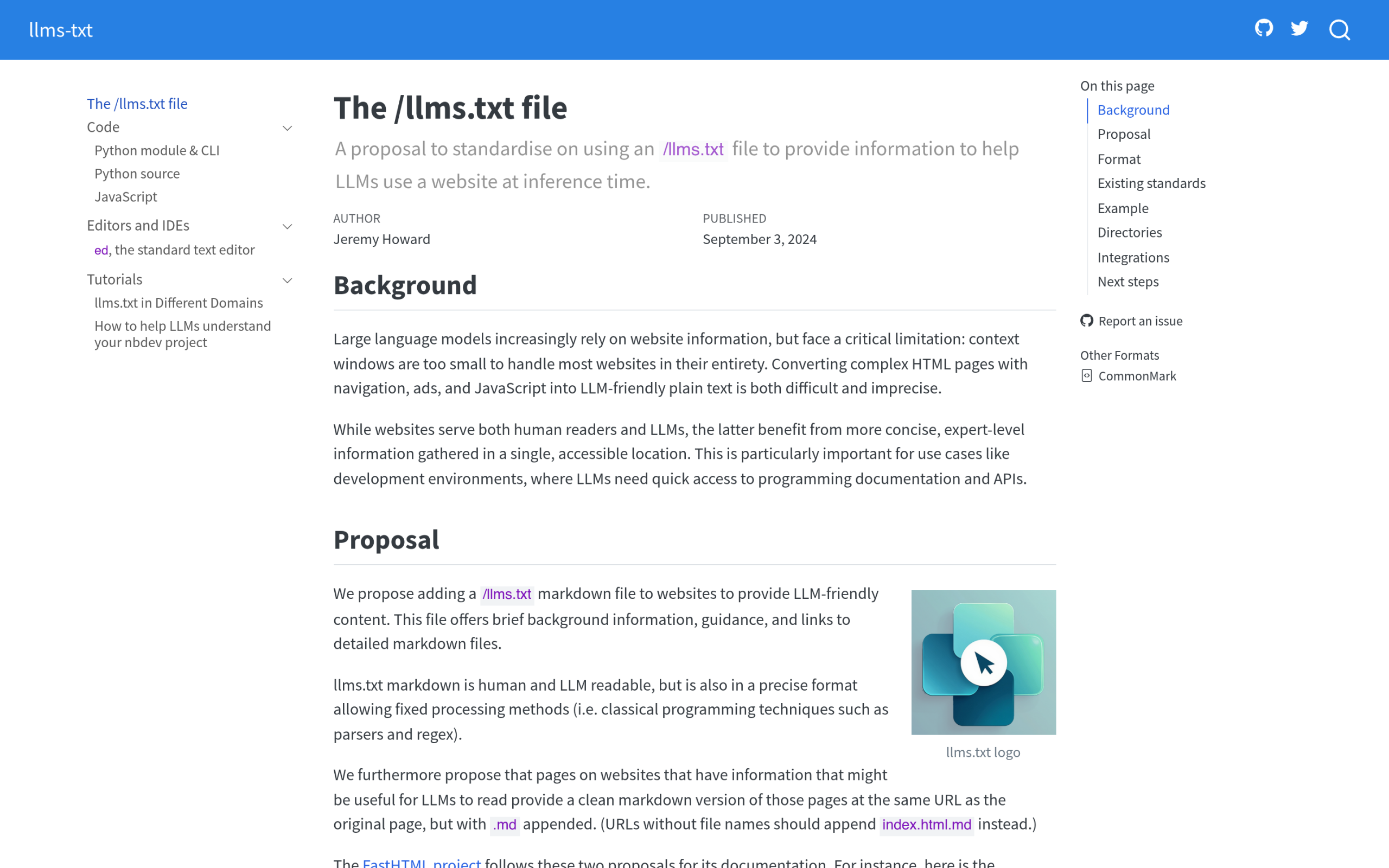
- The new machine-facing formats keep landing on the same humble file type: llms.txt is Markdown, and Google’s Open Knowledge Format is a directory of Markdown files.
- Markdown wins for machines because it is maximum signal with minimum noise: structure without scripts, ad chrome, or layout markup to wade through.
- A Gutenberg block theme has a quiet edge here. Clean semantic block markup converts to clean Markdown almost one to one, while page-builder div soup does not.
- The practical move is to serve a clean Markdown version of each page alongside the normal one. It removes a barrier for machines. It is not a guarantee of a citation.
A reader emailed me last week with a fair question: every other week there is a new AI file format, so which one should a WordPress site actually adopt? I went back through the formats that landed this year, and the surprise was not how different they are. It was how similar. llms.txt is Markdown. Google’s Open Knowledge Format is Markdown. Documentation sites are quietly adding a plain Markdown version of every page for AI tools.
Different teams, different goals, same plain file format. Markdown is becoming the language machines use to read the web, and on a block-theme WordPress site that turns out to be good news.
What you’ll learn: why Markdown won for machine reading, where you are already seeing it, why a Gutenberg block theme has the edge, and the one practical move it suggests for your content.
Why Markdown, of All Things?
Markdown is plain text with a little structure: headings, lists, links, and not much else. There is no rendering engine to run, no scripts, and no ad chrome to wade through.
For a language model, that is close to ideal, because it is maximum signal with minimum noise. It is also readable by people and machines at the same time, which is exactly why the new AI formats keep choosing it instead of inventing something more complicated. When a format has to be produced by humans and consumed by agents, plain Markdown is the path of least resistance.
You Are Already Seeing It Everywhere
Once you notice the pattern, it is hard to unsee.
- An llms.txt file, and its larger llms-full.txt cousin, are Markdown.
- Google’s Open Knowledge Format is a directory of Markdown files with YAML frontmatter.
- Documentation platforms increasingly expose a
.mdversion of each page for AI tools to fetch. - The same thread runs through the whole AI-readiness stack: give machines clean, structured text.
Also Read: OKF vs llms.txt breaks down how these two Markdown formats differ and which one fits a block-theme site.
Why a Gutenberg Block Theme Has the Edge Here
This is where the format you build with starts to matter. When the web converges on Markdown, the question becomes how cleanly your pages can turn into it.
A Gutenberg block theme stores your content as structured blocks. A heading block is a heading, a list block is a list, a paragraph is a paragraph. That maps to Markdown almost one to one, because the meaning is already in the markup. A page-builder layout, by contrast, wraps the same words in nested container divs, column wrappers, and styling hooks. The text is in there, but a machine has to dig it out of the scaffolding first.
So the cleaner your blocks, the cleaner the Markdown that comes out the other side. A block theme like Nexter Theme paired with Nexter Blocks gives you semantic structure by default, which is the same reason block themes already do well at structured data and entity SEO. You are not adding a new discipline. You are reusing the clean foundation you already have.
Also Read: llms.txt for Gutenberg WordPress explains why block themes win the AI citation race over page-builder sites.
What It Means for Your WordPress Site
Your content lives as rendered HTML, built for browsers, wrapped in menus, sidebars, and scripts. That is fine for human visitors and harder for machines. To meet the Markdown shift, the move is simple: make a clean Markdown version of each page available alongside the normal one.
You can export pages by hand, which gets tedious fast, or use a plugin that adds a Markdown endpoint automatically and keeps it in sync as you publish. The honest caveat is the one we keep repeating across this whole topic: this is a bet on where the machine-readable web is heading, not a tactic that earns you a citation today. No major model promises to fetch these files yet. You are removing a barrier so that the day an agent does come looking, it reads the clean version instead of fighting your theme. If you want the broader context, our guide to answer engine optimization covers where this fits.
The Easy Way on a Block-Theme Site
RankReady handles the Markdown side for you.
Add .md to any post URL and you get a clean Markdown version with the correct Content-Type. It generates your /llms.txt and /llms-full.txt and keeps them current, outputs Article, Speakable, FAQPage, HowTo, and ItemList schema, and scores each post from 0 to 100 for AI readiness based on schema, freshness, content depth, and author signals. It also keeps a live AI crawler log so you can see which citation-style bots actually fetched your pages.
A Markdown version does not promise you a citation, but if an agent does come to read your page, it gets the clean version instead of the rendered theme. RankReady is free, GPL-2.0-or-later, runs on WordPress 6.0 and PHP 7.4 or higher, and merges into the schema graph of whatever SEO plugin you already run, including Rank Math, Yoast, AIOSEO, and SEOPress. If you want the full picture of how it fits with schema and llms.txt, see our AI-readable knowledge base guide and the schema markup generator walkthrough.
The Bottom Line
Markdown is not a trend to chase, it is the format machines are converging on. You do not have to rewrite anything. If you build on a block theme, you are already most of the way there.
Make a clean Markdown version of your content available, keep it current, and your site is ready for whatever reads it next, whether that is ChatGPT today or an agent standard that does not exist yet. Want the honest read on whether any of this moves rankings? Our take on whether OKF matters for WordPress SEO says it plainly.
Suggested Reading
- llms.txt for Gutenberg WordPress: Why Block Themes Win the AI Citation Race
- What Is Google’s Open Knowledge Format (OKF)?
- OKF vs llms.txt: Two Ways to Hand AI Your Site’s Knowledge
- The 2026 AI-Readiness Stack for WordPress
- What Is Answer Engine Optimization (AEO)?
