





Key Takeaways
- LLM SEO is the practice of optimizing your content so AI assistants like ChatGPT, Gemini, and Perplexity can read, trust, and cite it, not only so Google ranks it.
- Language models cite content they can parse cleanly: clear structure, valid schema, machine-readable copy, and strong entity signals.
- LLM SEO is a layer on top of solid traditional SEO, not a replacement. Sites that lose organic rankings usually lose AI citations too.
- On WordPress you can produce the signals without writing code: Markdown endpoints, Article and Speakable schema, an llms.txt file, and AI crawler control.
- RankReady is a free WordPress plugin that generates those signals and shows you which of your posts AI crawlers actually fetch.
A few months ago a client called me sounding genuinely confused. Their Google traffic had been flat for weeks, yet three sales calls that same morning had opened with some version of “I asked ChatGPT for the best option and your name came up.” Their analytics showed almost none of it, because the visitor never clicked a blue link. The answer was assembled inside the assistant, their brand was quoted, and the credit went nowhere a normal report would catch.
That gap is what LLM SEO is about. You are no longer only competing for a position on a results page. You are competing to be the source an AI model reaches for when it writes the answer. This guide explains what LLM SEO actually is, how language models decide what to cite, and how to set your WordPress site up to be one of those sources.
What LLM SEO actually is
LLM SEO, sometimes called large language model optimization, is the practice of structuring and publishing your content so AI tools can discover it, understand it, and cite it in the answers they generate. Traditional SEO earns you a ranking on a search results page. LLM SEO earns you a mention inside the answer that ChatGPT, Google Gemini, Perplexity, Claude, or Microsoft Copilot hands directly to the user.
The difference matters because the behavior is different. A searcher scans ten links and picks one. A person asking an assistant reads one synthesized answer and often stops there. If your page is not part of the material the model pulled in, you are invisible for that query, no matter how well you rank in classic search.
Also Read: Answer Engine Optimization for WordPress covers the broader strategy of optimizing for AI answers, with LLM SEO as one piece of it.
How language models find and choose what to cite
There are two broad paths a model uses to reach your content. The first is training data, the large snapshot of the web a model learned from. You cannot edit your way into a past training run. The second path is the one you can influence: live retrieval. When an assistant needs current or specific information, it fetches pages in real time, reads them, and uses the best ones to ground its answer. That live fetch is where LLM SEO does its work.
For a page to survive that process, the model has to do three things quickly: reach it, parse it, and trust it. Reach means an AI crawler is allowed in and your page is discoverable. Parse means the content is clean enough that the important parts are obvious without a human eye. Trust means the page carries signals of authority, clear authorship, original data, and a recognizable entity behind it. Miss any one of the three and you drop out of the candidate pool.
The signals that make WordPress content LLM-citable
You do not need a new content strategy to do LLM SEO well. You need to make your existing content easy for a machine to read and verify. Six things move the needle most.
- Clean structure. One clear H1, logical H2s, short paragraphs, and direct answers near the top of each section. Models extract well-labeled chunks far more reliably than wall-of-text pages.
- Machine-readable copy. A plain Markdown version of a page strips away theme markup and hands the model just the words and headings. Less noise means cleaner extraction.
- Valid schema. Article, Person, FAQPage, and HowTo JSON-LD tell a model what each part of the page is. Speakable schema flags the exact sentences best suited to be read aloud or quoted.
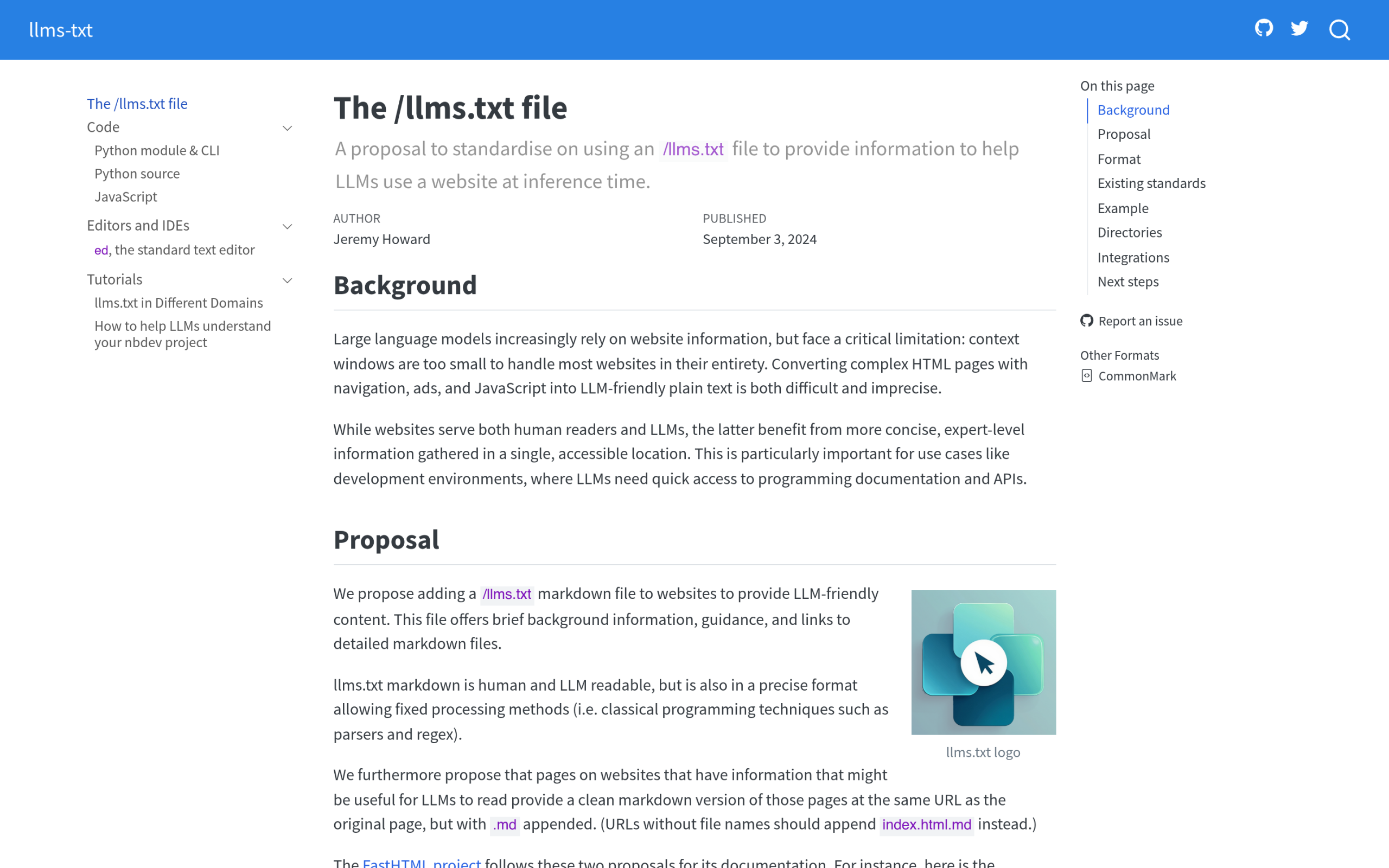
- An llms.txt file. A simple Markdown map at your domain root that points AI tools to your most important pages, similar in spirit to a sitemap but written for language models.
- Strong entities. Consistent author identity, organization details, and clear topical focus help a model recognize who you are and connect you to the subjects you cover.
- Crawler access. If GPTBot, ClaudeBot, PerplexityBot, and Google-Extended are blocked in robots.txt, you opt out of citation entirely. Decide access deliberately rather than by accident.
Also Read: llms.txt for Gutenberg WordPress walks through creating the file on a block theme step by step.
LLM SEO vs traditional SEO vs AEO
These terms overlap and the labels get used loosely, so here is a plain breakdown of how they relate.
| Approach | Goal | Main lever |
|---|---|---|
| Traditional SEO | Rank on the Google results page | Keywords, links, page experience |
| AEO (answer engine optimization) | Win the featured answer or AI Overview | Direct answers, structure, schema |
| LLM SEO | Get cited inside an AI assistant’s answer | Machine-readable content, schema, entities, crawler access |
The practical point is that these are layers, not rivals. Traditional SEO and AI citation move together. When a site loses organic rankings, its AI citations tend to fall as well, because the same authority and crawlability signals feed both. Treat LLM SEO as something you add on top of strong fundamentals like entity SEO and E-E-A-T, never as a shortcut that replaces them.
How to do LLM SEO on WordPress without hand-coding
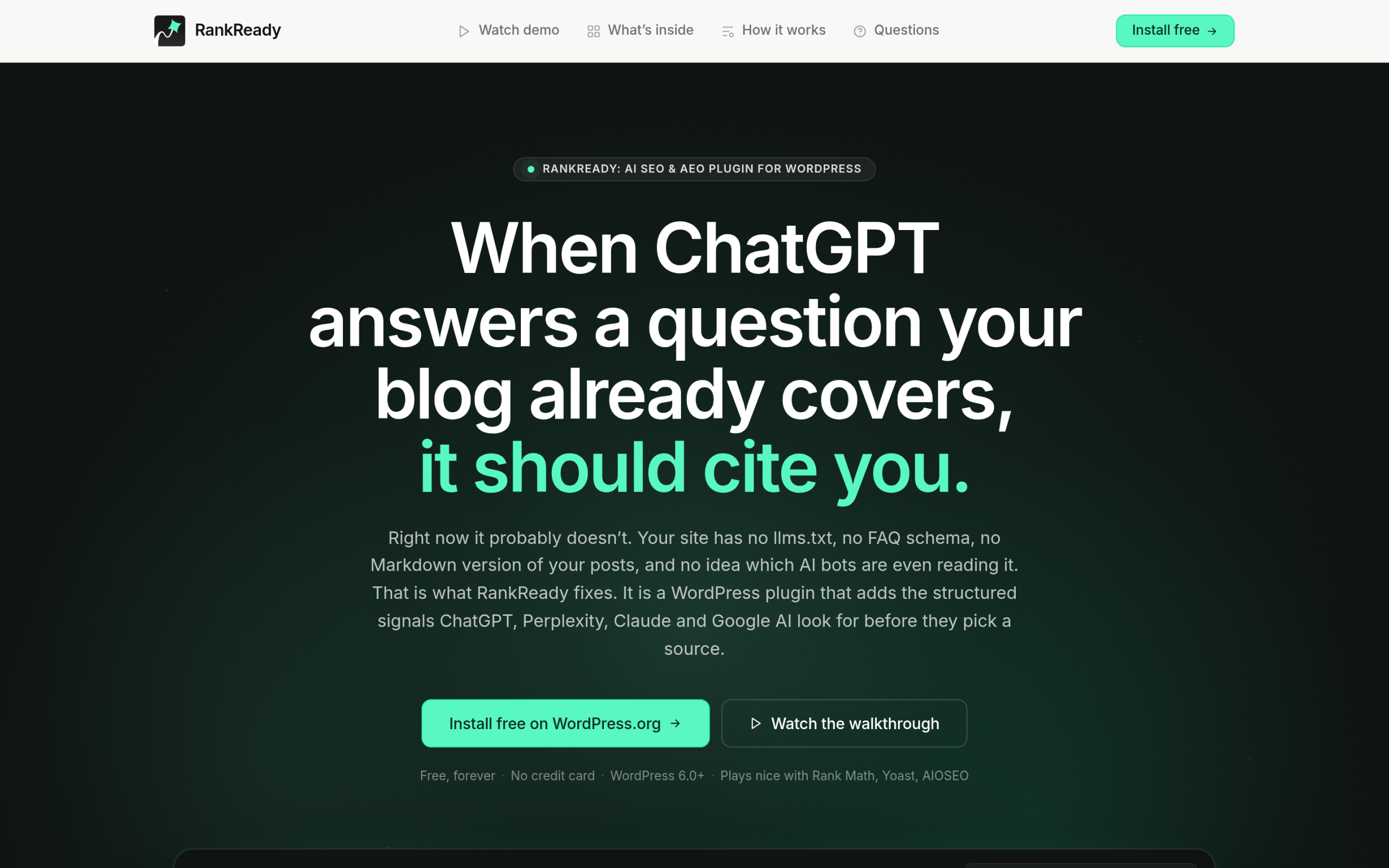
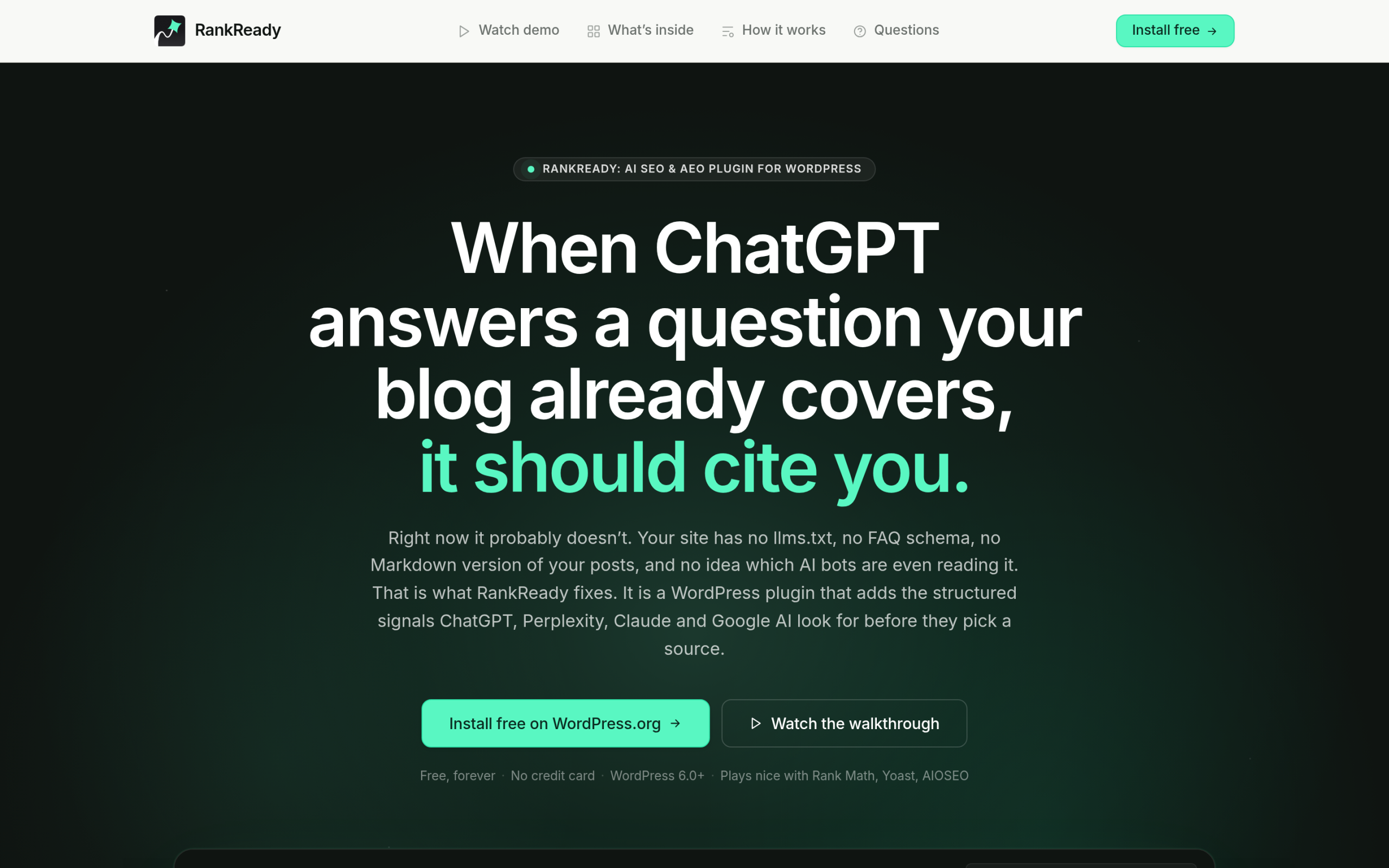
Producing all of those signals by hand is real work. Markdown endpoints, JSON-LD schema, an llms.txt file, and per-crawler robots rules are each their own small project. This is where a purpose-built plugin saves time. RankReady is a free WordPress plugin from POSIMYTH built specifically for this layer, and it generates the machine-readable signals so you can focus on the content itself.
On the production side, RankReady generates llms.txt and llms-full.txt files and keeps them current as you publish, adds a clean Markdown version to any post when you append .md to the URL, and writes Article and Speakable schema for every post, with the speakable sentences flagged separately. It also produces FAQPage, HowTo, ItemList, and Person schema, and it manages 31 AI crawlers individually, including GPTBot, ClaudeBot, PerplexityBot, and Google-Extended, so you control exactly who is allowed in.
A fair caveat: no plugin makes thin content citable. RankReady produces the signals and the measurement, but the substance still has to be worth quoting. Think of it as the layer that makes good work legible to machines, not a replacement for the work. It runs alongside Rank Math, Yoast, AIOSEO, SEOPress, and The SEO Framework rather than replacing your existing SEO plugin, and it is free with a GPL license, needs WordPress 6.0 or newer and PHP 7.4 or newer, and keeps zero telemetry.
How to measure whether your LLM SEO is working
The hard part of LLM SEO is that the payoff hides from normal analytics. A citation inside ChatGPT does not always send a click, and when it does the referral can be hard to attribute. So you measure earlier in the chain. Start with crawler activity: are AI bots actually fetching your pages, and which ones. Then look at which posts the citation-style bots return to most, since repeated fetches are a strong signal that your content is being used to build answers.
RankReady surfaces exactly this. Its live AI crawler log records each visit with a timestamp, the page, the bot name, and an intent classification. Its citation candidates view is a leaderboard of your own posts that citation-style bots fetched in the last 30 days. And it tracks AI referral traffic from ChatGPT, Perplexity, Claude, Gemini, and Copilot, so the clicks that do arrive stop hiding in your direct traffic.
Start simple. Make your best existing posts clean and well-structured, add schema and a Markdown version, publish an llms.txt file, confirm the AI crawlers you want are allowed, then watch the crawler log to see what gets picked up. LLM SEO is not a one-time switch. It is the same compounding discipline as classic SEO, pointed at a new set of readers that happen to be machines.
Suggested Reading
- Answer Engine Optimization for WordPress
- Do You Actually Need an AI SEO Tool?
- llms.txt for Gutenberg WordPress
- Schema Markup Generator for WordPress
- The 2026 AI-Readiness Stack for WordPress
