



The first blog I helped a client monetize earned $1.47 in its entire first month on Google AdSense. Not $1.47 a day. $1.47 total. She was ready to quit, and I understood why. But the blog was not the problem. The problem was starting with the wrong monetization method for her stage of growth, then judging the whole idea by it.
WordPress.org, the self-hosted CMS powering 43% of all websites on the internet (W3Techs), gives you full control over how you earn from your content. WordPress.com is a separate platform: its free and personal plans cannot use third-party ad networks or monetization plugins without upgrading to a Business plan ($25/month). This guide is for self-hosted WordPress.org blogs. Ad network thresholds and RPM ranges were last verified in June 2026.
There is no single best monetization method. The right strategy depends on your traffic volume, your niche, and how much time you can invest. A new blog with 500 monthly visitors should not chase display advertising. An established blog with 60,000 monthly sessions is leaving real money on the table if it still relies on affiliate links alone. This guide covers seven proven methods for how to monetize a WordPress blog: display advertising, affiliate marketing, digital products, online courses, memberships, sponsored content, and WordPress services. For each one, you get the realistic income potential, the tools required, and the traffic stage where it makes sense to start.
Method 1: Display Advertising (From AdSense to Premium Ad Networks)
Display advertising is the most common starting point, and the most misunderstood. The issue is not display ads themselves. It is the assumption that Google AdSense is the ceiling, when it is closer to the floor.
Also Read: more ways to make money with WordPress.
Ad Networks: Traffic Thresholds and Realistic RPMs
How much you earn per 1,000 pageviews (your RPM) depends almost entirely on which ad network you use, and each network sets its own traffic requirements:
| Ad Network | Minimum Traffic | Typical RPM (varies by niche) | Notes |
|---|---|---|---|
| Google AdSense | None | $1-5 per 1,000 views | Easiest to join, lowest earnings |
| Ezoic | None | $5-15 per 1,000 views | AI-optimized ad placement |
| Journey by Mediavine | Lower entry tier for growing sites | $10-20 per 1,000 views | Mediavine’s program for smaller publishers |
| Mediavine | Higher sessions minimum | $20-40 per 1,000 views | Premium network, large RPM jump from AdSense |
| Raptive (formerly AdThrive) | 25,000 pageviews/month | $30-50+ per 1,000 views | Premium network for established sites |
Network minimums and RPMs change often and vary by niche, season, and audience location. Raptive’s own site currently lists a 25,000 monthly pageview minimum (verified June 2026); Mediavine and Journey by Mediavine set their own sessions-based requirements, so confirm the current numbers on each network’s site before you apply. The gap between AdSense and a premium network is not small. The same 10,000 monthly visitors earning $10-50 a month on AdSense can earn several hundred dollars a month at the premium RPMs above.
If you are under roughly 10,000 monthly sessions, display ads are not worth prioritizing yet. Focus on affiliate marketing and digital products first, then apply to an entry-tier premium network like Journey by Mediavine once your traffic qualifies.

Direct Ad Sales
Once your blog has an established audience in a specific niche, you can sell ad space directly to companies without a network taking a cut. Direct deals pay higher rates because you set the pricing and control which brands appear on your site. Here is how to start:
- Build a media kit with your monthly traffic, audience demographics, and available ad placements
- Set rates based on your niche and traffic (a food blog with 20,000 readers in a specific demographic can charge far more than a general lifestyle blog at the same numbers)
- Reach out to brands your readers already use, or add an “Advertise With Us” page to your site
- Disclose all paid placements clearly per FTC guidelines
Also Read: Building a blog from scratch and want to choose the right platform first? See the best blogging platforms to launch your WordPress blog.
Method 2: Affiliate Marketing
Affiliate marketing is the most effective method for blogs under 50,000 monthly sessions because it has no traffic floor. A single well-positioned product review can generate $50-$500+ per month with only 2,000 monthly visitors, as long as the content matches buyer intent. The mechanics are simple: you earn a commission when a reader clicks your affiliate link and makes a purchase. Commission rates vary a lot by niche.
High-commission categories WordPress bloggers target:
- WordPress hosting: 30-50% recurring commissions or $50-$200+ per sale
- Software and SaaS tools: 20-40% recurring commissions
- Finance and investing: $50-$200+ per signup depending on the program
- Online education platforms: 30-45% per sale
Lower-commission categories to approach carefully:
- Amazon Associates (physical goods): 1-4.5% commission, limited by small average order values
- General retail: 2-10%, with narrow margins on most products
Content type matters as much as niche. Review posts, comparison posts, and “best of” lists convert far better for affiliate income than informational content. A post targeting “best WordPress hosting for beginners” from a 3,000-visit-per-month blog can consistently outperform an informational post getting 15,000 visits per month, because the reader intent is commercial rather than exploratory.
If your audience includes WordPress site builders or designers, the POSIMYTH affiliate program covers every product in the ecosystem, including Nexter Blocks, Nexter Theme, and The Plus Addons for Elementor.
Also Read: Ready to build a dedicated affiliate site? Here is a step-by-step guide on how to make an affiliate marketing website in WordPress.
Method 3: Sell Digital Products
Digital products have the highest margin of any monetization method because there are no production costs after the initial build and no inventory to manage. A well-positioned digital product earns while you sleep.
Ebooks
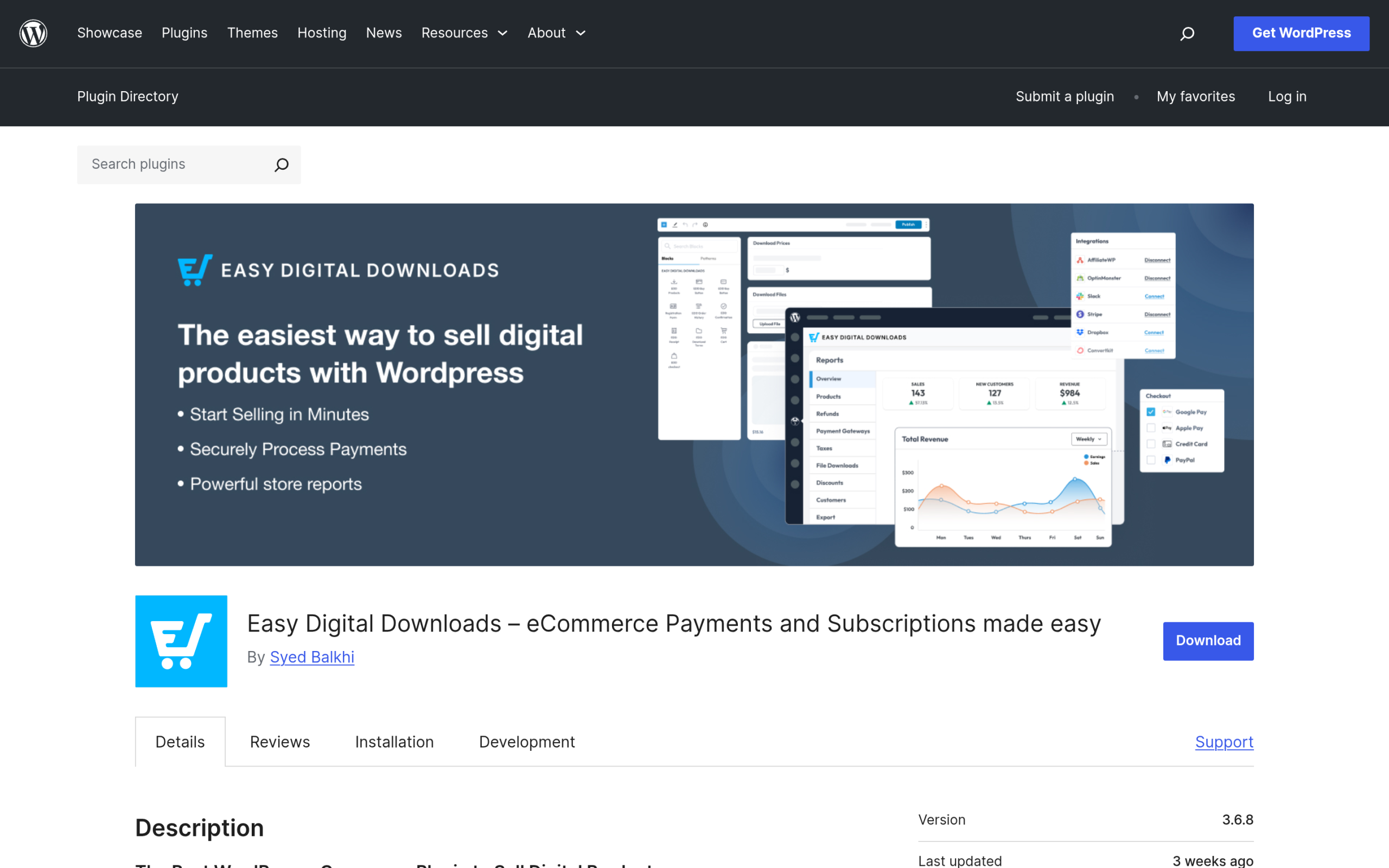
An ebook priced between $9 and $49 on a specific problem your audience faces creates recurring passive income. Depth and specificity beat length: a focused 20-page guide on one concrete problem converts better than a broad 150-page overview. The free Easy Digital Downloads plugin (with a paid Pro tier) handles payment processing, file delivery, and license management directly from your WordPress dashboard.
Templates and Design Assets
Templates are high-value because they save buyers time directly. WordPress theme templates, social media kits, Canva templates for a specific niche, spreadsheet templates, and email sequences all sell well when positioned for a clear buyer. As a reference for what a polished template library looks like, WDesignKit offers a cross-builder template and widget collection for Elementor, Gutenberg, and Bricks that your audience can use to speed up their own projects.
Printables and Worksheets
Printables (planners, trackers, worksheets, and checklists in PDF format) are among the easiest digital products to create and convert well in lifestyle, education, and productivity niches. Even a small shop with a few digital products signals to readers and search engines that your site sells, not just informs.
The Blog Post Builder block from Nexter Blocks, a Gutenberg block plugin by POSIMYTH Innovations, lets you create clean product showcase layouts inside your WordPress blog posts. With 90+ blocks in total, you can build your entire blog infrastructure, including product listings, image galleries, and styled CTAs, without a separate page builder.
Method 4: Sell Online Courses
Online courses have the highest earning ceiling of any digital product method. An ebook might sell for $29. A structured video course on the same topic can sell for $197-$997 or more. The price difference reflects the depth of transformation the student receives.
When to launch: build your audience before you build the course. Most successful bloggers launch their first course after growing an email list of 500-1,000 engaged subscribers who regularly read and reply to their content. A course needs buyers, not just lessons.
For WordPress-native course delivery:
- Tutor LMS: a full-featured WordPress LMS plugin with a course builder, quizzes, certificates, and student management that runs entirely inside WordPress. It integrates with WooCommerce for payment processing and is a strong choice for bloggers who want full control over their course platform.
- LearnPress: another WordPress-native LMS with a free core and paid add-ons for drip content, certificates, and multiple payment gateways.
For hosted platforms (simpler setup, less technical control):
- Teachable: handles video hosting, payments, and student management for you. Paid plans start at $39/month for the Starter plan, billed monthly, with a 7-day free trial and no permanent free plan (Teachable pricing, verified June 2026).
- Thinkific: another hosted course platform that lets you test on a starter tier before committing to a paid plan.
The trade-off is straightforward: WordPress-native solutions keep 100% of revenue but ask more of you technically. Hosted platforms take a cut or a monthly fee but handle the complexity for you. If you are already comfortable managing your WordPress site, a native LMS is worth the effort for the long-term savings.
Also Read: Want a real-world example of building a niche blog toward course income? Here is how to start a food blog and make money from it.
Method 5: Subscriptions and Memberships
A membership model creates predictable monthly recurring revenue that no other method provides. Instead of chasing traffic spikes, you build a base of subscribers who pay every month for ongoing access, exclusive content, or direct access to you. A tiered structure that works for most content-driven blogs:
- Core membership ($9-19/month): exclusive in-depth content, downloadable resources, and a members-only newsletter
- Premium tier ($29-49/month): all of the above, plus Q&A sessions, community forum access, or early access to new content
- Optional free tier: standard public posts, plus one newsletter issue per month to demonstrate value before asking for a paid commitment
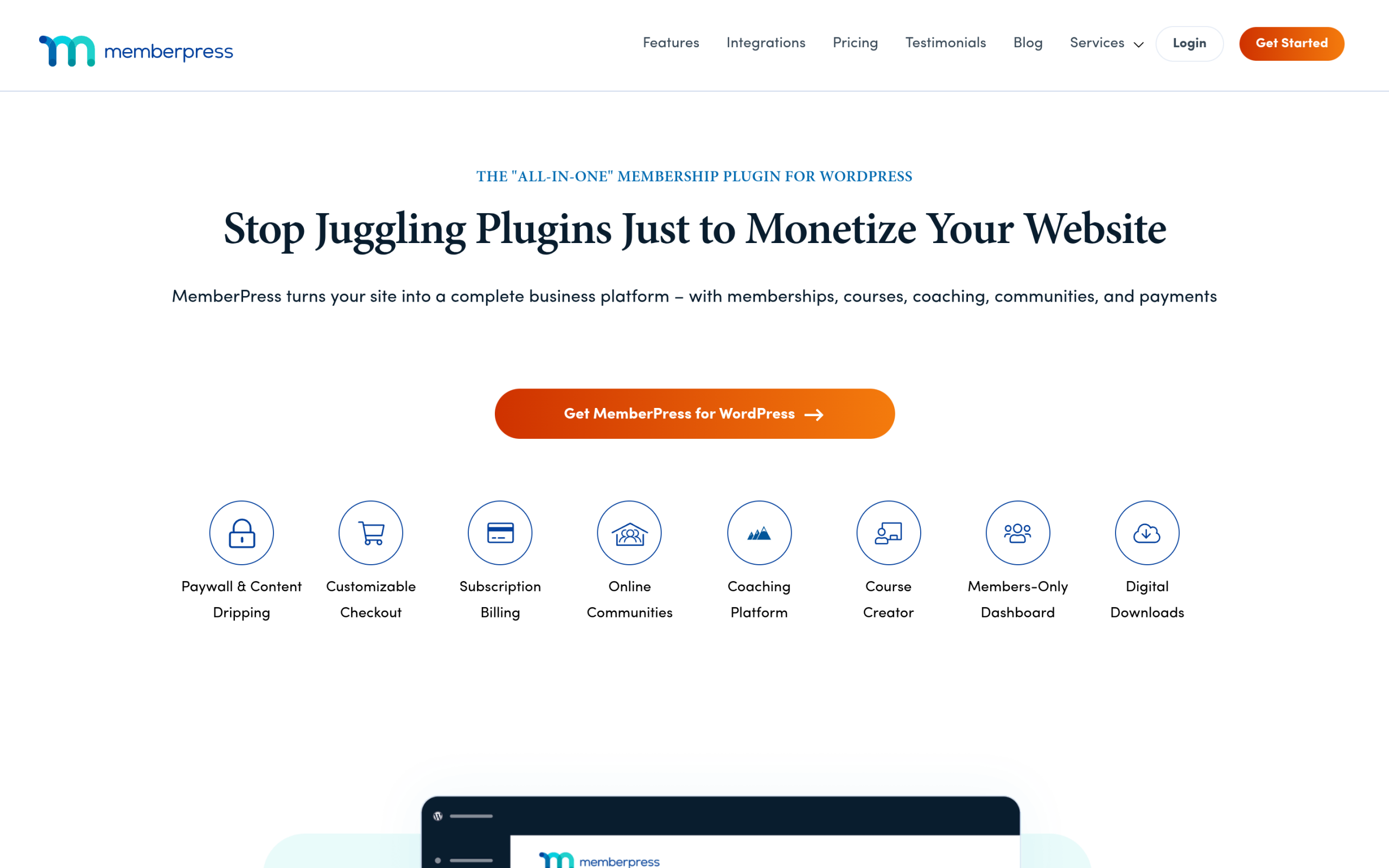
MemberPress handles access-level management, payment processing, and content restriction inside WordPress. It integrates with major email service providers to add new members to the right email sequences automatically.
Build the email list before you launch the membership. This is the most common mistake bloggers make: launching a paid membership with no existing email audience. Your list is your launch audience. Bloggers who grow an engaged email list before launching paid products consistently see higher initial conversion rates than those who launch to zero subscribers.
The email list also protects your income if a Google algorithm update cuts your search traffic. A blog with 10,000 loyal email subscribers is far more resilient than one with 100,000 Google-dependent visitors and no direct relationship with its readers. Build the list from day one, not after you decide to launch a membership.
For membership sites that need dedicated login and registration pages, Nexter Blocks includes a Login Form (Pro) and Registration Form (Pro) block you can style to match your site’s design, without a separate form plugin.
Method 6: Sponsored Posts and Brand Deals
Sponsored content is one of the most underused methods for blogs in the 10,000-50,000 monthly session range. Brands in your niche will pay $100-$1,000+ per post, depending on your traffic, niche, and domain authority, to have their product or service featured in your content.
How brands find you: domain authority, niche relevance, and engaged audience size. A WordPress blog with 15,000 monthly readers and a clearly defined professional audience is more attractive to relevant sponsors than a general lifestyle blog with 50,000 scattered readers.
What to include in your media kit:
- Monthly traffic and pageview stats (Google Analytics screenshot)
- Audience demographics: age range, location, primary interests
- Social media following and engagement rate
- Previous sponsored content samples, if any
- Rate card for different placement types: full sponsored post, product mention in an existing post, newsletter feature
Reaching out proactively: search your niche for brands already sponsoring content on other blogs. A short, specific pitch email that names their brand, explains your audience, and gives one concrete reason your readers would care about their product beats any generic template. Personalisation at the outreach stage is the difference between a reply and silence.
FTC disclosure: any paid content must be clearly disclosed. “Sponsored” or “Paid partnership with [Brand Name]” must appear at the start of the post or within the first 100 words. This is an FTC requirement, not optional.
Realistic earnings by stage: WordPress and technology blogs with a clearly defined professional audience typically command $300-$800+ per sponsored post even at 10,000-25,000 monthly sessions, because that audience is commercially valuable to software and SaaS brands. Food, parenting, and general lifestyle blogs in the same traffic range typically earn $100-$400 per post.
Method 7: Offer WordPress Services
Your blog is not just a monetization vehicle. It is a living portfolio. Every post you publish demonstrates your WordPress knowledge, SEO expertise, or niche authority to potential clients. Readers who follow you, leave comments, and reply to your emails are warm leads for paid services, because they already trust your perspective. Services WordPress bloggers are well-positioned to offer:
- WordPress development: site builds, theme customization, plugin configuration, and Gutenberg or Elementor layout work for clients
- WordPress maintenance retainers: monthly plans covering updates, backups, uptime monitoring, and security checks. Retainers create predictable recurring revenue, much like a membership model.
- SEO and content strategy consulting: paid strategy sessions and audits are a natural extension of publishing SEO content
- Site audits: one-time paid reviews of a client’s WordPress site covering performance, SEO, and conversion improvements
For client work using Elementor, The Plus Addons for Elementor provides 120+ widgets and a suite of site builders (header, footer, WooCommerce, popup, and more) that help you deliver more complex client builds faster without extra plugins.
For Gutenberg-based client builds, Nexter’s 1,000+ starter templates and 90+ blocks let you ship professional WordPress sites without starting from scratch on every project. Nexter Theme is a lightweight, jQuery-free block theme (under 20KB) built in pure Vanilla JS, which makes strong Core Web Vitals an easy result to show clients.
Whether you are freelancing solo or building an agency around your WordPress blog audience, see how Nexter for freelancers and Nexter for agencies approach client delivery workflows using the full Nexter ecosystem.
Which Monetization Method Is Right for You?
The best strategy depends on where your blog is today, not where you want it to be in two years. Choosing a method suited to your current traffic stage means you earn sooner instead of waiting for scale that may never arrive. A stage-based decision framework:
- New blog (0-10,000 monthly sessions): start with affiliate marketing in your niche. Choose 2-3 products you genuinely recommend and write in-depth review and comparison content around them. Add 1-2 digital products (an ebook or template) once you spot a clear problem your audience wants solved. Hold off on display ads until you can qualify for Ezoic or an entry-tier premium network.
- Growing blog (10,000-50,000 monthly sessions): apply to an entry-tier premium network like Journey by Mediavine to add display income on top of affiliate revenue. Build your email list aggressively at this stage. Pitch your first sponsored post to a relevant brand. Launch a course or membership if your audience is already asking you questions consistently.
- Established blog (50,000+ monthly sessions): apply to a premium network such as Mediavine or Raptive (Raptive lists a 25,000 monthly pageview minimum; confirm current requirements for each). At this scale, a membership model produces meaningful recurring income alongside courses and sponsored posts.
Match the method to your content type:
- Informational how-to content: display ads and affiliate marketing both convert well
- Review and comparison content: affiliate marketing performs best here
- Expert-driven content with original research or case studies: sponsorships, courses, and consulting
- Community-focused content: memberships and subscriptions
One pattern holds across income levels: the bloggers who earn the most tend to choose topics with clear commercial intent before they write, not after. Starting with buyer-intent keywords rather than purely informational ones is one of the strongest predictors of monetization success. Topic selection at the start sets your income ceiling years later.
Suggested Reading
- Best Mailchimp Plugins for WordPress: start building the email list that becomes your launch audience for courses and memberships.
- Best Popup Plugins for WordPress: capture more subscribers from the traffic you already have.
- Gutenberg vs Elementor: decide how to build the fast, conversion-ready site your income streams sit on.
- Answer Engine Optimization for WordPress: stay visible as search shifts to AI answers, so your monetized traffic does not dry up.
Wrapping Up: Start Monetizing Your WordPress Blog
The most profitable blogs do not pick one monetization method and wait for it to scale. They build in order: affiliate marketing early, display advertising once traffic qualifies, digital products and courses as audience trust grows, and sponsorships as niche authority sets in. Knowing how to monetize a WordPress blog is not about choosing the most exciting method. It is about choosing the right method for where you are right now, then stacking others on top as you grow.
A fast, SEO-optimized site is the foundation every income stream builds on. Nexter Theme is a lightweight, jQuery-free block theme that helps deliver strong Core Web Vitals, which support better rankings and stronger ad viewability across every method you add. Nexter Blocks gives you 90+ Gutenberg blocks and 1,000+ starter templates to build a professional, high-converting blog without a developer. See Nexter’s free and paid plans to find the right fit for where your blog is today.
[inarticle_subscribe id=”28477″]
FAQs on Monetize a WordPress Blog
What are the requirements for AdSense approval on a WordPress blog?
To get approved for Google AdSense, your blog needs original content, a clear navigation structure, and compliance with AdSense policies. You also need a privacy policy and a contact page.
How can I run ads on my WordPress blog and maximize earnings?
You can run ads by signing up for ad networks like Google AdSense or Media.net. For better earnings, place ads in high-visibility areas, optimize ad formats and use responsive design to cater to mobile users.
Is it possible to earn income from a free WordPress blog, and what are the limitations?
Earning income from a free WordPress blog is possible but limited. You can’t use custom domains, and some ad networks may not work. This could reduce your revenue potential and branding opportunities.
What amount of traffic is needed to generate substantial revenue from a WordPress blog?
The required traffic for substantial revenue varies based on your niche and monetization methods. Generally, thousands of monthly visitors, often over 10,000, are needed to see significant income from ads or affiliate marketing.
How does one calculate potential earnings from a WordPress blog based on views or clicks?
To calculate potential earnings, consider your blog’s traffic and the average cost per click (CPC) for ads. For instance, if you have 1,000 views and a CPC of $0.25, you could earn around $250 if every visitor clicked on an ad.
