





Key Takeaways
- Google SGE (Search Generative Experience) is no longer a separate product. It graduated out of Search Labs and became AI Overviews, which began rolling out to everyone in the United States on May 14, 2024.
- Google later added AI Mode for longer, exploratory questions that need reasoning and side-by-side comparison.
- Google states there are no special files, markup, or “AI text files” required to appear in AI Overviews or AI Mode. Standard Search eligibility is the bar.
- The 2023 “optimize for SGE” checklists are outdated. The real work now is helpful content, accurate structured data, crawlability, and demonstrated experience and expertise.
- You can measure whether AI engines actually cite you using AI referral tracking and a per-post readiness score, which is where RankReady fits.
A few weeks ago someone on our team typed “how to optimize for Google SGE” into Search, opened the top three guides, and realized every one of them was describing a product that does not exist anymore. The screenshots showed a colored box labeled “Search Generative Experience.” The advice talked about joining a Labs waitlist. None of it matched what Google actually shows in 2026.
That gap is the whole problem with the term “Google SGE” today. The name stuck around in blog posts and checklists long after Google moved on. If you are still chasing SGE, you are optimizing for a label Google retired. This guide clears that up: what SGE was, what it turned into, and what genuinely moves the needle for getting your WordPress site surfaced in Google’s AI answers now.
What Google SGE Actually Was
Search Generative Experience, almost always shortened to SGE, was Google’s 2023 experiment in putting a generative AI answer at the top of the results page. It launched inside Search Labs, which meant you had to opt in to see it. Early on it sat behind a waitlist, and the AI answer appeared in a shaded panel above the regular blue links.
Because it was an experiment, SGE changed constantly. The panel got shorter, the sources moved around, and the queries that triggered it shifted from week to week. That churn is exactly why so much “how to rank in SGE” advice from 2023 reads as guesswork today. People were reverse-engineering a moving target that Google had explicitly labeled a test.
What Happened to SGE: It Became AI Overviews and AI Mode
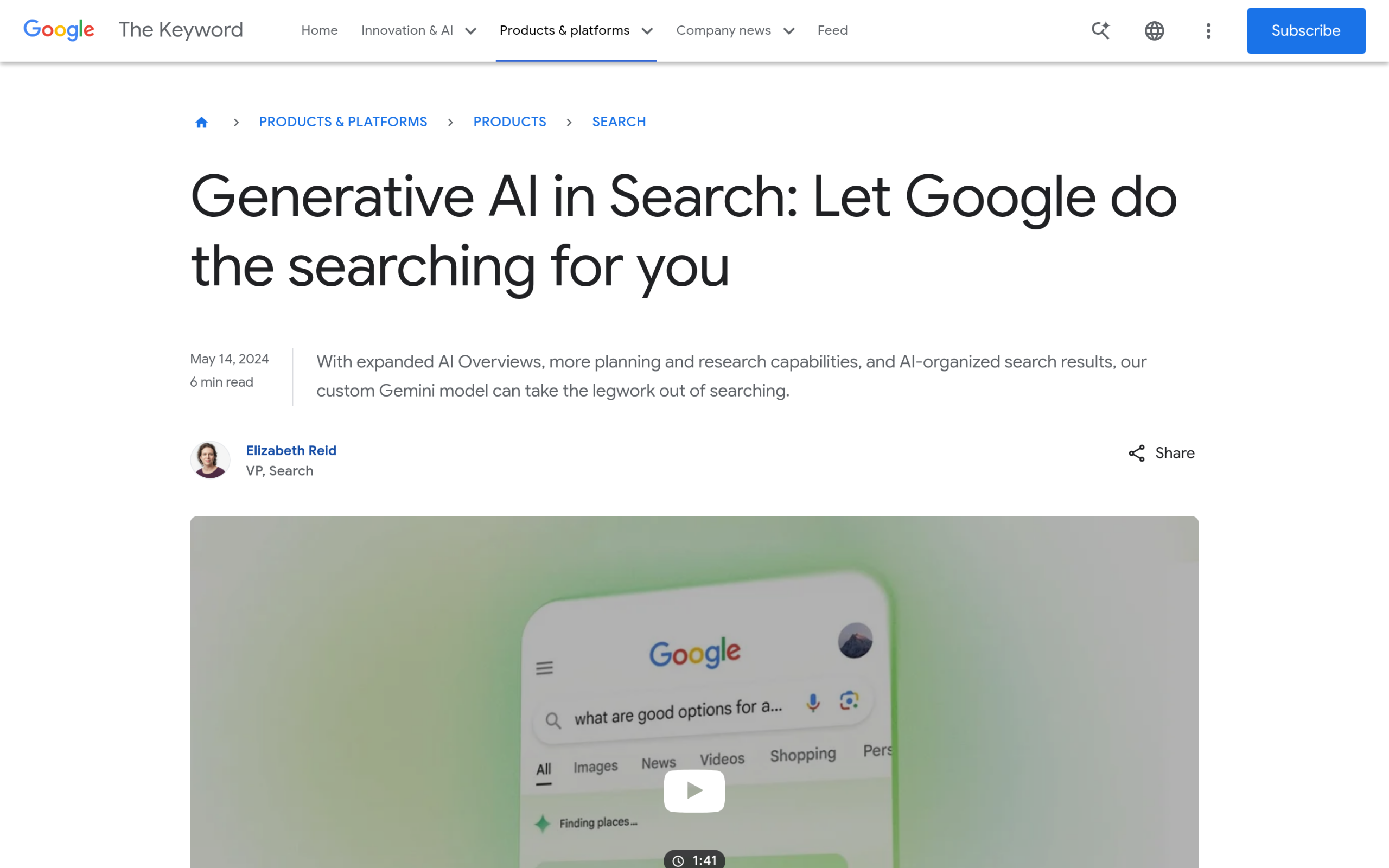
SGE did not get shut down. It graduated. At Google I/O in May 2024, Google announced that the feature people had “already used billions of times through our experiment in Search Labs” was rolling out to everyone in the United States as AI Overviews, starting May 14, 2024. The shaded experiment became a permanent, default part of Search, with Google projecting access for over a billion people by the end of that year.
So the practical translation is simple. When a 2023 article says “SGE,” the 2026 equivalent is “AI Overviews.” Same lineage, new name, no waitlist. Google then added a second surface, AI Mode, for questions that need more than a quick summary. Together they replaced the single SGE panel with two distinct experiences.
Also Read: Answer Engine Optimization for WordPress for the complete on-site playbook behind getting cited by AI answers.
AI Overviews vs AI Mode: The Difference
The two are easy to confuse because both sit on top of regular Search and both use AI. The split comes down to how much thinking the query needs.
| AI Overviews | AI Mode | |
|---|---|---|
| Built for | Quickly grasping a topic, then jumping off to links | Exploration, reasoning, and complex comparisons |
| Query type | Standard searches where a summary adds value | Nuanced questions that used to take several searches |
| How it works | Summary plus a diverse set of supporting links | Query fan-out across subtopics, then a synthesized answer |
| Where it shows | Top of the standard results page | A dedicated mode you switch into |
Google describes both as showing “a wider and more diverse set of helpful links” than classic results, using query fan-out to break a question into subtopics. The takeaway for publishers: these features pull from the same index your normal pages already live in. There is no separate AI index to submit to.
Why Your Old SGE Optimization Checklist Is Outdated
Most 2023 SGE guides told you to do one of three things: join the Labs waitlist, write in a specific “conversational” format to please the panel, or add some special tag so the AI would notice you. All three are dead weight in 2026.
- The waitlist is gone. AI Overviews are on by default for eligible queries.
- There is no secret format. Google did not publish a magic structure that guarantees inclusion.
- There is no special markup that opts you in. We will get to exactly what Google says about that next.
If a guide you are reading still references “SGE,” a waitlist, or a one-time AI tag, treat it as a historical artifact, not a plan.
What Google Says You Actually Need
This is the part that surprises people who expected a new ruleset. In its own documentation on AI features in Search, Google is blunt: “There are no additional requirements to appear in AI Overviews or AI Mode, nor other special optimizations necessary.” It goes further: “You don’t need to create new machine readable files, AI text files, or markup to appear in these features.”
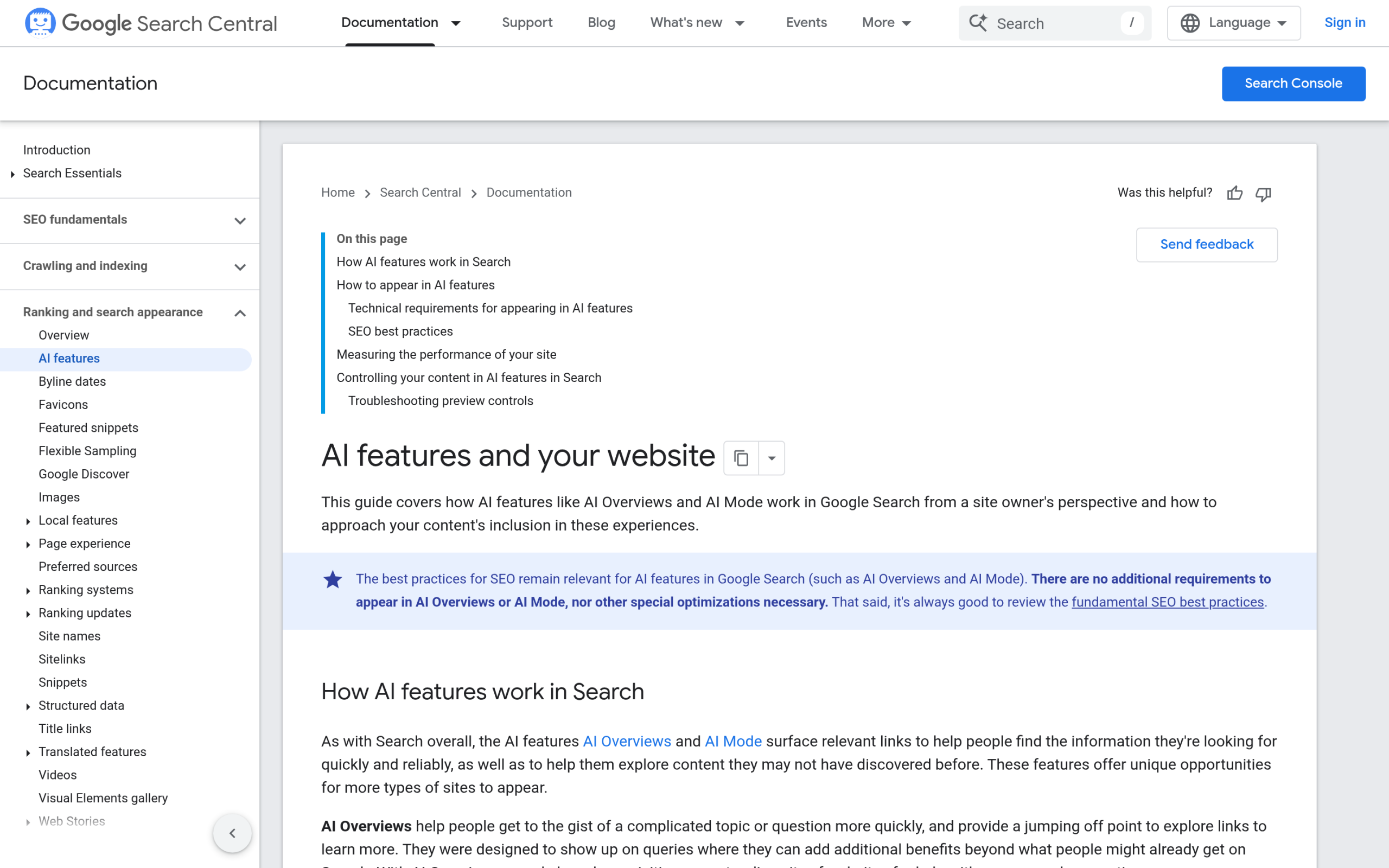
To be eligible, a page only has to meet standard Search criteria. It needs to be indexed and eligible to appear in a snippet. From there, Google points to the same fundamentals it always has: allow crawling, create helpful people-first content, deliver a good page experience, and use structured data accurately. Nothing AI-specific, nothing exotic.
That does not make AI Overviews easy. It means the bar is good SEO done well, not a separate game.
How to Optimize Your WordPress Site for AI Overviews and AI Mode
Since the requirements are standard Search fundamentals, here is how that translates into concrete WordPress work, ordered by impact.
- Make sure AI crawlers can reach you. Eligibility starts with crawlability. Check that your robots.txt is not blocking Googlebot, and decide deliberately which AI crawlers you allow.
- Write genuinely helpful, people-first content. AI Overviews favor pages that answer the question directly and completely. Lead with the answer, then support it.
- Use structured data accurately. Article, FAQ, and HowTo schema help Google understand your page. Accuracy matters more than volume here.
- Show experience and expertise. First-hand experience, named authors, and real evidence are what separate a citeable page from a generic one.
- Build topical depth. A single thin post rarely gets cited. Clusters of connected, complete coverage do.
Also Read: E-E-A-T for AI Search on WordPress for how to prove experience and expertise on every post.
For the crawler side, our guide to controlling AI crawlers with robots.txt walks through which bots to allow. For the structured data side, a schema markup generator for WordPress keeps your Article and FAQ markup accurate without hand-coding. And if you are building coverage on a subject, our topical authority guide shows how to structure a cluster.
How to Tell If You Are Actually Getting Cited
Here is the catch that classic SEO tools miss. When AI Overviews or AI Mode use your page, the visit often does not look like a normal Google click in your analytics. You can rank well and still have no clear signal that you were cited. That blind spot is why measurement is its own task.
A free WordPress plugin like RankReady closes the loop here. It logs AI crawler hits in real time, tracks AI referral traffic from sources like gemini.google.com and chatgpt.com, surfaces a 30-day citation candidates leaderboard, and gives each post a readiness score out of 100. Instead of guessing whether your AI Overviews work paid off, you watch the crawler log and the referral data move.
So, Is “Google SGE” Still a Thing?
No. SGE was the 2023 experiment. It became AI Overviews in 2024 and was joined by AI Mode for deeper questions. The strategy is no longer “optimize for SGE.” It is helpful content, accurate structured data, clean crawlability, and real expertise, then measuring whether AI answers actually pick you up. Drop the old label and the rest gets a lot clearer.
Suggested Reading
- Answer Engine Optimization (AEO): The Complete WordPress Guide
- AI Overview Tracking for WordPress
- E-E-A-T for AI Search on WordPress
- Schema Markup Generator for WordPress
- Control AI Crawlers with robots.txt in WordPress
