










Key Takeaways
- Generative engine optimization (GEO) is the practice of improving how often your content is cited in AI-generated answers from tools like ChatGPT, Perplexity, and Google AI Overviews.
- The term comes from a 2024 research paper that found GEO methods can lift a source’s visibility in generative engine responses by up to 40%.
- GEO, AEO, and LLM SEO describe largely the same goal: being the source an AI quotes. Do not let the alphabet soup distract you.
- The practical work on WordPress is structure, citable facts, schema, and an llms.txt file, layered on solid traditional SEO.
- A free plugin can generate the schema and llms.txt and track which AI bots fetch you, but it cannot make weak content citable.
The first time a client asked me about “GEO,” I assumed they meant local search. They did not. They had asked Perplexity a question in their own industry, watched it write a confident answer, and noticed every cited source was a competitor. None were them. The question they brought me was simple: how do we become one of the sources the AI pulls from? That is the whole job of generative engine optimization.
GEO is one of three or four names floating around for the same shift, and the jargon scares people off more than the work does. So here is a plain guide: what GEO actually is, what the research says, how it relates to the other acronyms, and the practical steps to do it on a WordPress site.
What is generative engine optimization?
Generative engine optimization is the practice of structuring your content so generative engines cite it when they answer a question. The term comes from a 2024 academic paper (“GEO: Generative Engine Optimization,” Aggarwal and colleagues, accepted to KDD 2024). The authors define generative engines as systems that “use generative models to gather and summarize information to answer user queries,” and they “synthesize information from multiple sources and summarize them using LLMs.” Think ChatGPT, Perplexity, Google’s AI Overviews, and similar tools.
The paper frames GEO as “the first novel paradigm to aid content creators in improving their content visibility in generative engine responses.” In normal language: traditional SEO optimizes to rank a link, GEO optimizes to be quoted in the answer. The page might never get the click, but your brand shows up inside the response a person actually reads.
GEO vs AEO vs LLM SEO: same goal, different labels
Here is the honest part most posts skip. Generative engine optimization, answer engine optimization, and LLM SEO are not three different disciplines. They are three labels for one goal: being the source an AI quotes. GEO came from the research world, AEO from the SEO community, and LLM SEO is the plain-English version. The tactics underneath are about 90 percent the same.
So do not buy three different “courses” or chase each acronym separately. Pick the work, not the label. If you already read our answer engine optimization guide or the LLM SEO walkthrough, you have already met most of GEO. This guide is the umbrella that ties them together.
Also Read: How to Optimize Content for AI Search for the per-page workflow that sits under all three acronyms.
Does GEO actually work?
The research says yes, with a caveat. The same KDD 2024 paper found that GEO methods “can boost visibility by up to 40% in generative engine responses.” That is a meaningful lift for what amounts to better structuring and sourcing of content you were already writing.
The caveat, also from the paper: “the efficacy of these strategies varies across domains.” What lifts visibility for a finance query is not identical to what works for a recipe or a software tutorial. So treat any single tactic as a hypothesis to test on your own content, not a guarantee. The 40% is a ceiling from controlled experiments, not a number you bank on every post.
How to do GEO on a WordPress site
GEO is not a plugin you flip on. It is a set of habits applied to each page, on top of solid traditional SEO. The core moves:
- Answer first, then expand. Lead each section with a clear, self-contained sentence a model can lift directly.
- Back claims with citable facts. Specific numbers, named sources, and direct quotations give a generative engine something concrete to repeat and attribute.
- Add structured data. Article schema, Speakable, and FAQPage where they fit tell engines what the page is and which parts matter.
- Publish an llms.txt file. It gives AI crawlers a clean index of your key content, plus Markdown versions they can read without fighting your page markup.
- Prove who wrote it. Real author, bio, and Person schema raise the trust a model needs before it quotes you.
None of this requires code. A block theme like Nexter handles clean headings and structure, and a plugin handles the schema and llms.txt layer.
Also Read: Speakable Schema in 2026 for the markup that flags your most quotable sentences.
Measure your GEO results
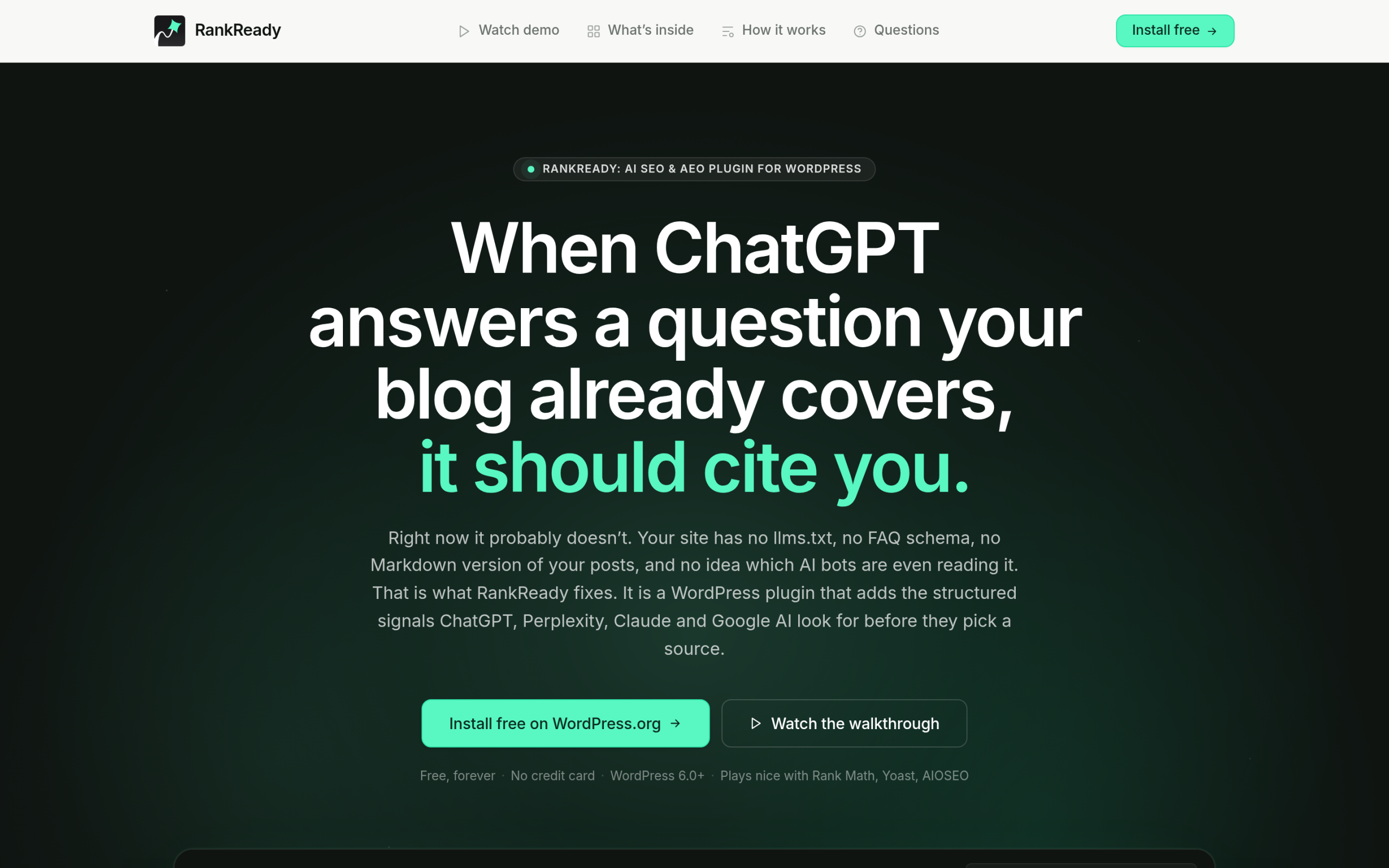
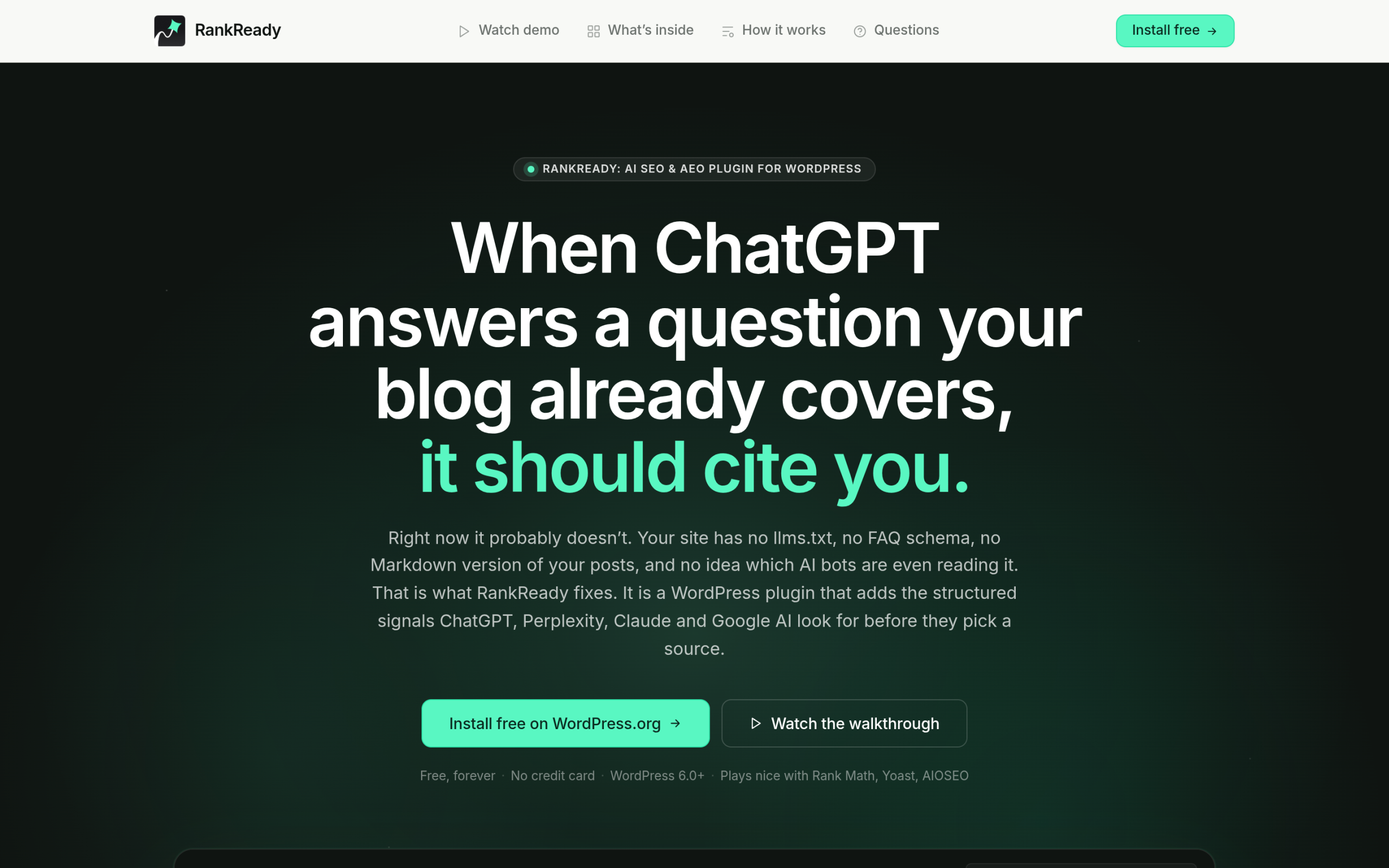
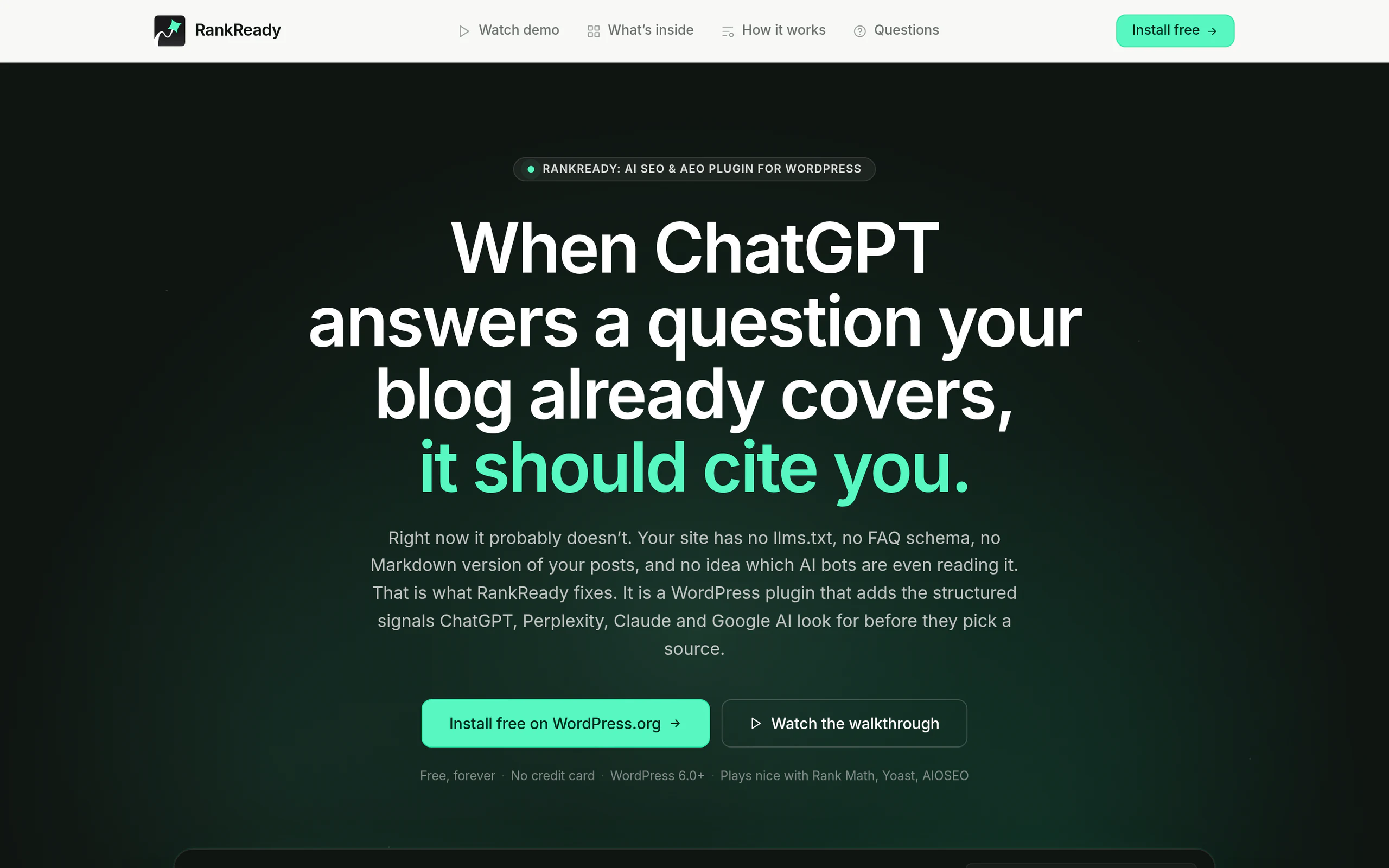
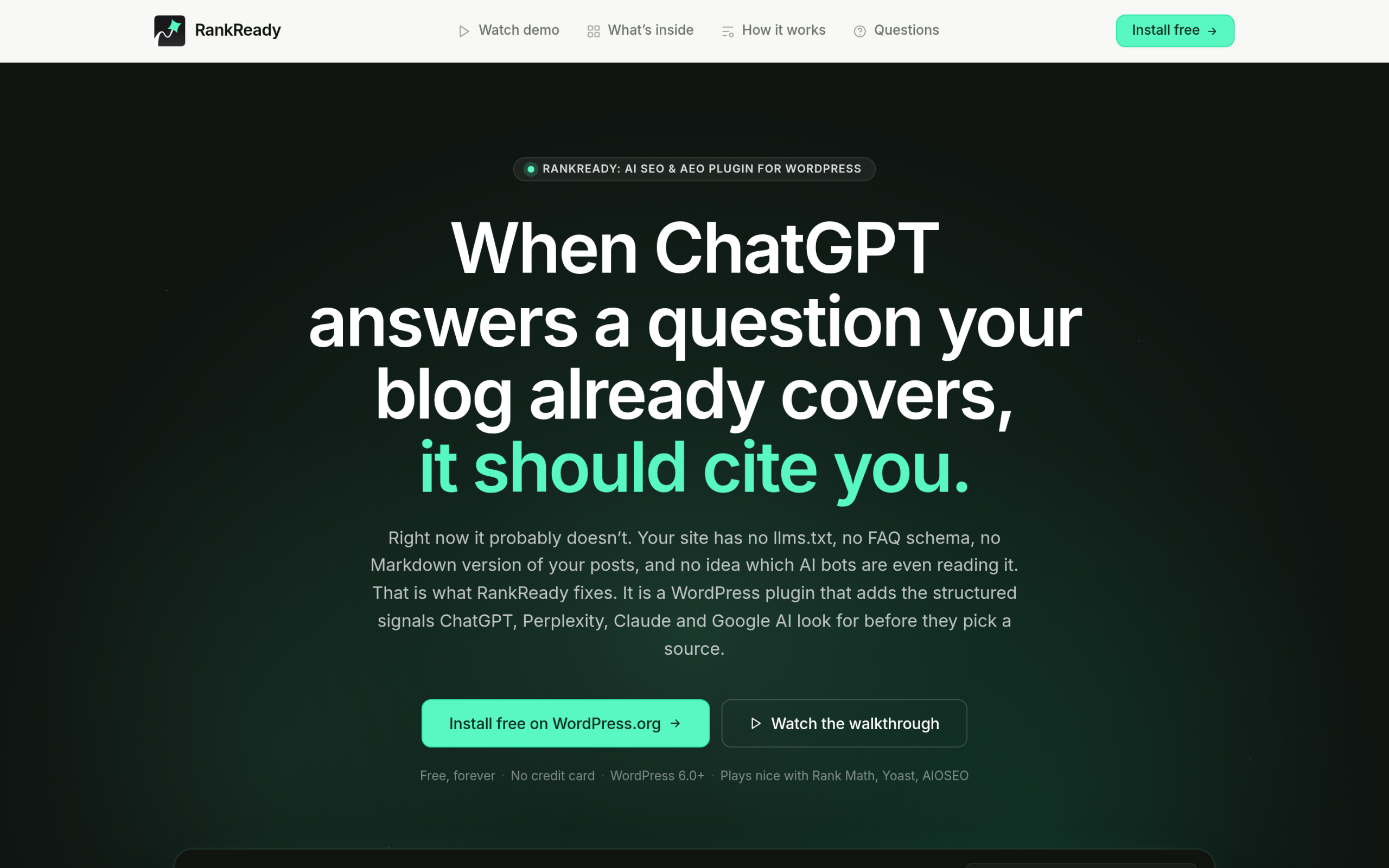
GEO without measurement is guessing. Google Analytics will not tell you that PerplexityBot fetched a post or that ChatGPT built an answer from it. You need to watch the AI layer directly. RankReady, the free AI SEO plugin from POSIMYTH, is built for that: it generates Article, Speakable, FAQPage, and HowTo schema plus your llms.txt and Markdown endpoints, then shows a live log of 31 named AI crawlers (GPTBot, ClaudeBot, PerplexityBot, Google-Extended, and more), a citation-candidates leaderboard of posts those bots fetched in the last 30 days, and a per-post readiness score from 0 to 100.
It is free, GPL-2.0-or-later, and runs on WordPress 6.0+ with PHP 7.4+. The honest boundary, same as every tool: it ships and measures the signals, it does not write your content or promise a citation. You can see the full feature set on the RankReady plugin page.
Also Read: What Is Entity SEO? on helping engines recognise who and what your content is about.
Where to start with GEO
Do not try to do everything at once. Start with your handful of pages that already rank or already get traffic, because GEO works best on content engines can already find. Rewrite those to answer first, add real sources, and ship the schema and llms.txt layer. Then watch the crawler log for a few weeks and double down on the pages that get fetched.
Generative engine optimization is not a separate empire from SEO. It is the same content, structured and sourced so a machine can quote it with confidence. If you want the full map of how these pieces fit at a site level, the 2026 AI-readiness stack lays out llms.txt, schema, MCP, and more in order.
Suggested Reading
- Answer Engine Optimization for WordPress: The Complete Guide
- LLM SEO for WordPress: How to Get Cited by ChatGPT, Gemini and Perplexity
- How to Optimize Content for AI Search: A Step-by-Step Guide
- Speakable Schema: Markup for Voice and AI Answers
- The 2026 AI-Readiness Stack for WordPress
