





Key Takeaways
- Crawl budget is the set of URLs Google can and wants to crawl on your site. Google defines it as a mix of a crawl capacity limit and crawl demand.
- Most WordPress sites do not have a crawl budget problem. Google says if your pages get crawled the same day you publish them, you can skip the topic entirely.
- Where WordPress does waste crawl is in its defaults: tag, category, author and date archives, attachment pages, internal search URLs, feeds, and parameter URLs on WooCommerce stores.
- The fixes are boring and effective: noindex thin archives, block junk URLs in robots.txt, keep an accurate XML sitemap, return clean 404s, and cut redirect chains.
- The new 2026 wrinkle is AI crawlers. GPTBot, ClaudeBot, PerplexityBot and others hit your server on their own schedule, and deciding who gets in is a separate call from Googlebot crawl budget.
Picture a WordPress blog with 80 posts. The owner reads that “crawl budget” is hurting their rankings, spends a weekend blocking URLs and pruning archives, and changes nothing that Google cared about. Meanwhile a WooCommerce store with 12,000 filterable product URLs genuinely is burning Googlebot’s time on near duplicate pages and never realizes it.
Crawl budget is one of the most misunderstood ideas in WordPress SEO. It is real, it is documented by Google, and for a specific kind of site it matters a lot. For most blogs it does not. This guide draws the line honestly: what crawl budget actually is, whether your site is in the group that needs to care, where WordPress quietly wastes it by default, and the new question nobody was asking two years ago, which AI crawlers you actually want spending time on your server.
What Crawl Budget Actually Is
Google defines crawl budget as “the set of URLs that Google can and wants to crawl” on your site. That phrasing matters, because it splits into two separate things.
The first is the crawl capacity limit: “the maximum number of simultaneous parallel connections that Google can use to crawl a site, as well as the time delay between fetches.” Googlebot does not want to hammer your server into the ground, so it watches how fast and reliably your site responds. A fast, healthy site earns more simultaneous connections. A slow site, or one throwing server errors, gets crawled more gently.
The second is crawl demand: how much Google actually wants to crawl you, based on your “site’s size, update frequency, page quality, and relevance, compared to other sites.” A popular news site that publishes hourly generates far more crawl demand than a static brochure site.
Crawl budget is where those two meet. And here is the part people skip: crawling is not ranking. Google is explicit that “not every page that is crawled will necessarily be indexed. After crawling, each page must be evaluated, consolidated, and assessed to determine its suitability for the index.” Getting crawled is the price of admission, not the prize.
Do You Even Need to Worry About It?
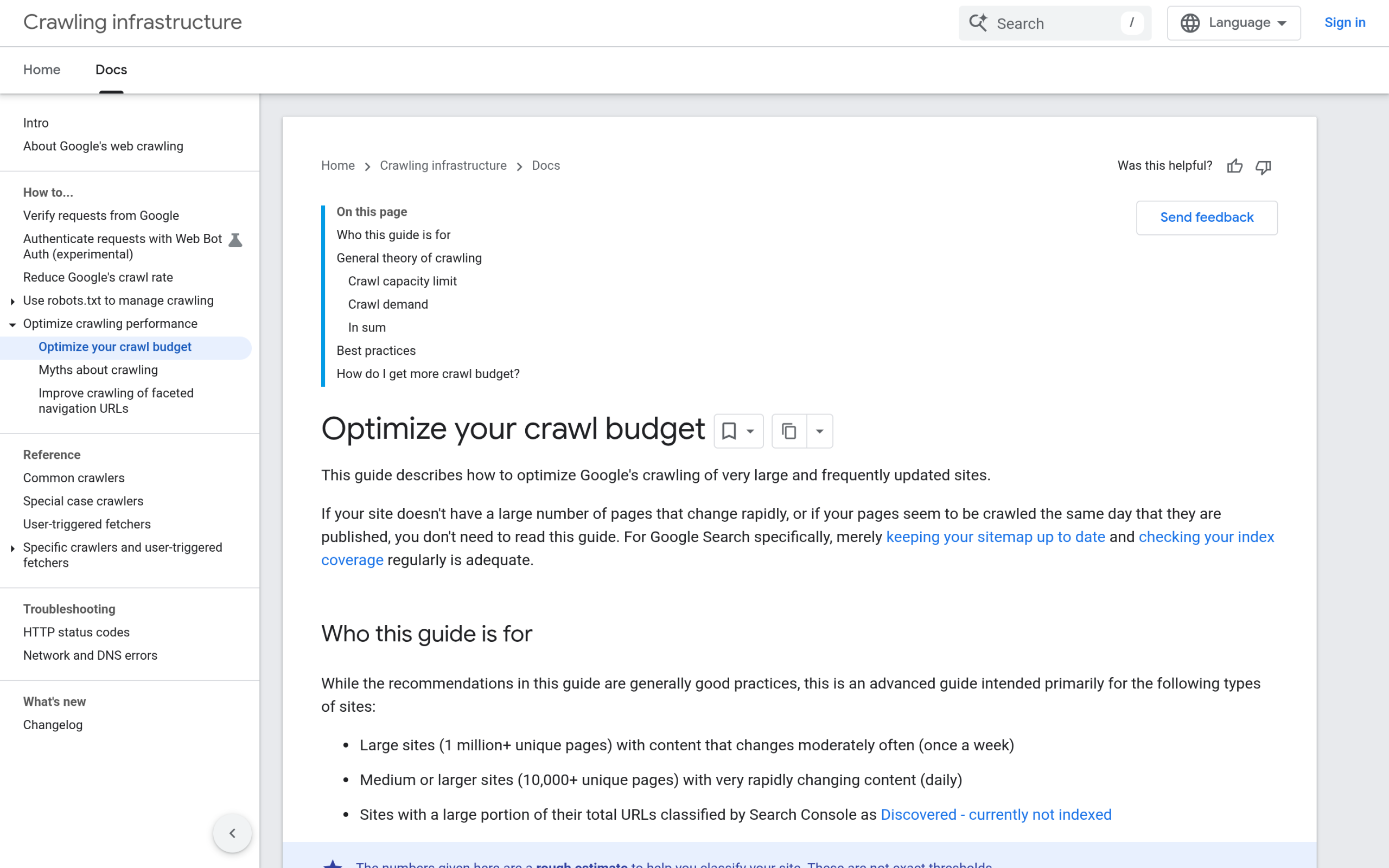
Probably not. Google’s own crawl budget guide opens by telling most site owners to leave: “If your site doesn’t have a large number of pages that change rapidly, or if your pages seem to be crawled the same day that they are published, you don’t need to read this guide.”
The guide is written for three specific situations:
- “Large sites (1 million+ unique pages) with content that changes moderately often (once a week).”
- “Medium or larger sites (10,000+ unique pages) with very rapidly changing content (daily).”
- Sites where a large share of URLs show up in Search Console as “Discovered – currently not indexed.”
A 100 post WordPress blog does not qualify on page count. But that third bucket is the sneaky one, because WordPress can inflate your real URL count far beyond your post count without you noticing. A 200 post blog can quietly expose several thousand crawlable URLs through archives, feeds, and parameters. That is when a small site starts to look like a medium one to Googlebot.
Also Read: Web Crawlers List: the most common bots and spiders to understand which crawlers actually visit your site and why.
Where WordPress Quietly Wastes Crawl Budget
WordPress is generous with URLs. Out of the box it generates a page for almost every way you might slice your content, and most of those pages are thin, duplicative, or both. On a small blog that is harmless. On a large or fast changing site, it is exactly the “low value-add URLs” Google warns eat into crawling.
Here are the usual WordPress culprits and what to do with each.
| WordPress URL type | Why it wastes crawl | Usual fix |
|---|---|---|
| Tag archives | Often one tag per post, creating near empty archive pages | noindex, or prune tags |
| Author & date archives | Duplicate lists of the same posts, common on single author sites | noindex or disable |
| Attachment / media pages | A standalone URL for every uploaded image | Redirect to the parent post |
| Internal search results | Infinite unique ?s= URLs | Block in robots.txt |
| Feeds & paginated comments | Extra crawlable copies of content | Leave feeds, block comment feeds if noisy |
| Parameter & filter URLs | WooCommerce filters and sorts multiply URLs fast | Block junk parameters in robots.txt |
The pattern is the same every time. Decide whether a URL type deserves to be in Google’s index. If yes, let it be crawled and indexed. If no, either stop generating it or tell crawlers not to bother. Faceted navigation on stores is the biggest offender, because a handful of filters can turn 500 products into tens of thousands of URL combinations. If you are scaling pages deliberately, our guide to programmatic SEO on WordPress covers how to do that without creating a crawl sink.
How to Fix Crawl Budget in WordPress
Google’s best practices for crawl efficiency translate almost directly into WordPress settings. You do not need enterprise tooling. You need to make a few decisions and enforce them consistently.
- Consolidate duplicates and manage your URL inventory. Pick canonical versions, noindex thin tag and author archives, and stop publishing near identical pages.
- Block unimportant URLs in robots.txt. Google explicitly recommends this for things like internal search and infinite filter URLs. A clean robots.txt is the single biggest win.
- Return proper 404 or 410 for removed pages, and eliminate soft 404s, where a “not found” page returns a 200 status. Soft 404s trick Google into crawling dead ends again and again.
- Keep your XML sitemap current with accurate
<lastmod>dates. The sitemap is how you tell Google what changed and is worth re crawling. - Avoid long redirect chains, which waste a fetch on every hop before Google reaches the real page.
- Make pages load efficiently, because faster responses raise your crawl capacity limit. A good WordPress cache plugin does real work here.
Most of these levers live in one place if you run the Nexter SEO module inside Nexter Extension. Its free feature set includes Robots & Robots.txt management, XML Sitemaps, a Redirects & 404 Monitor, and Instant Indexing via IndexNow, which are exactly the crawl efficiency controls Google’s checklist asks for. You can also edit robots.txt directly, and if you prefer to start from a template our WordPress robots.txt generator guide walks through safe defaults.
Also Read: How to edit your WordPress robots.txt for AI crawlers, including exactly which user-agent lines to add.
The AI-Crawler Angle: A Different Kind of Crawl Budget
Here is what changed since the old crawl budget playbooks were written. Your server is no longer visited mostly by Googlebot and Bingbot. In 2026 a growing share of your traffic is AI crawlers, and they do not play by Googlebot’s polite rules about your crawl capacity limit.
They also are not one thing. OpenAI alone runs three distinct crawlers, and the difference decides how you should treat them:
- GPTBot (
GPTBot/1.4; +https://openai.com/gptbot) is “used to make our generative AI foundation models more useful and safe.” This is the training crawler. Disallow it in robots.txt if you do not want your content used for model training. - OAI-SearchBot (
OAI-SearchBot/1.4; +https://openai.com/searchbot) surfaces websites in ChatGPT’s search feature. If you want to appear in ChatGPT search results, you allow this one. - ChatGPT-User (
ChatGPT-User/1.0; +https://openai.com/bot) handles “certain user actions in ChatGPT and Custom GPTs.” Because it fires in response to a real person’s request, OpenAI notes it is not governed by robots.txt the way automatic crawling is.
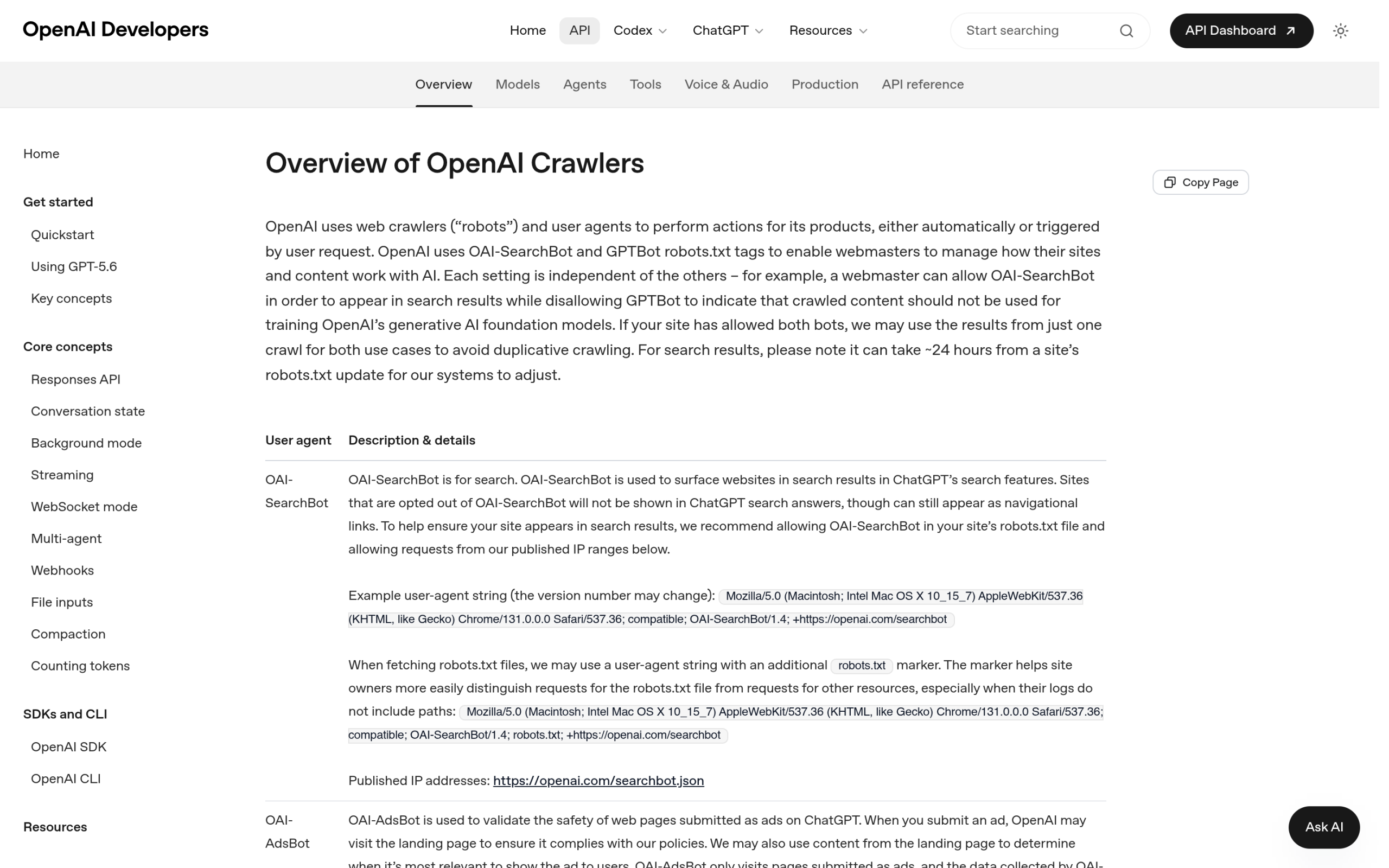
Multiply that by every AI company, ClaudeBot, PerplexityBot, Google-Extended, Bytespider, CCBot and more, and you have a real decision to make. Training crawlers spend your server resources and give you nothing measurable back. Search and citation crawlers can send you referral traffic and get you cited in AI answers. Blocking is not automatically the right move, and neither is allowing everything. It is a budget question, just aimed at a different set of bots. Our breakdown of how to handle GPTBot on WordPress goes deeper on the training versus search distinction.
If you want AI assistants to read a clean, cheap to crawl version of your content instead of your full HTML, an llms.txt file is emerging as the low friction option, and the Nexter SEO module can generate one for you.
How to See Who Is Actually Crawling You
You cannot manage what you cannot see. Before you block or allow anything, look at who is really hitting your site.
- Server access logs are the ground truth. Every bot, every request, with a timestamp and user-agent. Most hosts expose these through cPanel or your CDN dashboard.
- Google Search Console Crawl Stats (Settings, then Crawl stats) shows Googlebot’s activity specifically: total requests, average response time, and any host status problems. Our guide to Google Search Console for WordPress covers where to find it.
- The AI-crawler blind spot. Neither of the above tells you cleanly which AI bots fetched which posts, or whether ChatGPT and Perplexity are actually citing you.
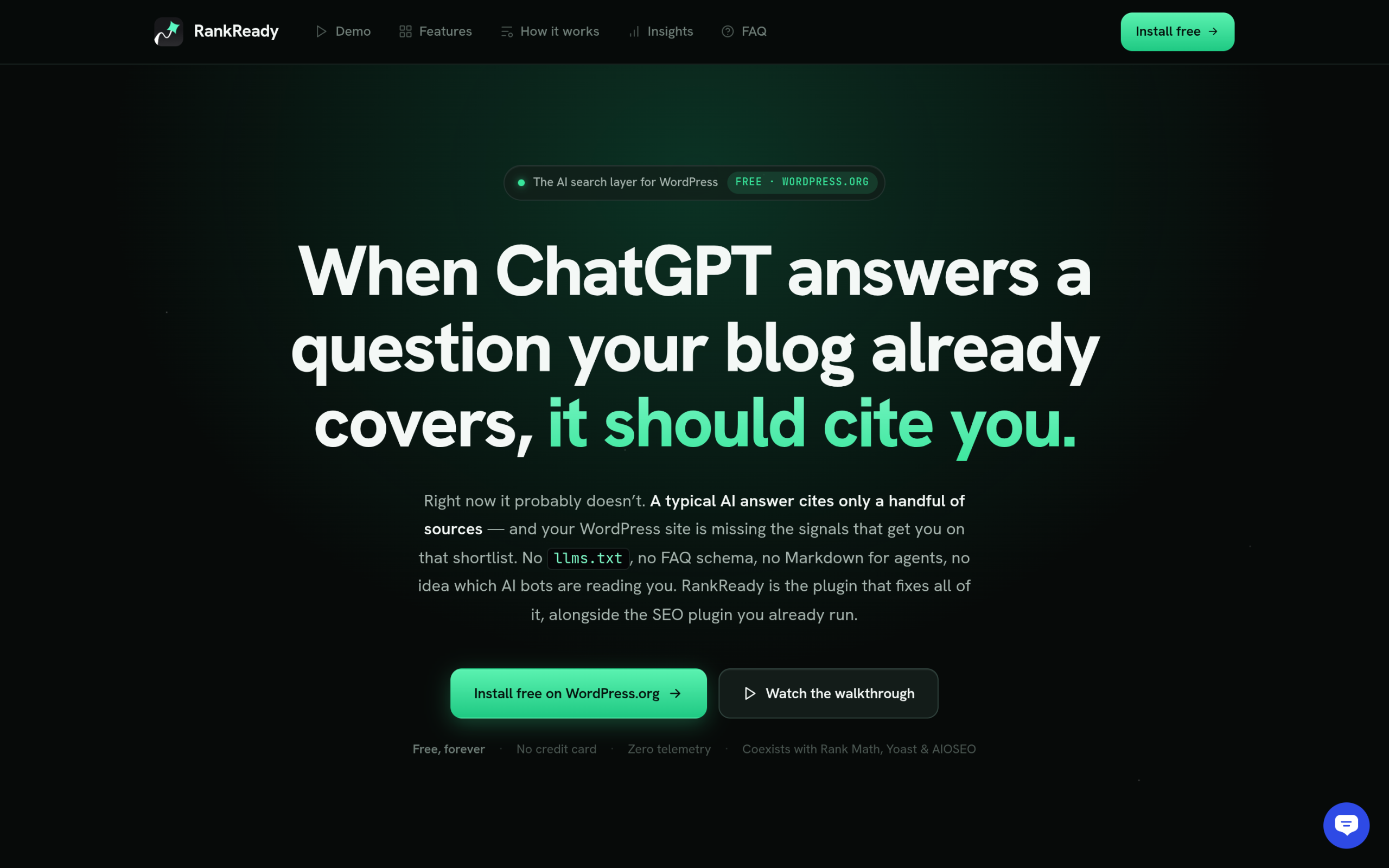
That last gap is where a dedicated tool helps. RankReady, a free GPL plugin, keeps a training-bot log showing which AI crawlers indexed which pages (GPTBot, ClaudeBot, Google-Extended, Bytespider, CCBot and more), a citation-bot candidates view for bots that fetch a page mid answer (ChatGPT-User, OAI-SearchBot, PerplexityBot, Claude-Web, DuckAssistBot), and it lets you allow or block 31 AI crawlers individually, syncing those rules to your real robots.txt. To be clear about what it is: this is an AI-crawler visibility and control layer, not a Googlebot crawl budget manager. It answers “who is crawling me and are they citing me,” not “is Google wasting fetches on my tag pages.” For the broader landscape of measurement tools, see our roundup of AI visibility tools.
Frequently Asked Questions
Does crawl budget affect my Google rankings?
Not directly. Crawl budget affects how quickly and thoroughly Google discovers your pages. Ranking is a separate step. Google says a crawled page still has to be “evaluated, consolidated, and assessed” before it can be indexed, and only indexed pages can rank. If your important pages are already getting crawled and indexed promptly, spending effort on crawl budget will not lift your rankings.
Should I block AI crawlers to save crawl budget?
It depends on the crawler. Blocking training bots like GPTBot or CCBot saves server resources and keeps your content out of model training, with little downside for most sites. Blocking search and citation bots like OAI-SearchBot or PerplexityBot can remove you from AI answers that might otherwise send referral traffic. Decide per bot, not with one blanket rule.
How do I know if my WordPress site has a crawl budget problem?
Check Google Search Console. If the Pages report shows a large number of URLs stuck in “Discovered – currently not indexed,” and your Crawl Stats show Googlebot spending most of its requests on archives, feeds, or parameter URLs rather than your real content, you have a crawl efficiency problem worth fixing. If new posts get indexed within a day or two, you do not.
Suggested Reading
- What Is a WordPress robots.txt Generator? (And Which One to Use)
- Programmatic SEO on WordPress: Scale Pages Without Penalties
- How to Handle GPTBot on WordPress
- AI Visibility Tools: Track Your Place in AI Answers
- Image SEO for WordPress: Optimize for Search and AI
