







If you came here in 2024 to choose between Cloudflare Turnstile and Google reCAPTCHA, the answer was “they are both free, pick what fits your stack.” In 2026 the answer changed. Google quietly migrated every reCAPTCHA site to reCAPTCHA Enterprise on Google Cloud, and the free quota is now 10,000 assessments per month, enforced per Cloud project. Cross that line and you need a billing instrument plus an $8 flat fee for the next 90,000 assessments. Cloudflare Turnstile, meanwhile, is still free with unlimited challenges on the standard plan, no card, no Cloudflare DNS requirement, no monthly cap.
That single shift, combined with the GDPR pressure of the last 18 months and Cloudflare’s new “Block AI Scrapers” toggle that ships with Turnstile, is why this comparison reads differently today than it did a year ago. The choice is no longer Turnstile vs reCAPTCHA on features. It is “do you want a CAPTCHA that stays free and private, or do you want a CAPTCHA that ties you to Google Cloud billing as soon as traffic grows.”
This guide walks through the five differences that actually decide it in 2026, with vendor-confirmed pricing, the new AI-scraper rules, and the WordPress plugin reality on both sides.
What is Cloudflare Turnstile?

Cloudflare Turnstile is a CAPTCHA alternative built by Cloudflare in 2022 and rolled into general availability in 2023. Instead of asking visitors to identify crosswalks or buses, it runs a rotating set of non-interactive challenges in the browser (proof-of-work, browser-fingerprint signals, and behavior heuristics) and decides whether the request looks human before any form is submitted.
The big shift in 2026 is that Turnstile now ships with native protection against AI scrapers and LLM training crawlers. Site owners can flip on the Block AI Scrapers toggle inside the Cloudflare dashboard and Turnstile will challenge requests from known AI agents (GPTBot, ClaudeBot, PerplexityBot, and the long tail of headless crawlers harvesting content for model training). That same toggle does not exist for reCAPTCHA, which still classifies AI scraper traffic with the same v3 score it gives any other bot.
Pros and Cons of Cloudflare Turnstile
Pros
- Free at any scale. Cloudflare’s published plan page lists “Unlimited challenges” on the free tier with up to 20 widgets per account. There is no surprise quota wall at 10,000 verifications.
- No cookies, no cross-site tracking. Turnstile uses ephemeral signals scoped to the current session. That makes the GDPR consent banner a simpler conversation with your DPO.
- Works without Cloudflare DNS. You can drop Turnstile on a WordPress site hosted anywhere. You don’t need to migrate nameservers.
- Accessibility wins. No image grids means screen reader users and people with visual impairments are not punished by the verification step.
- AI scraper toggle (2026 addition). One click in the dashboard adds AI-bot challenges to every form using Turnstile.
Cons
- Smaller signal set than reCAPTCHA Enterprise. reCAPTCHA’s risk model has 20+ years of Google traffic behind it. Turnstile relies on Cloudflare’s edge network signals, which are excellent but younger.
- Fewer customization knobs. You can pick visible, non-interactive, or fully invisible. You cannot tune a numeric risk score the way reCAPTCHA v3 lets you.
- Migration effort. If you are coming from reCAPTCHA v2 or v3, the server-side verification endpoint and response shape are different. Plan an afternoon of integration work per form.
Protect your website from unwanted access. Here’s how to secure your WordPress login page.
What is Google reCAPTCHA?
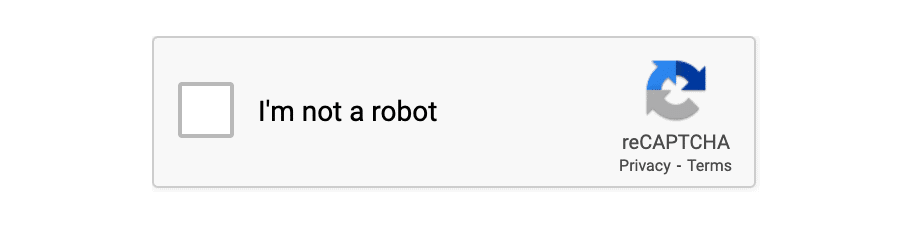
Google reCAPTCHA is a bot-detection service that launched in 2007 (after Google acquired the original reCAPTCHA project from Carnegie Mellon) and went through three major versions: v2 with the “I’m not a robot” checkbox, v3 with the invisible 0.0 to 1.0 risk score, and reCAPTCHA Enterprise, which now lives inside Google Cloud as part of Google Cloud Fraud Defense.
The 2026 reality everyone needs to know: Google quietly merged the classic standalone reCAPTCHA console into Google Cloud during the 2025 migration. New sites are provisioned as reCAPTCHA Enterprise by default. Per Google’s own documentation, the free tier is now 10,000 assessments per month per Cloud project. Above 10,000 you pay an $8 flat fee for the next 90,000 assessments, then $1 per 1,000 above 100,000. The “1 million calls per month, then upgrade” rule that older WordPress tutorials still reference applies only to legacy reCAPTCHA Standard sites that have not yet been migrated.
For a high-traffic WordPress site with a busy login form and a noisy contact form, 10,000 assessments per month is not generous. A site doing 350 form submissions per day already eats the free quota by month-end.
Pros and Cons of Google reCAPTCHA
Pros
- Deep risk model. Google’s behavior dataset on what a “real human session” looks like is older and broader than any competitor.
- Numeric score (v3) for granular logic. You can let scores above 0.7 through silently, challenge 0.3 to 0.7, and block under 0.3. That conditional logic is harder to replicate elsewhere.
- Mature WordPress plugin ecosystem. The official Google plugin, Advanced Google reCAPTCHA, WPForms reCAPTCHA, and most form builders ship with first-class reCAPTCHA integration. You won’t hit a “no integration exists” wall.
- Transaction risk scoring. reCAPTCHA Enterprise includes a Transaction Protection API for payment fraud signals that Turnstile does not match.
Cons
- Paid above 10,000 assessments per month. The 2026 free quota is tight for anything beyond a brochure site.
- Requires a Google Cloud billing instrument. Even on the free tier, every new site must attach a card. That is the friction WordPress hosts complain about most in 2026 support tickets.
- Cookie-based tracking. reCAPTCHA reads your Google account cookies and shares the signal across every reCAPTCHA-protected site you visit. EU DPAs have flagged this in multiple consent rulings.
- v2 image grids hurt mobile conversion. Form-completion data published by WPForms in 2025 showed a 4.7% drop in submissions when reCAPTCHA v2 challenges were forced on mobile users.
- No AI scraper toggle. reCAPTCHA does not distinguish “GPTBot scraping for training” from “human in a flagged region.” Both get the same score path.
Want to add reCAPTCHA to login forms? Here is how to add reCAPTCHA in login form.
Cloudflare Turnstile vs Google reCAPTCHA [5 Key Differences in 2026]
The five differences below are the ones that actually changed answers between 2024 and 2026. Pricing, AI bots, privacy, WordPress plugins, and customization. We checked each against the vendor’s own documentation in May 2026.
1. Pricing in 2026 (the change everyone missed)
Cloudflare Turnstile
Free. Unlimited challenges. Up to 20 widgets per Cloudflare account. No credit card required. No Cloudflare DNS dependency. Enterprise plan exists for “Contact Sales” pricing but it only unlocks unlimited widgets and managed hostnames, not the core verification engine. The free tier is genuinely production-ready, which is why projects from forums to enterprise SaaS use it without ever moving up a plan.
Google reCAPTCHA
Free up to 10,000 assessments per month per Google Cloud project (verified on Google’s reCAPTCHA pricing documentation, May 2026). Above 10,000:
- 10,001 to 100,000 assessments: $8 flat fee per month
- 100,001 to 1,000,000 assessments: $1 per 1,000 assessments
- 1,000,001+ assessments: custom Enterprise pricing
The bigger friction is the billing instrument requirement. Even sites that stay under 10,000 must attach a Google Cloud billing card to enable the API. WordPress hosts have reported a spike in 2026 support tickets from owners discovering this only after their forms broke post-migration.
If you are a small business running a single contact form, both services land at zero cost. If you are a SaaS, a high-traffic blog, or a forms-heavy site, the math swings hard toward Turnstile.
2. AI Scraper Blocking (new in 2026)
Cloudflare Turnstile
In May 2026 Cloudflare rolled out the Block AI Scrapers dashboard toggle that pairs with Turnstile. When enabled, Turnstile challenges any request whose user-agent or behavior fingerprint matches a known AI training crawler (OpenAI’s GPTBot, Anthropic’s ClaudeBot, Perplexity’s PerplexityBot, ByteDance, Common Crawl, and a maintained list of long-tail scrapers). For WordPress sites that publish original content and want to stay out of unauthorized LLM training sets, this is the first one-click defense that does not require editing robots.txt or wrestling with .htaccess.
Google reCAPTCHA
reCAPTCHA’s v3 score classifies AI scrapers as low-trust bots, but there is no dedicated AI-scraper rule and no toggle equivalent. Google itself trains Gemini on parts of the open web, which puts reCAPTCHA in an awkward position to lead on this signal. If AI-content protection is in your 2026 plan, Turnstile is currently the only CAPTCHA-class product shipping it.
3. Privacy and GDPR
Cloudflare Turnstile
No cookies. No cross-site tracking. No Google account fingerprinting. Cloudflare publishes a Turnstile-specific data processing addendum and lists Turnstile in its GDPR sub-processor docs with the data scope limited to session-level signals (IP, user-agent, behavior heuristics). Your cookie banner does not need a separate Turnstile entry.
Google reCAPTCHA
reCAPTCHA reads Google account cookies (NID, SID, HSID, SSID, APISID, SAPISID) when the visitor has signed in to any Google property, and shares the bot/human signal across the Google ecosystem. In 2022 the French CNIL fined two sites for using reCAPTCHA without explicit consent. The German DPA followed in 2023. In 2026 most EU privacy lawyers tell WordPress sites to either get explicit consent before loading reCAPTCHA, or switch to a no-cookie alternative. Turnstile is the most-recommended replacement in those legal briefs.
4. WordPress Plugin Maturity
Cloudflare Turnstile
The official Cloudflare Turnstile plugin (by Elliot Sowersby / RelyWP) is on the WordPress.org repo with 50,000+ active installs and a 4.9 rating. It auto-protects WordPress core login, registration, comment, and lost-password forms, plus first-class integrations for WPForms, Gravity Forms, Contact Form 7, Fluent Forms, WooCommerce, and Elementor Pro forms. Setup is paste-the-site-key, paste-the-secret-key, save. No Google Cloud project to provision.
Google reCAPTCHA
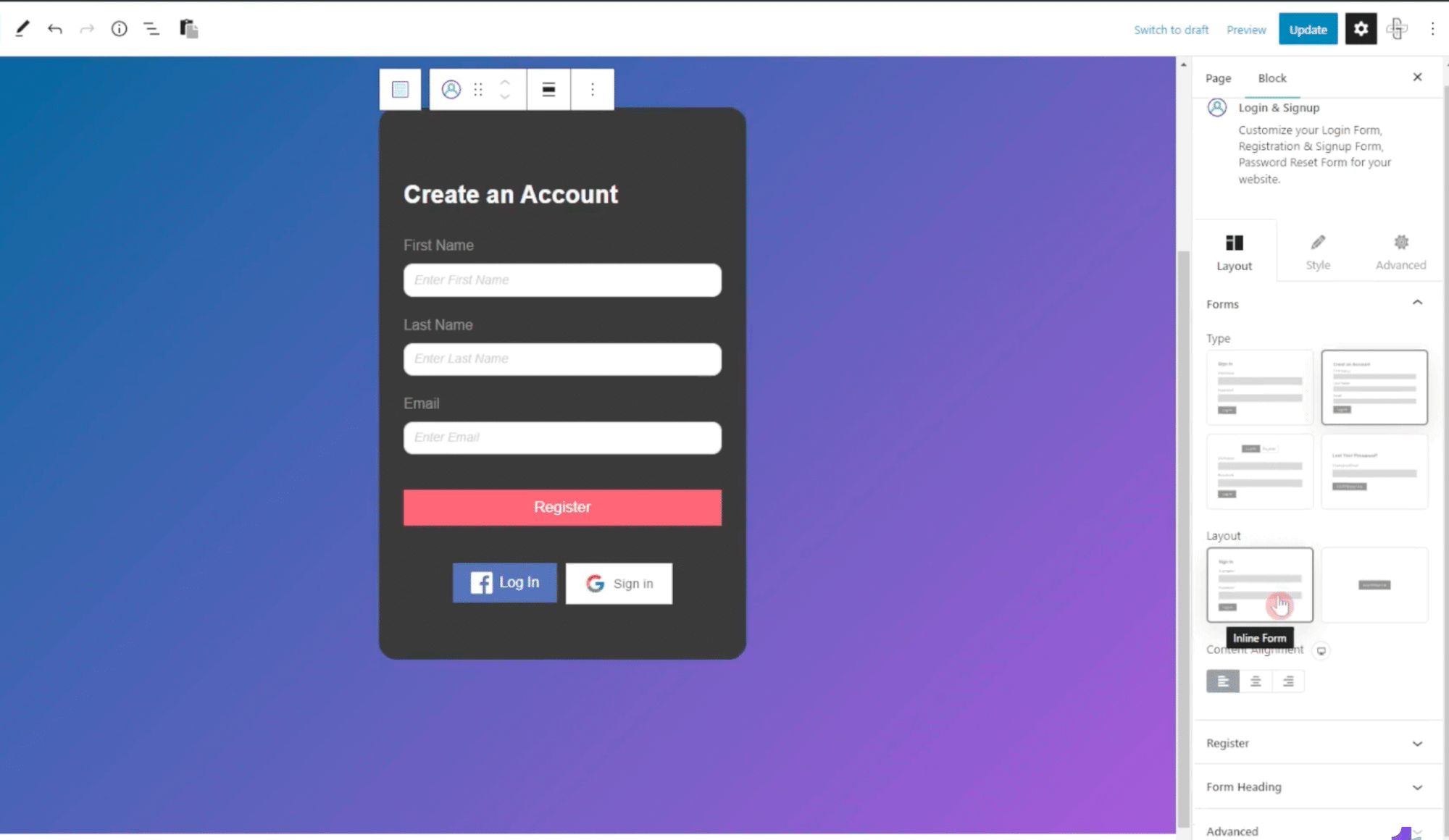
The Login/Registration for Spam Protection block from the Nexter Blocks plugin is a clean way to drop reCAPTCHA into WordPress registration forms without disrupting your design. The classic Advanced noCaptcha and Invisible Captcha plugin still covers core forms. Most premium form builders ship with reCAPTCHA support too. The friction is no longer “is there a plugin” but “do I want to manage a Google Cloud billing account just for my contact form.”
5. Customization and Risk Tuning
Cloudflare Turnstile
Turnstile gives you three widget modes (managed, non-interactive, invisible), a light/dark theme, and a single “challenge passed / failed” boolean from the server-side verify endpoint. There is no risk-score slider. The trade-off is simpler integration and fewer dashboards to babysit, but if you want conditional logic (“if score is between 0.3 and 0.7, send to manual review”), Turnstile cannot give you that out of the box.
Google reCAPTCHA
reCAPTCHA v3 returns a numeric score (0.0 to 1.0) plus reason codes (AUTOMATION, UNEXPECTED_USAGE_PATTERNS, LOW_CONFIDENCE_SCORE, etc.). reCAPTCHA Enterprise extends this with Account Defender, Password Leak Detection, and the Transaction Protection API. If you are building checkout fraud signals or chaining CAPTCHA into a multi-step risk pipeline, reCAPTCHA Enterprise is still the more flexible engine. For most WordPress sites, you will never use 80% of those knobs.
Want to prevent spam on your website? Here’s how to stop contact form spam on WordPress.
Side-by-Side Comparison (2026)
| Criteria | Cloudflare Turnstile | Google reCAPTCHA |
|---|---|---|
| Free tier | Unlimited challenges, 20 widgets | 10,000 assessments/month/project |
| Billing card required | No | Yes (Google Cloud) |
| Cookies / tracking | None | Google account cookies |
| GDPR friction | Low | Consent typically required in EU |
| AI scraper toggle | Yes (May 2026) | No dedicated toggle |
| Risk score | Pass/fail boolean | 0.0 to 1.0 + reason codes |
| WordPress plugin | Official Turnstile plugin (50k+ installs) | Multiple, incl. Nexter Blocks reCAPTCHA |
| Mobile UX | No image grids | v2 grids hurt mobile conversion |
| Owner | Cloudflare | Google Cloud Fraud Defense |
Suggested Reading
- The complete list of web crawlers (and which ones to block in 2026) — when you flip on Turnstile’s AI scraper toggle, this is the reference that tells you which bots you just blocked.
- WordPress FSE block themes vs classic themes — your CAPTCHA strategy should match how your site is built. FSE sites integrate Turnstile slightly differently than classic-theme sites.
- WordPress robots.txt rules for AI crawlers — the layered defense. CAPTCHA stops form spam, robots.txt sets the policy, Cloudflare rules enforce it.
- Allow or block ClaudeBot in WordPress — same decision tree applies to GPTBot, PerplexityBot, and the rest. Pair this with Turnstile’s new toggle.
- How to add reCAPTCHA to an Elementor form — if you stay on reCAPTCHA, this is the canonical Elementor walkthrough.
- Cloudflare Turnstile official documentation — the source of truth for widget modes, server-side verification, and the AI scraper toggle.
Stay updated with Helpful WordPress Tips, Insider Insights, and Exclusive Updates – Subscribe now to keep up with Everything Happening on WordPress!
Wrapping Up
In 2024 the Turnstile vs reCAPTCHA decision was mostly about taste. In 2026 the decision is about cost, privacy, and AI exposure. Cloudflare Turnstile stays free at any scale, ships no cookies, and just added a one-click AI scraper block. Google reCAPTCHA gives you a deeper risk model and granular score tuning, but the free quota is now 10,000 assessments per month and every new site needs a Google Cloud billing account.
For most WordPress sites in 2026, Turnstile is the safer default. Pick reCAPTCHA Enterprise when you specifically need v3 risk scores, Account Defender, or Transaction Protection feeding into a fraud pipeline you have already built.
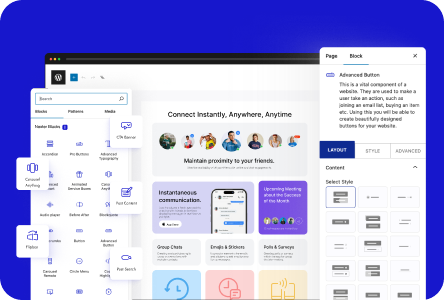
Nexter Blocks is a WordPress plugin that integrates with Google reCAPTCHA out of the box, so if you do stay on reCAPTCHA, you can drop spam protection onto registration and login forms without writing any code. It also gives you 90+ Gutenberg blocks for the rest of your site design work.
Try Nexter Blocks today to secure your forms and elevate your WordPress site design in one move.
FAQs on Cloudflare Turnstile vs Google reCAPTCHA
Is Cloudflare a CAPTCHA alternative?
Yes. Cloudflare Turnstile is the most-deployed reCAPTCHA alternative in 2026. It validates visitors without asking them to identify crosswalks or buses, using browser fingerprint signals and behavior heuristics instead. The standard plan is free with unlimited challenges, so the cost question that pushes many sites off reCAPTCHA does not apply.
Can I use reCAPTCHA v2 and v3 together?
Technically yes, but it is rarely worth it. v3 runs invisibly and assigns a score, while v2 presents a challenge. Mixing them on the same form leads to inconsistent UX and double-counts assessments against your 10,000 per month free quota. Most sites that started this in 2023 have since consolidated on v3 (with v2 fallback only when scores are below 0.3).
Is Cloudflare Turnstile GDPR compliant?
Yes. Turnstile does not set cookies, does not track visitors across sites, and only processes session-scoped signals (IP, user-agent, behavior heuristics). Cloudflare’s GDPR sub-processor documentation lists Turnstile with a limited data scope. Most EU privacy lawyers in 2026 recommend Turnstile as the no-consent-banner-needed CAPTCHA option, in contrast to reCAPTCHA which typically requires explicit consent in the EU.
How much does reCAPTCHA cost in 2026?
reCAPTCHA Enterprise on Google Cloud is free up to 10,000 assessments per month per project. Above that, the next 90,000 assessments cost an $8 flat fee, and above 100,000 assessments the price is $1 per 1,000 assessments. Every new reCAPTCHA site also requires a Google Cloud billing instrument attached, even on the free tier.
Does Cloudflare Turnstile block AI scrapers like GPTBot?
Yes. In May 2026 Cloudflare added a Block AI Scrapers toggle in the dashboard that pairs with Turnstile. When enabled, Turnstile challenges requests from known AI training crawlers including GPTBot, ClaudeBot, PerplexityBot, and others. This is a feature reCAPTCHA does not currently match, and it is one of the biggest reasons publisher sites are switching in 2026.
Is Turnstile migration compatible with reCAPTCHA v2?
The widget swap is straightforward (different script tag, different server-side verification endpoint), but the response shape is different so server-side validation code needs updating. Plan an afternoon per form. The Cloudflare Turnstile WordPress plugin handles core login, comment, and registration forms automatically, and most major form builders (WPForms, Gravity Forms, Fluent Forms, Contact Form 7) ship Turnstile integrations.
