



ChatGPT moving from a chat window to a platform that runs third-party apps inside conversations changes what “being discoverable in AI” can mean for a business. Instead of just hoping ChatGPT cites your WordPress content, the Apps SDK lets you build something a user interacts with directly inside the chat itself.
What the Apps SDK Actually Lets You Build
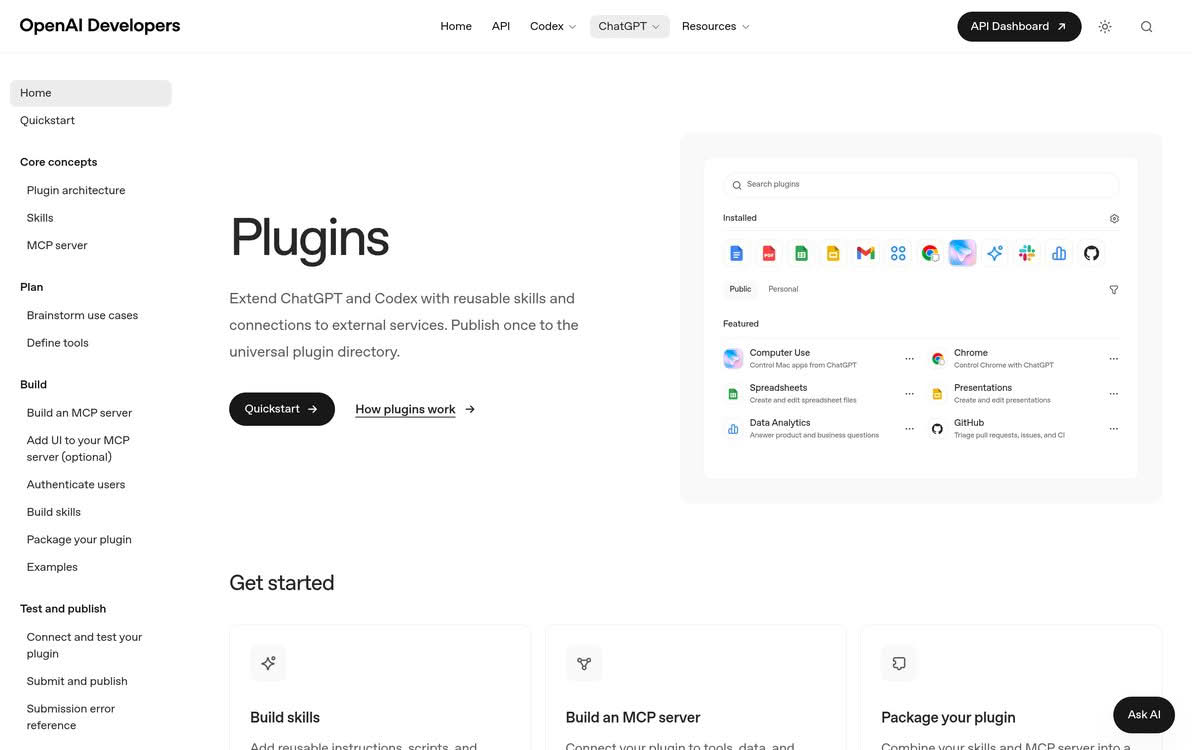
OpenAI’s Apps SDK lets developers build interactive applications that run inside ChatGPT conversations — not just a chatbot that answers questions about your business, but an embedded interface a user can act on directly: browsing a product catalog, booking something, or completing a task, without leaving the chat. Apps built on it are built with web technology (the SDK documentation centers on React-based components) and communicate with ChatGPT through the same Model Context Protocol that WordPress MCP servers use.
Also Read: How to Set Up a WordPress MCP Server, Step by Step — the same underlying protocol connecting a ChatGPT app to its backend.
The ChatGPT App Store: Discovery Inside the Chat
Alongside the Apps SDK, OpenAI opened a directory where users can discover and install apps directly inside ChatGPT, similar in concept to a mobile app store but surfaced inside a conversation rather than a separate storefront. For a business, this is a genuinely new discovery surface distinct from Google search or being cited in an AI Overview — it’s a user finding and using your product without ever visiting your website at all.
What the Submission and Review Process Requires
Getting an app into the directory isn’t automatic. Developers submit through the OpenAI Developer Platform and track review status there, with only one version of a given app allowed to be under review at a time — so a rejected or revised submission has to clear the queue before a new version can be reviewed. OpenAI’s published developer guidelines set a fairly specific bar for what gets approved: an app needs to serve a clear purpose and reliably do what it promises, and specifically needs to provide functionality or workflows that aren’t already natively covered by ChatGPT’s own conversational capabilities. In practice, that last requirement rules out apps that are really just a branded wrapper around something ChatGPT can already do unassisted — the bar is genuine added capability, not a skin.
Monetization Is Still Early and Deliberately Limited
This is the detail that changes the calculus for a lot of businesses considering building one: as of this current phase, ChatGPT apps can only monetize by linking out to an external website to complete a purchase, and only for physical goods. Selling digital goods, subscriptions, or any in-app service isn’t yet permitted inside the app experience itself, though OpenAI has said it’s exploring broader commerce support over time. Practically, this means a SaaS business, a subscription content site, or a digital-goods seller can build an app that helps a user browse or configure something, but the actual purchase still has to route back out to the business’s own site — the “never leaves the chat” pitch doesn’t fully hold for the actual transaction yet, even though the browsing and discovery experience can.
How This Differs From Just Being Cited
Being well-cited in ChatGPT’s answers (through good content, clear schema, and structured facts) and building an app on the Apps SDK solve genuinely different problems, and it’s worth being precise about which one your business actually needs. Citation gets your content referenced and linked when it’s relevant to a user’s question — the user still typically clicks through to your site for anything beyond the immediate answer. An app skips that click entirely for the browsing/interaction part: the interaction (browsing, booking, configuring) happens inside the chat, though as noted above the purchase itself for physical goods currently redirects out. That’s a meaningfully different traffic and conversion model, not just a bigger version of citation — it trades a visit to your site for a completed action inside someone else’s interface, with the transaction step as the current exception.
A Worked Example: A Booking Business Weighing This Decision
Take a WordPress-based booking business — a restaurant reservation platform, a service marketplace, a rental system — as a concrete case. It already has an API-accessible backend (availability, pricing, confirmation logic), which is the single biggest factor in whether an Apps SDK build is a reasonable-sized project versus a much larger one. A user could, in principle, check availability and complete a booking entirely inside a ChatGPT conversation, with the app calling that existing API rather than the business building anything from scratch. Because a booking (a service, not a physical good) currently falls outside the physical-goods-only external-checkout monetization path, the business would need to either treat the in-chat experience as lead generation that still closes on its own site, or wait for OpenAI to expand monetization to cover service bookings directly. That distinction (what actually gets built and monetized today, versus what the platform enables in principle) is the practical gap between the pitch and the current reality for most non-physical-goods businesses.
Should Your Business Actually Build One?
- You have a genuine interactive use case (booking, ordering, configuring, looking something up in real time) — an app is worth exploring; a static content business (a blog, a marketing site) has less obvious use for it today.
- You already have API-accessible backend logic — building on the Apps SDK is a much smaller lift if your business logic is already exposed via an API than if everything lives inside a traditional website UI.
- Your revenue model fits current monetization limits — a physical-goods business can route checkout externally without much friction; a digital-goods or subscription business currently can’t monetize inside the app at all, which changes the ROI math substantially.
- This is genuinely new and evolving — treat an early investment as exploratory rather than assuming a fixed ROI; the ecosystem, review process, and discovery mechanics are still maturing.
- You’re comfortable losing the direct site visit — if your business model depends on on-site engagement (ad revenue, upsells discovered while browsing), an in-chat app that completes the whole interaction without a site visit may work against that model even if it succeeds on its own terms.
Also Read: AI Agents and Your WordPress Site: What They Can Actually Do in 2026 — the broader landscape this new discovery surface sits inside.
Conclusion
The Apps SDK and ChatGPT’s app store are a real, new discovery and interaction surface, not just another AI-content angle to chase, and they solve a genuinely different problem than being well-cited in AI answers. Whether it’s worth building for depends entirely on whether your business has a genuine interactive use case, an API-ready backend already, a revenue model that fits the current physical-goods-only external-checkout monetization limits, and a business model that tolerates the interaction happening off your own site — for most content-first WordPress sites, being well-cited by AI search still matters more right now than shipping a ChatGPT app.
FAQ
Do I need to know MCP to build a ChatGPT app?
Apps built on the Apps SDK communicate with ChatGPT via MCP, so a working understanding of MCP is relevant, though the SDK itself provides higher-level tooling on top of it.
Is this the same as ChatGPT plugins from 2023?
It’s the newer, more capable successor concept — the original 2023 ChatGPT plugins model was deprecated in favor of this Apps SDK / GPTs-and-apps approach.
Does a content-only WordPress blog need a ChatGPT app?
Not typically. A content-first site benefits more from being well-structured for AI citation (schema, clear answers, llms.txt) than from building an interactive app; apps make the most sense for genuinely interactive business logic.
Does an in-chat app hurt my website traffic?
It can, for interactions that would previously have driven a site visit — a completed in-chat booking or lookup means that specific interaction never touches your website. Weigh that against the convenience benefit before assuming an app is a pure upside.
Can I sell a subscription or digital product directly inside a ChatGPT app?
Not currently. Monetization is limited to linking out to an external site for physical-goods purchases; digital goods, subscriptions, and in-app services aren’t yet permitted, though OpenAI has said it’s exploring expanding this over time.
Suggested Reading
- How to Set Up a WordPress MCP Server, Step by Step
- AI Agents and Your WordPress Site: What They Can Actually Do in 2026
- Vector Search for WordPress: How Semantic Search Actually Works Under the Hood
