







A while back I counted the browser tabs open on my second monitor. Fifteen. Every one was a news site or a blog I was supposed to be keeping an eye on, and I was actually reading maybe two of them. The rest were just guilt with a favicon.
That is the exact problem a news aggregator solves. Instead of visiting fifteen sites, you point one tool at all of them and read the headlines in a single feed. Less tab clutter, less time lost, and a much better chance you actually see the story that matters.
Below are seven news aggregator websites worth using in 2026, sorted by who each one is really for. After the tools, I will show you how to build your own aggregator on WordPress if you want a feed for one specific topic or community.
Short answer: for most people Google News is the best news aggregator website, because it is free, needs no setup, and sorts headlines from thousands of publishers into a single topic-based feed. Which one is right for you changes with how you read:
- Best for a free daily scan: Google News
- Best for magazine-style browsing: Flipboard
- Best for organized RSS with AI filtering: Feedly
- Best for keyword and topic monitoring: Inoreader
- Best for checking political bias: Ground News
- Best open-source reader you can self-host: NewsBlur
- Best for design, tech, and startup news: Panda
What Is a News Aggregator?
A news aggregator is a website or app that collects stories from many publishers and shows them in one place. Instead of opening each site on its own, you get headlines, summaries, and links pulled together into a single feed you can scan in a few minutes.
Most aggregators work from RSS feeds, which are simple files that sites publish every time they post something new. The aggregator checks those feeds, grabs the fresh items, and groups them by topic, source, or popularity. You are also likely to hear them called feed readers or content aggregators, which mean the same thing.
How to Choose a News Aggregator
The right tool depends on how you actually read. Before you sign up for anything, decide which of these you are:
- The casual reader. You want a clean feed of the day’s big stories with zero setup. Google News and Flipboard are made for you.
- The RSS power user. You follow dozens of niche blogs and want filters, folders, and search. Feedly, Inoreader, and NewsBlur fit here.
- The bias-checker. You want to see how different outlets frame the same story and avoid an echo chamber. Ground News is built for exactly this.
- The niche follower. You only care about one field, like design or startups. A focused reader like Panda saves you the noise.
Keep that profile in mind as you read. It is the fastest way to skip the six tools that are wrong for you and commit to the one that is right.
How We Picked These News Aggregators
Every tool below was checked live in July 2026. We opened each one, confirmed it is still running, and read its own pricing and feature pages to verify what the free plan covers and what you actually pay for. Anything that has shut down was removed rather than left on the list, which is why Pocket appears further down as a warning instead of a recommendation. The order reflects who each tool is best for rather than one overall score, because a bias-checker and an RSS power user are not shopping for the same thing.
| Tool | Type | Best for | Price |
|---|---|---|---|
| Google News | Curated news feed | A reliable daily scan with no setup | Free |
| Feedly | RSS reader | Organized feeds plus AI filtering | Free to start; paid plans available |
| Magazine-style reader | Visual browsing over a strict feed | Free | |
| Inoreader | RSS plus social and newsletter monitoring | Tracking keywords and topics | Free plan plus paid tiers |
| Ground News | Bias comparison reader | Seeing how each side covers a story | Free tier plus a paid plan |
| NewsBlur | Open-source RSS reader | Control, no lock-in, self-hosting | Free up to 64 sites; Premium 36 dollars a year |
| Panda | Niche design and tech reader | Design, startup, and product news | Free |
The 7 Best News Aggregator Websites in 2026
1. Google News

Google News is the default starting point for most people, and for good reason. It gathers stories from sources worldwide and sorts them by topic, so you can scan world, business, tech, or sports in seconds without following anything manually.
The feed personalizes itself based on your location and what you read, and it often shows the same story from several outlets so you get more than one angle. It is free, works on the web and mobile, and supports many languages.
Best for: casual readers who want a reliable daily feed with no setup. Price: free.
2. Feedly

Feedly is one of the best known RSS readers. You follow websites, blogs, and topics, and group them into collections so related sources sit together. The feed updates in real time, and its AI assistant can prioritize the articles that match your interests and filter out the noise.
Worth knowing: Feedly has put a lot of its energy into a separate enterprise product for security teams, but the reader most people came for is still here and still works well. There is a free plan for following a limited number of feeds, with paid tiers that unlock more sources and the AI features.
Best for: RSS power users who want AI filtering and clean organization. Price: free tier plus paid plans.
3. Flipboard

Flipboard takes a more visual approach. It lays your news out like a digital magazine, and you flip through stories by swiping. You follow topics such as technology, sports, or politics, and Flipboard pulls in matching stories from a mix of sources.
You can also build your own magazines by saving articles into themed collections, which is handy for research or for sharing a reading list. It works across phones, tablets, and the web, so your saved stories follow you everywhere.
Best for: visual readers who enjoy browsing over a strict feed. Price: free.
4. Inoreader
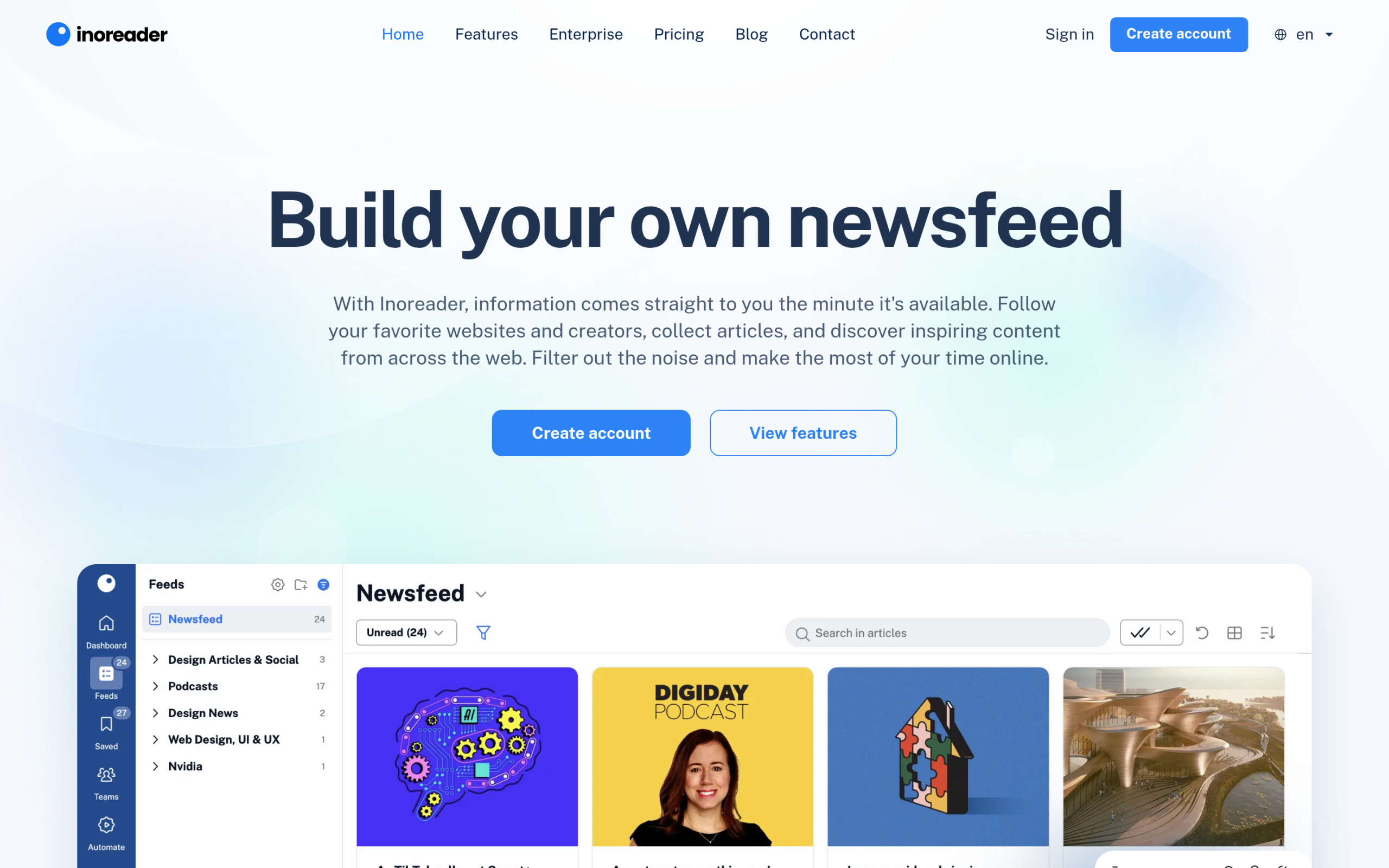
Inoreader is the reader for people who treat news as research. On top of standard RSS, it can follow social sources like Reddit, Mastodon, Telegram, and YouTube, plus podcasts and newsletters, so everything lands in one feed.
Its strongest feature is monitoring. You can set keyword feeds that surface every new mention of a topic across many languages, then use rules, filters, tags, and folders to keep it all organized. There is an AI layer called Inoreader Intelligence that summarizes articles and answers questions about what you are reading. A free plan covers the basics, with paid tiers for heavier use.
Best for: researchers and teams who monitor topics and keywords. Price: free tier plus paid plans.
Also Read: want to build the site you will host all this on? Start with our guide on how to make a WordPress website for free.
5. Ground News
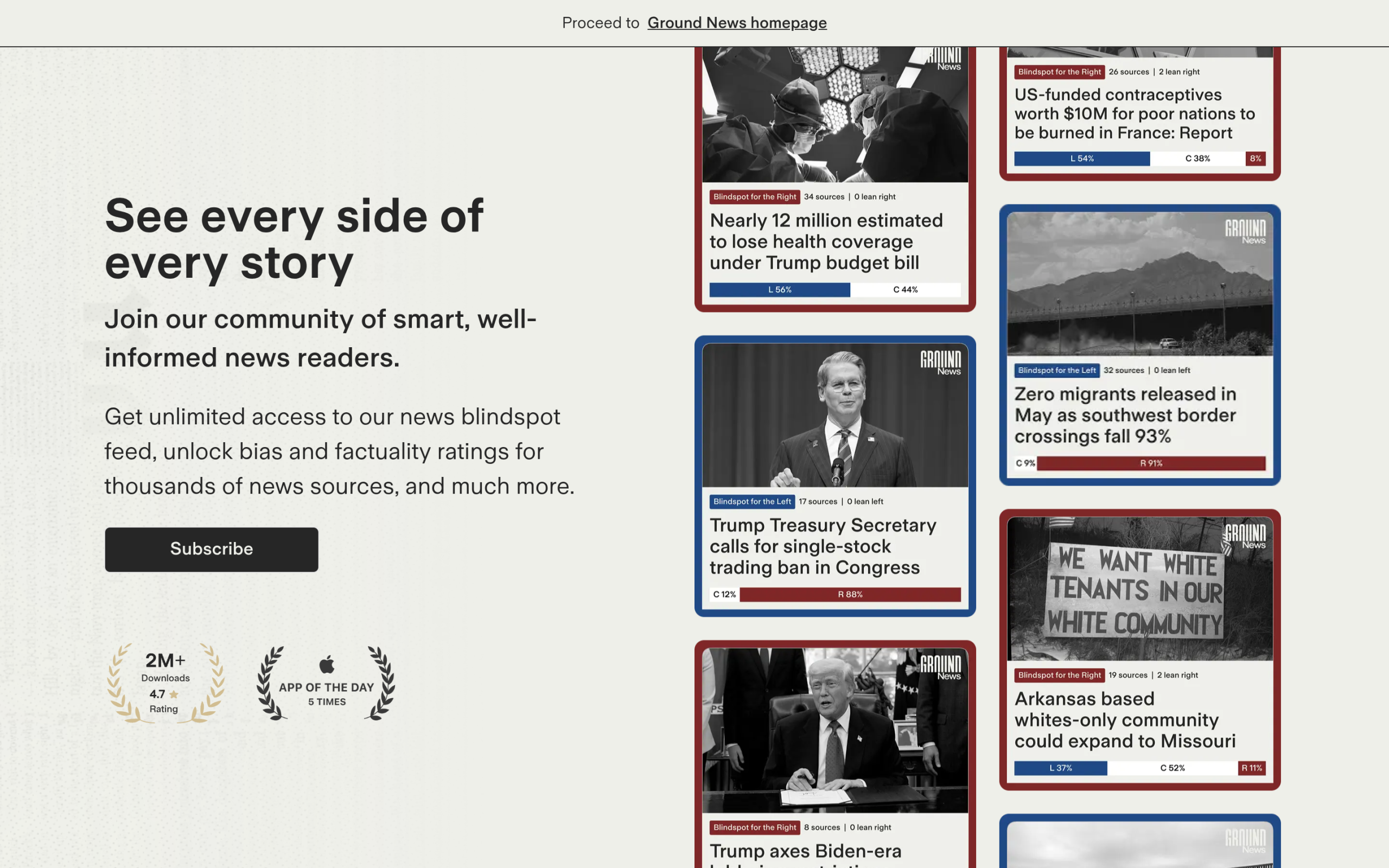
Ground News does something the others do not. For each story, it shows you how outlets across the political spectrum are covering it, with Media Bias Ratings plus ownership and factuality ratings for each source. You see the same event reported by left, center, and right outlets side by side.
Its standout feature is the Blindspot feed, which surfaces stories that one side of the spectrum is underreporting. If you are tired of only seeing news that already agrees with you, this is the tool that breaks the bubble. It comes with apps, a browser extension, and a newsletter, and the deeper bias tools sit behind its paid Vantage plan.
Best for: readers who want to compare bias and escape the echo chamber. Price: free tier plus the paid Vantage plan.
6. NewsBlur
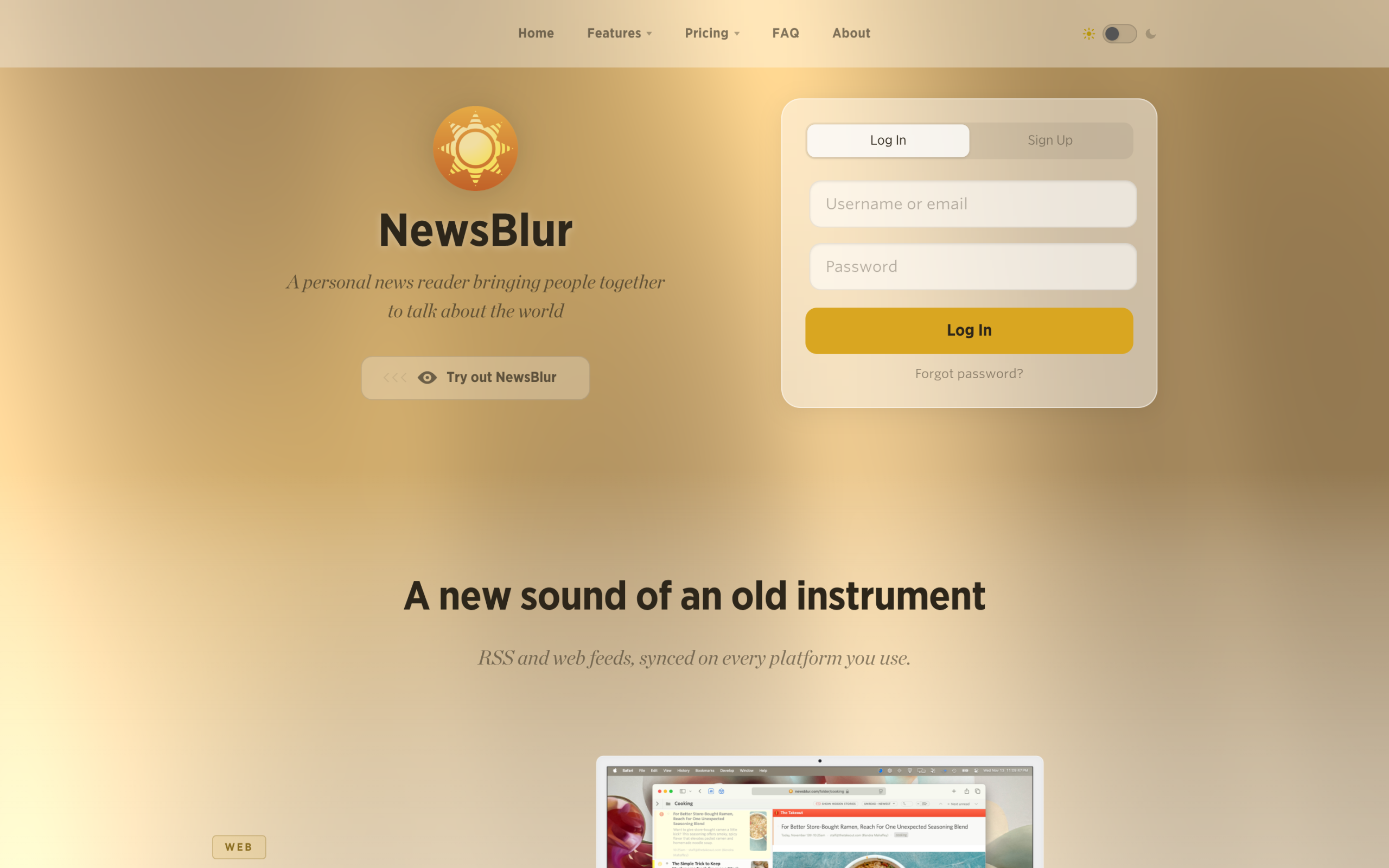
NewsBlur is the choice for readers who want control and no lock-in. It is a fully open-source RSS reader under the MIT license, which means you can even run your own copy with Docker if you want to. The code is on GitHub.
Its training feature lets you teach each feed which stories to highlight and which to hide, and it adds full-text search, story clustering, tagging, and native iOS and Android apps. The free plan lets you follow up to 64 sites, which is plenty for most people. Premium is 36 dollars a year and raises that ceiling to 1,024 sites, with a Premium Archive tier at 99 dollars a year for up to 4,096.
Best for: tinkerers who want an open-source reader they can shape or self-host. Price: free up to 64 sites; Premium from 36 dollars a year.
7. Panda
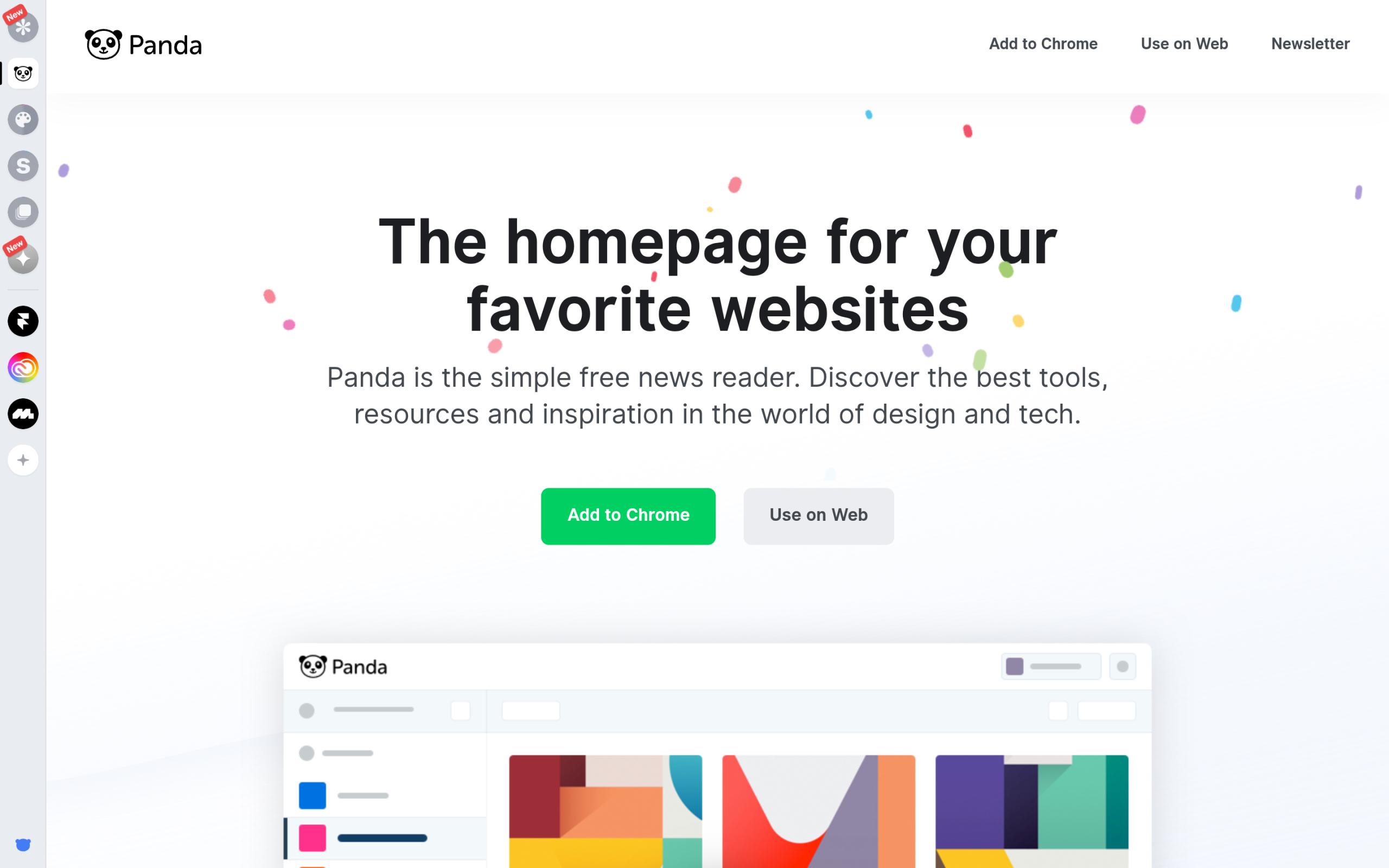
Panda calls itself the simple free news reader, and it has served the tech community since 2014. Instead of trying to cover everything, it focuses on design, tech, and startups, pulling from sources like Designer News, Product Hunt, Dribbble, Medium, Reddit, and Y Combinator.
You add the feeds you want, pick a layout, and bookmark articles to read later. It runs as a web app and a Chrome extension, and it is free. If your reading is mostly about what is shipping in design and startups, Panda cuts out everything else.
Best for: designers, developers, and startup followers who want a focused feed. Price: free.
A quick note on Pocket
If you have read an older list, you have probably seen Pocket recommended as a save-for-later tool. Skip it. Mozilla shut Pocket down in 2025, with the official note saying the team made the difficult decision to phase out the read-it-later app. If you used it, NewsBlur and Inoreader both cover the save-and-read-later habit well.
How News Aggregator Websites Work
Under the hood, every aggregator does two jobs: it collects content automatically, then it decides what to show you first.
Content curation algorithms
Aggregators scan many sources through RSS feeds, then group the fresh stories by topic or popularity. Some rank items by relevance, date, or how reliable the source is. Others watch what is trending across the web and push the stories lots of people are reading to the top. That automation is what saves you the manual checking.
User personalization features
On top of that, you steer the feed. Most tools let you pick favorite topics, sources, or keywords, and they learn from what you open over time. Read-later lists, saved boards, and breaking-news alerts then keep your feed focused on what you actually care about rather than everything at once.
How to Build Your Own News Aggregator With WordPress
The seven tools above are great for reading. But if you want to own a feed for one topic or community, say a curated page of WordPress news, local sports, or design links, you can build your own aggregator on WordPress without writing code.
It comes down to two pieces. First, a feed plugin to pull stories in. Popular options include WP RSS Aggregator, Feedzy RSS Feeds, and CyberSEO Lite, which fetch items from the RSS feeds of the sources you choose. Second, a fast theme and a flexible way to display those posts so the page looks like a real publication and not a wall of links.
That display layer is where Nexter Theme and Nexter Blocks earn their place. Nexter is a lightweight block theme, so your aggregator stays fast even when the feed grows. Nexter Blocks adds 90+ Gutenberg blocks, including Post Grid, Post Carousel, Post Masonry, and Post Metro layouts that turn your collected posts into a clean, magazine-style front page. There is a free version on WordPress.org, and paid plans start at 39 dollars a year.
One rule before you launch: respect the sources. Summarize and link out with clear attribution rather than republishing full articles, and add your own angle so the page offers something of its own. That keeps you on the right side of both copyright and search engines.
Also Read: not sure which theme foundation to use? See what a WordPress block theme is and why it matters for a content-heavy site.
Wrapping Up
Keeping up with the news does not have to mean fifteen open tabs. Pick the tool that matches how you read: Google News or Flipboard for an easy daily scan, Feedly, Inoreader, or NewsBlur for serious RSS reading, Ground News when you want to check bias, and Panda if you live in design and tech.
And if no tool quite fits the niche you care about, build your own. With a feed plugin and a fast, flexible setup like Nexter Theme and Nexter Blocks, you can launch a focused news feed of your own in an afternoon.
Suggested Reading
- How to Make a WordPress Website for Free
- What Is a WordPress Block Theme?
- Gutenberg Core Web Vitals: Speed Up a Block-Theme Site
- Headless CMS and WordPress: What It Means in 2026
- What Is Topical Authority and How to Build It
Stay updated with Helpful WordPress Tips, Insider Insights, and Exclusive Updates – Subscribe now to keep up with Everything Happening on WordPress!
FAQs on Best News Aggregator Websites
How do news aggregator websites make money?
They often monetize through display ads, affiliate marketing, sponsored content, or premium subscriptions.
Can I create a news aggregator site without coding?
Absolutely! With WordPress and the right plugins, you can build a fully functional news aggregator without writing any code.
What plugins do I need to create a news aggregator in WordPress?
Popular options include WP RSS Aggregator, Feedzy RSS Feeds, and CyberSEO Lite. These plugins help pull content from other sites into yours.
Will Google penalize my site for using content from other websites?
Not if you use proper attribution, don’t scrape full articles, and add your own commentary or summaries. Make sure your content offers some unique value.
Do I need a specific theme to build a news aggregator in WordPress?
No, but choosing a fast, clean, and content-focused theme like Nexter Theme can help you create a better user experience.
Is a news aggregator the same as a blog?
Not exactly. While both display content, a blog usually features original content, whereas a news aggregator curates content from other sources.
