



Key Takeaways
- llms.txt, schema, MCP, and Google’s OKF are not four competing standards. They are four layers of one AI-readiness stack, and each does a different job.
- Helpful content plus schema markup is the foundation. For most WordPress sites it is the only high-priority layer.
- llms.txt is a low-cost hedge, not a guaranteed win: no major AI engine has committed to using it, and Google has said it does not.
- OKF is Google’s Markdown knowledge format, built for internal and enterprise AI agents. It is optional for a public blog today.
- MCP connects AI agents to live tools and data. It matters for apps and integrations, not for publishing an article.
A reader emailed me last week with four browser tabs open and one question: which one do I actually need? The tabs were llms.txt, schema markup, Model Context Protocol, and Google’s brand-new Open Knowledge Format. Every one of them had a blog post somewhere promising it was the key to getting found by AI. He runs a block-theme WordPress site, writes a few posts a month, and just wanted to know where to spend a Saturday afternoon.
The honest answer is that none of these is a race you win by picking the right one. They are layers of a single stack, and they do not all deserve the same effort. Here is what each layer actually is, who it is really for, and how much it should matter to a normal WordPress site in 2026.
The AI-readiness stack at a glance
| Layer | What it is | Mainly for | Priority for a public WP site |
|---|---|---|---|
| Content + schema | Well-structured content with markup machines can read | Everyone | High |
| llms.txt | A signpost file at your site root | The public web | Medium (cheap hedge) |
| OKF | A Markdown knowledge bundle for AI agents | Internal / enterprise | Low |
| MCP | A protocol that connects agents to tools and data | Apps and agents | Situational |
Layer 1: helpful content and schema (the foundation)
Everything else in this stack rests on one thing: content a machine can parse without guessing. Schema markup is the part that labels what your content actually is, so a search engine or an AI model reads a recipe as a recipe and an author as an author instead of inferring it from the layout. This is the groundwork for answer engine optimization, and it is the single highest-priority layer here. Skip every other layer on this page and you will be fine. Skip this one and nothing downstream can save you.
Block themes have a quiet advantage here. A Gutenberg block site outputs clean, semantic HTML by default, which is exactly what machines want to read. Nexter Blocks lean into that: structured headings, proper lists, and markup that does not bury the meaning under a pile of nested divs. If you want a deeper walkthrough of getting the structured-data part right, our schema markup generator for WordPress guide covers the JSON-LD side in full.
Also Read: What Is Entity SEO? Schema and entities are how AI learns not just what your pages say, but how they connect.
Layer 2: llms.txt (the public signpost)
An llms.txt file is a plain Markdown file you place at your site root. The idea, proposed in 2024, is to hand AI tools a curated map of your most important pages instead of making them crawl your whole site. It is genuinely low-effort to publish.
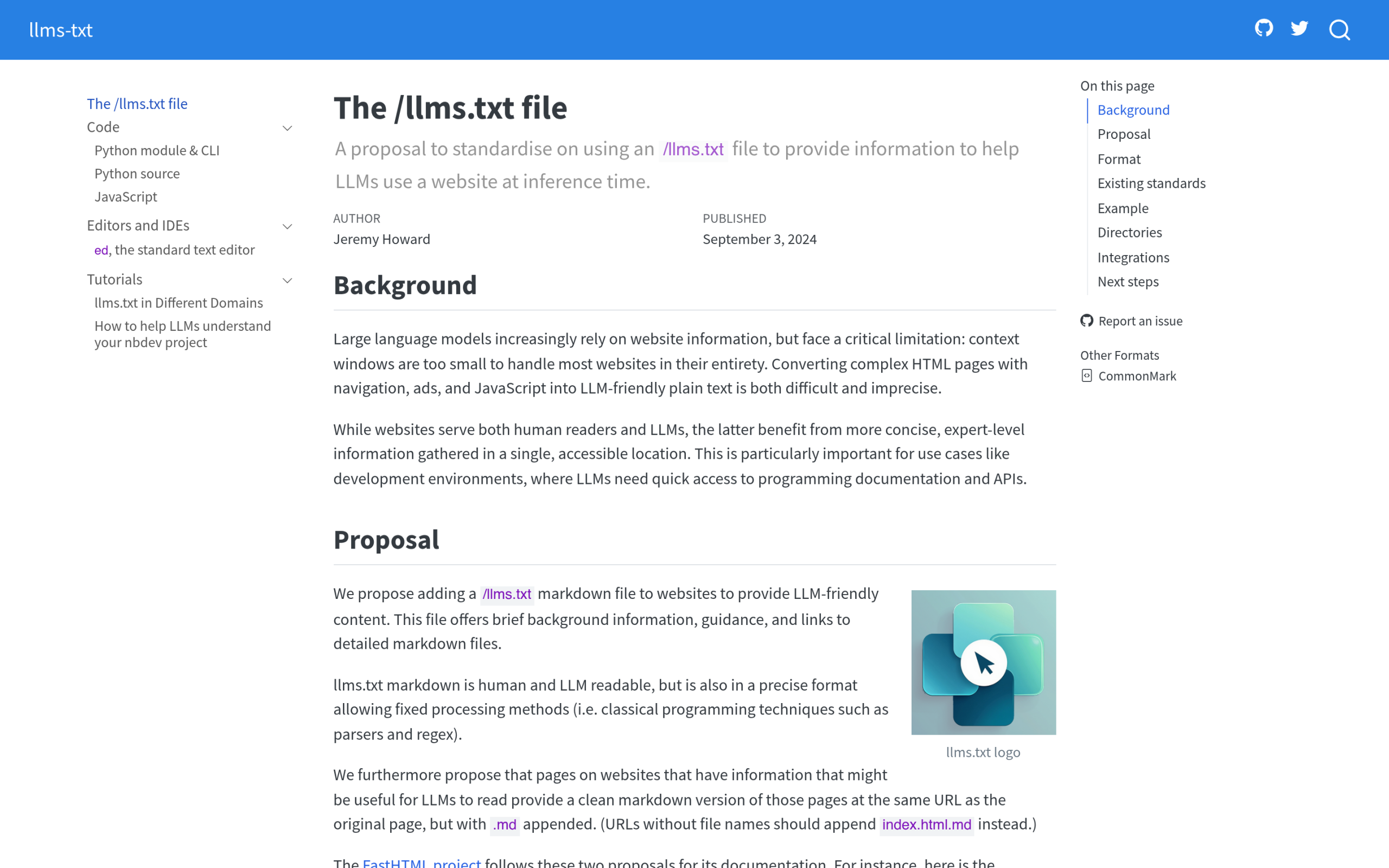
Here is the part most posts leave out. As of early 2026, no major AI engine has committed to using llms.txt, and Google has publicly said it does not. Independent audits show AI crawlers almost never fetch the file. So treat llms.txt as a low-cost, low-risk hedge on where the machine-readable web might be heading, not as a tactic that earns you AI citations today. Publish one because it is cheap and harmless, not because it is a guaranteed win. We go deeper on the trade-off in our OKF vs llms.txt comparison.
Layer 3: OKF (the internal library)
Google’s Open Knowledge Format (OKF), announced in June 2026, packages curated knowledge as a directory of Markdown files with YAML frontmatter so AI agents can consume it in one agreed shape. It is a vendor-neutral, version 0.1 draft, and Google built it for data teams and internal agents sharing tables, metrics, and tribal knowledge, not for blogs.
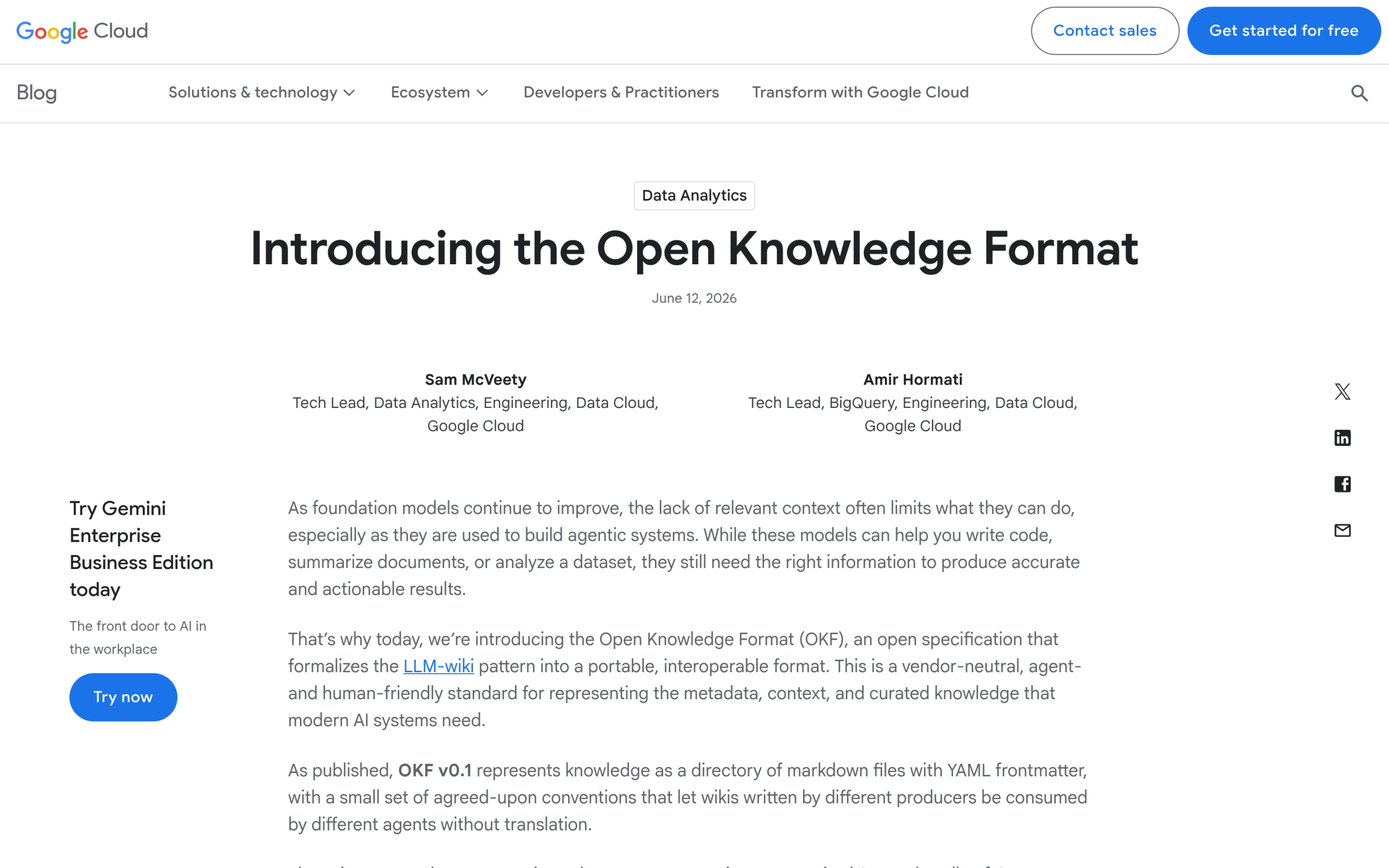
For most public WordPress sites this layer is optional today. A bundle is essentially a second copy of what your site already publishes, which is a maintenance cost with no proven payoff yet. If you want the full honest assessment of whether it is worth your time, we wrote one. Otherwise, file OKF under watch, not do.
Also Read: Does Google’s OKF Matter for WordPress SEO? An honest take on whether to act on it now or wait.
Layer 4: MCP (the live connection)
The Model Context Protocol is, in its own words, an open-source standard for connecting AI applications to external systems. It lets AI apps like Claude or ChatGPT reach data sources, tools, and workflows so they can do things, not just read things. The project describes it as a USB-C port for AI: one standard way to plug an agent into your stuff.
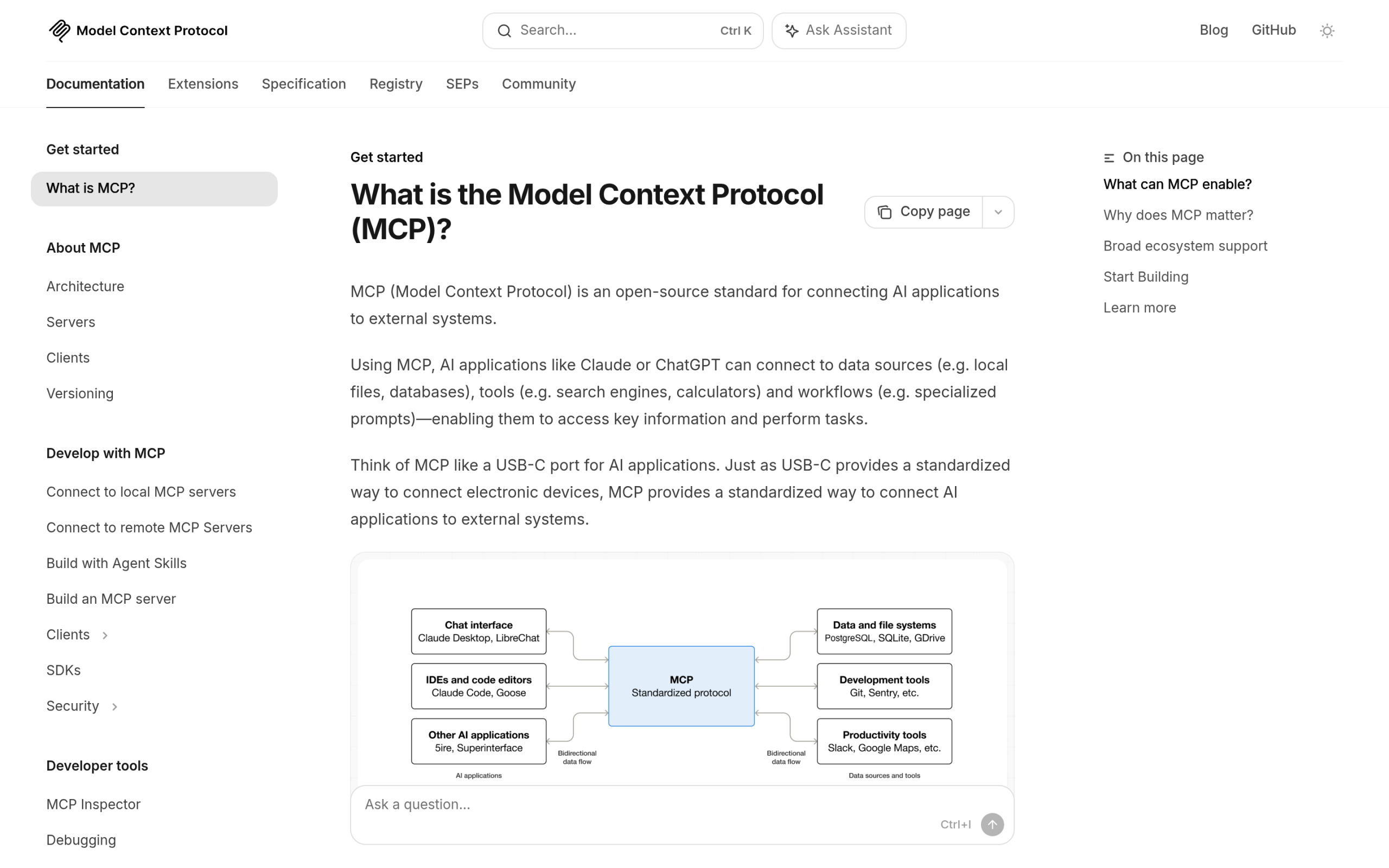
This is the layer least relevant to publishing an article. MCP matters when you want an AI agent to take actions against your data, such as querying a store or running a workflow, rather than simply citing your blog post. If that is on your roadmap, our MCP vs API guide explains when a WordPress site actually needs each one.
How to run the stack on a block-theme site
You do not need four plugins and a spreadsheet. The work splits cleanly in two. Your theme handles structure, and one tool handles the AI-readiness signals on top.
On the structure side, a clean block theme like Nexter already gives machines semantic HTML to read. On the signals side, RankReady acts as the control panel for three of the four layers. It outputs Article, Speakable, FAQPage, HowTo, and ItemList schema; generates your llms.txt and llms-full.txt files and keeps them current as you publish; adds a clean Markdown version of any post when you append .md to the URL; and scores each post from 0 to 100 on schema, freshness, content depth, and author signals. It also logs every AI crawler that hits your site (GPTBot, ClaudeBot, PerplexityBot, Google-Extended, and more) so you can see who is actually reading you. It is free, GPL-2.0-or-later, runs on WordPress 6.0+ and PHP 7.4+, and merges with whichever SEO plugin you already run.
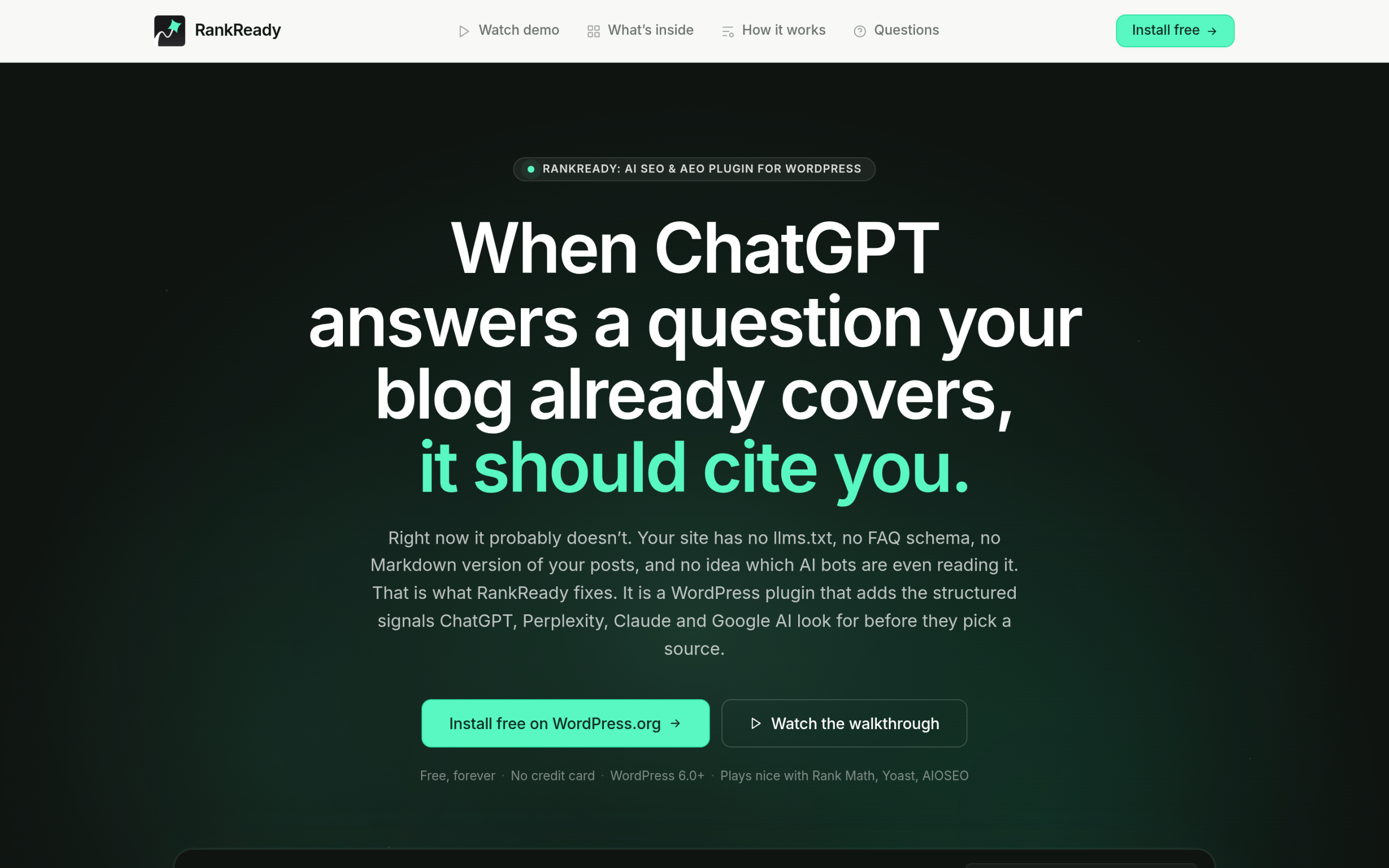
One honest boundary: RankReady covers the content, schema, llms.txt, and Markdown layers. It does not build OKF bundles or run an MCP server, and you do not need it to. For a normal publishing site, those two layers stay in watch-and-wait. If you want to measure the layers that do matter, that is the gap a tool like an AI SEO tool is built to close.
The bottom line
Stop treating llms.txt, schema, MCP, and OKF as four separate races to win. Get your content and schema right first, because that is the layer every AI system actually uses. Publish an llms.txt because it is cheap, while being clear-eyed that no major engine has committed to it. Keep an eye on OKF without rushing a bundle. And reach for MCP only when you genuinely need an agent to act on your data. That is the whole stack, in priority order, for a site that publishes for humans first and machines second.
Suggested reading
- What Is Google’s Open Knowledge Format (OKF)? A Plain-English Guide
- OKF vs llms.txt: Two Ways to Hand AI Your Site’s Knowledge
- How to Turn Your WordPress Content Into an AI-Readable Knowledge Base
- Answer Engine Optimization (AEO): The Complete WordPress Guide
- What Is Topical Authority? How WordPress Sites Build It
